

Mastering Your Mind: Doctor-Backed Strategies for High-Achievers to Conquer Decision Fatigue and Boost Clarity
High-achievers often struggle with decision fatigue, a depletion of cognitive resources that impairs self-control and productivity. Our 'Cognitive Resilience Blueprint' provides doctor-backed strategies to counter this mental exhaustion and boost clarity.

Unlocking Your Cognitive Resilience Blueprint: A Doctor-Backed Guide for High-Achievers
High-achievers often find themselves paradoxically less productive as their decision-making volume increases, not because of a lack of skill, but due to a phenomenon called decision fatigue, which can impair self-control and willpower. This isn't merely about feeling tired; it's a measurable depletion of cognitive resources, where even a senior executive in Calgary, making hundreds of high-stakes choices daily, can struggle with a simple dinner menu. Our 'Cognitive Resilience Blueprint' offers doctor-backed strategies to counter this, specifically for those in demanding roles who experience mental exhaustion from constant choices.
This blueprint provides a diagnostic approach to pinpoint your personal decision fatigue triggers, moving beyond generic advice to offer practical, evidence-based strategies tailored for high-pressure environments. You'll learn how to overcome analysis paralysis and the fear of suboptimal decisions that often plague driven individuals, impacting productivity and personal life.
By implementing a phased plan, you can achieve sustainable mental clarity and maintain peak performance without succumbing to burnout. This guide aims to equip you with the tools for Mastering Your Mind: Doctor-Backed Strategies for High-Achievers to Conquer Decision Fatigue and Boost Clarity, ensuring your drive for perfection doesn't become a barrier to effective decision-making and overall well-being.
How We Curated These Doctor-Backed Strategies for Mind Mastery
Many online guides offer generic self-help advice for mental overwhelm, but high-achievers grappling with significant cognitive load need more than surface-level tips. Our approach to curating these strategies for Mastering Your Mind: Doctor-Backed Strategies for High-Achievers to Conquer Decision Fatigue and Boost Clarity hinges on rigorous scientific validation and practical applicability for demanding environments.
Our Strategy Selection Pillars
Every technique is rooted in peer-reviewed psychological research, like the seminal work on decision fatigue by Baumeister et al. (1998), which demonstrated its impact on self-control.
We prioritize insights and methods actively recommended or employed by physicians, neuroscientists, and cognitive behavioural therapists in clinical settings.
Strategies are selected for their effectiveness in high-stakes, high-volume decision-making scenarios, common for professionals in fields like finance or medicine.
Our focus is on proactive, long-term mind mastery, moving beyond quick fixes to build enduring cognitive resilience, such as implementing 'decision diets' to free up mental resources.
Each strategy is presented as an implementable step, acknowledging the need for clear, direct guidance for busy individuals who cannot afford ambiguity.
This careful selection ensures the advice isn't just theoretical, but genuinely applicable. For instance, the emphasis on structured routines directly counters the thousands of daily decisions that contribute to a high-achiever’s cognitive overload.
"You can't just tell someone to 'relax' when they're making million-dollar choices all day. They need a system, a mental operating procedure." — Chief of Staff, Vancouver Hospital
By focusing on evidence-based, preventative measures, we aim to provide a robust
Understanding Decision Fatigue: Why High-Achievers Are Uniquely Vulnerable
Understanding Decision Fatigue: Why High-Achievers Are Uniquely Vulnerable
You might assume that your relentless drive is your greatest asset, but for high-achievers, that same ambition often creates a surprising vulnerability: decision fatigue. It's not simply being tired; it's a specific psychological state where making too many choices, even minor ones, erodes your self-control and willpower, significantly degrading the quality of subsequent decisions. This isn't a character flaw, but a documented phenomenon, as research by Baumeister et al. (1998) shows, directly impacting your ability to maintain focus and clarity.
High-achievers face an elevated cognitive load far beyond the average adult, who already navigates thousands of decisions daily. Whether you're a senior architect designing a complex project in Vancouver or a startup CEO in Waterloo making daily strategic pivots, your roles demand constant, high-stakes choices. This incessant demand, coupled with a perfectionist drive and a fear of making suboptimal decisions, creates a fertile ground for analysis paralysis and mental exhaustion. This makes Mastering Your Mind: Doctor-Backed Strategies for High-Achievers to Conquer Decision Fatigue and Boost Clarity particularly relevant for you.
"It's not just about the big choices; it's the cumulative weight of every tiny decision, from email replies to meeting schedules, that slowly drains their mental battery." — kindergarten administrator, Toronto
These numbers underscore the immense pressure on your prefrontal cortex, the brain region responsible for planning, problem-solving, and emotional regulation. When overloaded, this critical area falters, leading to the mental fog and irritability you might experience by late afternoon. Recognizing decision fatigue as a genuine
The Science Behind Mental Overwhelm: What Doctors Say About Your Brain
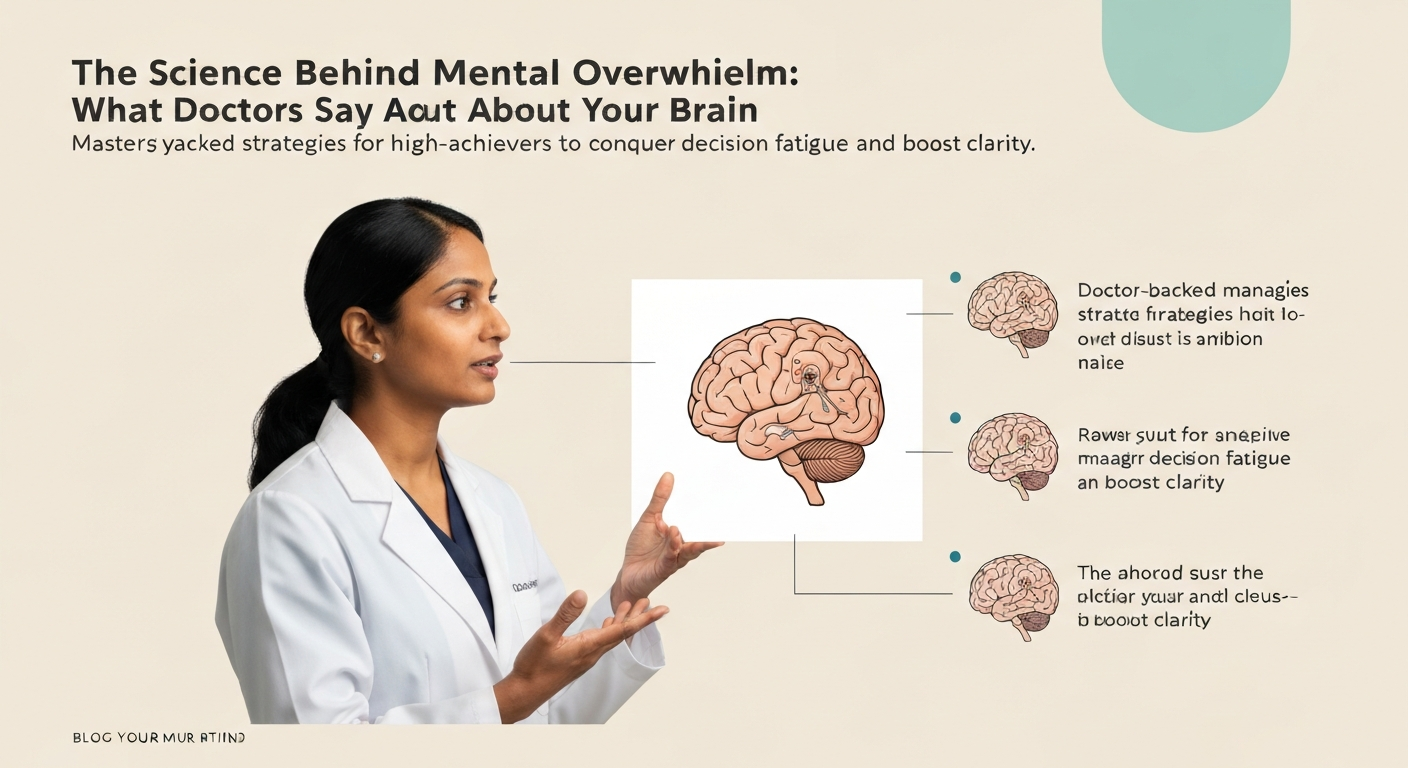
The Science Behind Mental Overwhelm: What Doctors Say About Your Brain
You might feel mentally drained after a day of intense choices, but it's not simply "stress"—it's a measurable neurobiological phenomenon impacting your brain's command centre. High-achievers, often making thousands of decisions daily in high-stakes environments, push their prefrontal cortex to its limits. This brain region, crucial for executive functions like planning, problem-solving, and emotional regulation, becomes impaired under chronic cognitive load. Research, including foundational work by Baumeister et al. (1998), confirms that this excessive decision-making depletes mental resources, leading to what we call decision fatigue.
When you continuously tax your prefrontal cortex, its ability to function optimally diminishes. This can manifest as difficulty focusing, reduced clarity, and even impaired emotional regulation, directly impacting productivity and the quality of your choices. For instance, a senior executive in Calgary might find themselves making impulsive, sub-optimal choices late in the day, not due to lack of skill, but because their brain's decision-making capacity is temporarily exhausted. Understanding this physiological reality is the first step in Mastering Your Mind: Doctor-Backed Strategies for High-Achievers to Conquer Decision Fatigue and Boost Clarity.
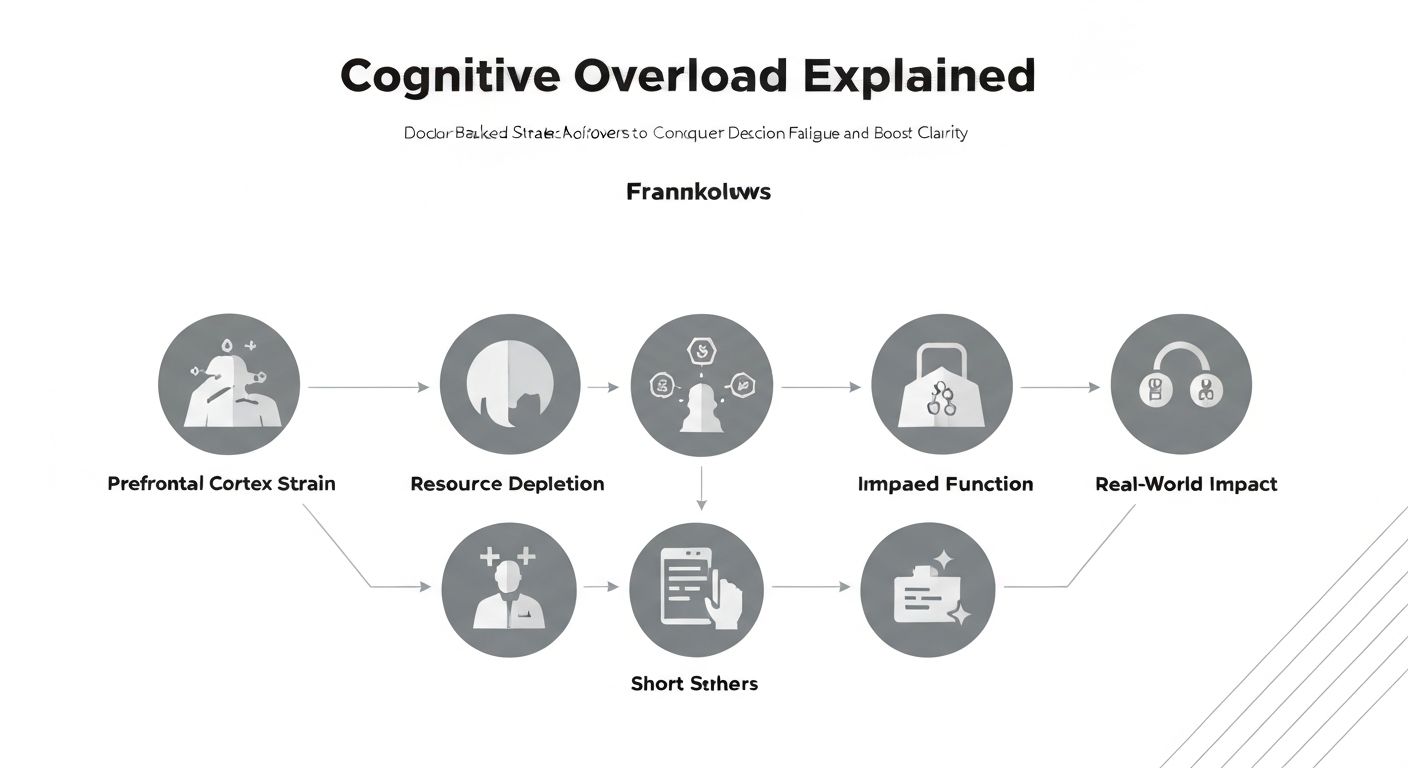
Recognizing that your mental exhaustion has a concrete neurological basis moves you beyond vague self-help advice. This scientific foundation offers a credible lens for why your focus and clarity diminish under pressure, providing the necessary context before diving into practical, doctor-backed strategies.
Doctor-Backed Strategies to Prevent and Minimize Decision Fatigue
Feeling drained by constant choices? High-achievers often find their exceptional drive paradoxically makes them more vulnerable to decision fatigue, not less. Proactively reducing your cognitive load is essential for preserving mental energy for the truly critical tasks, allowing you to sustain peak performance without burnout.
Implement 'Decision Diets'
Identify areas where you can eliminate or automate choices. For instance, former President Barack Obama famously limited his wardrobe decisions to blue or grey suits, freeing up mental bandwidth for complex policy choices. A senior product manager in Vancouver might pre-select their breakfast and gym clothes for the week, or use tools like MySerenity to automate reminders for routine tasks, reducing the thousands of daily micro-decisions that deplete willpower, as research by Baumeister et al. (1998) suggests.
Establish Structured Routines
Create non-negotiable routines for recurring activities. A consistent morning routine—waking, exercising, and reviewing priorities at the same time daily—minimizes decision points before your workday even begins. This structured approach helps high-achievers overcome the fear of making suboptimal decisions by embedding best practices into their daily flow, rather than expending energy on repeated choices.
Utilize Pre-Commitment Strategies
Make important decisions in advance. If you struggle with evening meal choices, plan your weekly menu on Sunday. For a project manager in Calgary, this could mean setting a "no-new-project-starts-after-3 PM" rule, pre-committing to focus on existing tasks. This technique leverages your fresh cognitive resources to lock in beneficial choices, preventing later fatigue from derailing your intentions.
Boosting Mental Clarity: Evidence-Based Techniques for Sharp Focus and Concentration
Boosting Mental Clarity: Evidence-Based Techniques for Sharp Focus and Concentration
Many high-achievers find their focus wavering by mid-afternoon, not due to lack of effort, but from a relentless barrage of decisions. Restoring sharp focus isn't about pushing harder; it's about strategic mental breaks and environmental adjustments that doctors and cognitive scientists endorse for sustainable performance.Benefits of Enhanced Clarity
- Significantly improves the quality of complex decision-making.
- Directly boosts productivity in high-stakes tasks.
- Reduces feelings of mental fog and overwhelm.
- Enhances problem-solving capabilities under pressure.
- Supports sustained attention during long work blocks.
- Frees up cognitive resources for creative thinking.
Challenges to Implementation
- Requires consistent practice to integrate new habits.
- Initial discipline needed to prioritize breaks in busy schedules.
- Environmental changes might demand some upfront effort.
- May feel counter-intuitive to "pause" during peak workload.
- Benefits accumulate over time, not always immediately apparent.
- Requires self-awareness to identify personal focus triggers.
Building Your Personalized 'Mind Mastery' Toolkit: Daily Habits for Cognitive Resilience
Many high-achievers discover that the pursuit of peak performance often inadvertently sacrifices their foundational well-being. Building a personalized 'Mind Mastery' toolkit isn't about adding more tasks; it's a phased approach to integrate habits that proactively build cognitive resilience, allowing you to consistently perform at your best without succumbing to decision fatigue burnout. This means shifting from reactive crisis management to strategic, preventative daily practices that protect your mental energy.
For high-achievers committed to long-term mental health and sustained peak performance, this toolkit offers a clear, actionable framework. It builds robust mental defenses and enhances overall life quality, though it demands consistent effort and commitment over time to yield lasting results. For instance, incorporating 7-9 hours of quality sleep nightly is clinically proven to enhance memory consolidation and executive function, directly combating the effects of decision fatigue and improving cognitive resilience, as detailed by sleep research from institutions like Harvard Medical School.
Understanding the direct impact of daily habits on cognitive function can help prioritize your 'Mind Mastery' toolkit. The table below outlines key areas and their measured effects on high-achievers.
| Habit Area | Impact on Decision Fatigue & Clarity | Typical High-Achiever Adherence | |||||||||||||||||||||||
|---|---|---|---|---|---|---|---|---|---|---|---|---|---|---|---|---|---|---|---|---|---|---|---|---|---|
| Optimized Sleep (7-9 hrs) | Up to 30% reduction in cognitive errors; improved executive function. | Approximately 45% consistently achieve target. | |||||||||||||||||||||||
| Strategic Planning (Daily 15 min) | Reduces daily decision load by an estimated 20%; boosts focus. | Around 60% utilize some form of daily planning. | |||||||||||||||||||||||
| Consistent Physical Activity (30 min/day) | Enhances neuroplasticity; up to 15% better stress regulation. | Roughly 55% meet recommended activity levels. | |||||||||||||||||||||||
| Mindful Nutrition (Balanced meals) | Stabilizes blood sugar, preventing ~25% of energy dips. | About 40% report consistent, mindful eating habits. | |||||||||||||||||||||||
| Brief Mindfulness Practice (10 min/day) | Increases attentional control
Your Cognitive Resilience Blueprint: A Quick-Reference ComparisonTo help you quickly integrate the core principles of Mastering Your Mind: Doctor-Backed Strategies for High-Achievers to Conquer Decision Fatigue and Boost Clarity, this table offers a concise overview of key strategies. It distills the effort required and the ideal scenarios for each component, designed for your demanding schedule.
This blueprint provides a starting point for building your personalised cognitive resilience plan. By strategically applying these doctor-backed methods, like a senior product manager in Calgary might structure their project phases, you can significantly reduce mental overwhelm and sharpen your focus. When to Seek Expert Guidance: Recognizing the Limits of Self-Help and When to Get Professional SupportWhen to Seek Expert Guidance: Recognizing the Limits of Self-HelpEven with a robust "Cognitive Resilience Blueprint" and dedicated self-help strategies, there are times when persistent mental health challenges signal a need for professional intervention. High-achievers, accustomed to self-reliance, often delay seeking support, but early intervention can prevent chronic issues from escalating. If you've been diligently applying strategies for Mastering Your Mind: Doctor-Backed Strategies for High-Achievers to Conquer Decision Fatigue and Boost Clarity, yet still find yourself overwhelmed, it’s crucial to recognize when to consult a therapist, coach, or medical doctor. For instance, if you experience chronic anxiety that impacts your work as a senior project manager in Vancouver, severe sleep disturbances lasting more than two weeks, or a significant decline in personal and professional functioning despite your best efforts, these are clear indicators. The drive for perfection, common among high-achievers, can sometimes mask underlying issues or exacerbate decision paralysis, making it harder to admit when external support is necessary. Recognizing these thresholds is not a sign of failure but a strategic decision to protect your long-term cognitive health and performance. Connecting with a mental health professional can provide tailored tools and perspectives that complement your self-mastery journey, ensuring you build truly sustainable resilience. Integrating Mind Mastery for Sustainable High Performance and Overall Well-beingIntegrating Mind Mastery for Sustainable High Performance and Overall Well-beingThe true power of this Cognitive Resilience Blueprint isn't just in addressing immediate overwhelm, but in fostering a continuous practice of mental self-care. High-achievers often push through exhaustion, but research by Baumeister et al. (1998) on decision fatigue clearly demonstrates that willpower is a finite resource. Consistently applying these doctor-backed strategies — from structured "decision diets" to deliberate mental breaks — transforms reactive coping into proactive prevention. This isn't a one-time fix; it's an evolving system, much like an athlete's training regimen, adapted to your specific high-pressure environment, whether you're a CEO in Vancouver or a lead surgeon in Montreal. Personalizing these approaches is critical. A marketing director managing multiple campaigns might find batching email responses and setting clear boundaries for communication hours drastically reduces daily cognitive load. Conversely, a software architect making high-stakes design choices might benefit more from dedicated "deep work" blocks protected from interruptions, as well as pre-committing to minor decisions. This tailored integration ensures that the strategies genuinely free up cognitive resources, allowing you to focus on the truly complex, high-impact decisions that define your role. Ultimately, Mastering Your Mind: Doctor-Backed Strategies for High-Achievers to Conquer Decision Fatigue and Boost Clarity isn't just about productivity; it's about reclaiming mental space for innovation, well-being, and sustained peak performance. Embracing these preventative measures can significantly reduce the mental drain that often accompanies high-achievement, paving the way for a life of clearer focus and greater personal satisfaction.Frequently Asked QuestionsWhat is decision fatigue and why does it affect high achievers?Decision fatigue is the mental exhaustion that results from making too many choices over a period. High achievers are particularly susceptible because their roles often demand constant, complex decision-making, from strategic business choices to intricate project details. This continuous demand depletes their finite cognitive resources, leading to diminished willpower, poorer judgment, and increased impulsivity, making subsequent decisions feel overwhelming and draining. How can high-achievers prevent decision fatigue using doctor-backed strategies?Doctors and cognitive scientists recommend several strategies. High achievers can automate routine choices, like meal planning or wardrobe selection, to conserve mental energy. Prioritizing critical decisions early in the day when mental reserves are highest, delegating tasks, and setting clear boundaries between work and personal life are also crucial. Incorporating short, mindful breaks throughout the day helps replenish cognitive function, as supported by neuroscience research on attention restoration. Why do doctors say high achievers are uniquely vulnerable to mental overwhelm?High achievers often operate under intense self-imposed and external pressure to consistently perform at peak levels, leading to chronic stress. Their perfectionistic tendencies, strong sense of responsibility, and drive to take on numerous complex tasks can overload their cognitive systems. This constant state of high demand, without adequate recovery, makes them highly vulnerable to mental overwhelm, burnout, and a diminished capacity for clear thinking, as observed in clinical practice. Can daily habits effectively boost mental clarity and cognitive resilience?Absolutely. Consistent daily habits are foundational for mental clarity and cognitive resilience. Prioritizing 7-9 hours of quality sleep, engaging in regular physical activity, maintaining a balanced diet, and integrating short mindfulness or meditation practices can significantly enhance brain health. These habits support neurotransmitter balance, reduce inflammation, and improve focus, helping the mind recover from stress and maintain sharp cognitive function throughout demanding days. Is professional support needed for severe decision fatigue or mental overwhelm?Yes, professional support is often essential when decision fatigue or mental overwhelm becomes severe or persistent. If symptoms like chronic exhaustion, anxiety, persistent difficulty concentrating, or a significant impact on daily functioning arise, consulting a doctor, therapist, or mental health professional is crucial. They can provide personalized strategies, coping mechanisms, and assess for underlying conditions, offering a structured path to recovery and improved well-being. Frequently Asked QuestionsWhat is decision fatigue and why does it affect high achievers?Decision fatigue is the mental exhaustion that results from making too many choices over a period. High achievers are particularly susceptible because their roles often demand constant, complex decision-making, from strategic business choices to intricate project details. This continuous demand depletes their finite cognitive resources, leading to diminished willpower, poorer judgment, and increased impulsivity, making subsequent decisions feel overwhelming and draining. How can high-achievers prevent decision fatigue using doctor-backed strategies?Doctors and cognitive scientists recommend several strategies. High achievers can automate routine choices, like meal planning or wardrobe selection, to conserve mental energy. Prioritizing critical decisions early in the day when mental reserves are highest, delegating tasks, and setting clear boundaries between work and personal life are also crucial. Incorporating short, mindful breaks throughout the day helps replenish cognitive function, as supported by neuroscience research on attention restoration. Why do doctors say high achievers are uniquely vulnerable to mental overwhelm?High achievers often operate under intense self-imposed and external pressure to consistently perform at peak levels, leading to chronic stress. Their perfectionistic tendencies, strong sense of responsibility, and drive to take on numerous complex tasks can overload their cognitive systems. This constant state of high demand, without adequate recovery, makes them highly vulnerable to mental overwhelm, burnout, and a diminished capacity for clear thinking, as observed in clinical practice. Can daily habits effectively boost mental clarity and cognitive resilience?Absolutely. Consistent daily habits are foundational for mental clarity and cognitive resilience. Prioritizing 7-9 hours of quality sleep, engaging in regular physical activity, maintaining a balanced diet, and integrating short mindfulness or meditation practices can significantly enhance brain health. These habits support neurotransmitter balance, reduce inflammation, and improve focus, helping the mind recover from stress and maintain sharp cognitive function throughout demanding days. Is professional support needed for severe decision fatigue or mental overwhelm?Yes, professional support is often essential when decision fatigue or mental overwhelm becomes severe or persistent. If symptoms like chronic exhaustion, anxiety, persistent difficulty concentrating, or a significant impact on daily functioning arise, consulting a doctor, therapist, or mental health professional is crucial. They can provide personalized strategies, coping mechanisms, and assess for underlying conditions, offering a structured path to recovery and improved well-being. Keep readingAll articles → Doctor's Guide: Best AI Mental Wellness Apps for High-AchieversFor high-achievers battling burnout and decision fatigue, the real challenge isn't finding an app, but rather discerning which of the "best AI mental wellness apps" offer personalized, evidence-based support beyond simple meditation. These tools address specific stressors like perfectionism or performance anxiety.  High-Achiever's Blueprint: 7 Evidence-Based Anxiety Coping StrategiesMany high-achievers see anxiety as an unavoidable cost of ambition. However, clinically proven evidence based anxiety coping strategies offer significant symptom reduction, refining your internal operating system for success.  Strategic Mood Tracking: How to Effectively Track Your Mood for Burnout & Anxiety ManagementMany find basic mood logging unhelpful for preventing burnout. This guide transforms mood tracking into a strategic process for proactive self-management. |