

Decision Fatigue: Why Small Choices Feel Impossible by Wednesday
While we often celebrate having endless choices, the surprising truth about decision fatigue is that it’s not primarily the difficulty of big decisions that exhausts us, but the sheer, relentless volume of small, seemingly insignificant ones.

What is Decision Fatigue and Why Does it Hit by Wednesday?
While we often celebrate having endless choices, the surprising truth about decision fatigue is that it’s not primarily the difficulty of big decisions that exhausts us, but the sheer, relentless volume of small, seemingly insignificant ones. This cumulative mental drain is precisely why even small choices feel impossible by Wednesday: your brain's capacity for self-control, like a muscle, has been quietly depleted since the start of the work week.
Social psychologist Roy Baumeister and colleagues popularized the concept of 'ego depletion' in the 1990s, suggesting our willpower and self-control draw from a finite mental resource. Research indicates the average adult makes roughly 2,000 to 3,000 decisions daily. These range from minor choices, like what type of coffee to brew, to more significant ones, such as prioritizing tasks at a busy Vancouver tech company. Each choice, no matter how small, draws from the same mental energy pool.
This constant demand overtaxes your prefrontal cortex, the brain region vital for executive functions like planning and judgment. As Monday and Tuesday unfold, this mental exertion builds. By Wednesday, the 'Wednesday Wall' appears: the cumulative mental energy spent leaves little in reserve, making even simple tasks, like deciding what to make for dinner or choosing an outfit for Thursday, feel overwhelmingly difficult. Understanding this daily wear-and-tear is the first step toward managing its impact on your week and your well-being.
Quiet Signs You're Hitting Decision Fatigue (Beyond Just Feeling 'Off')
Decision fatigue often isn't exhaustion; it's a curious mental inertia. You might stare blankly at your inbox, wondering why even small choices feel impossible by Wednesday, leading to frustrating self-doubt. This isn't about being lazy; it's your brain signaling a specific kind of overload.Quick Reference: Early Signs of Decision Fatigue
A general mental haziness thickens through the week. Tasks like client reports or grocery lists feel like wading through treacle.
Simple daily tasks become overwhelming. Staring at your fridge in Toronto, you feel paralyzed by options, leading to inaction or takeout.
Depleted mental energy leads to impulsive choices. Think unplanned online purchases or consistently choosing sugary snacks over healthy ones.
You struggle to articulate *why* choices feel draining, despite no crisis. This prompts internal questioning: "why do I struggle to make simple decisions?"
Tasks requiring minor decisions get pushed off. A senior project manager in Vancouver might delay a routine expense report for days.
"It's not just about being tired; it's that feeling of knowing exactly what you *should* do, but being completely unable to start." — elementary school principal, CalgaryThese indicators signal your brain's prefrontal cortex, responsible for decision-making, is nearing capacity. Recognizing these shifts before full paralysis matters. Reclaim your mental bandwidth.
The Hidden Toll: How Decision Fatigue Impacts Your Mood and Self-Worth
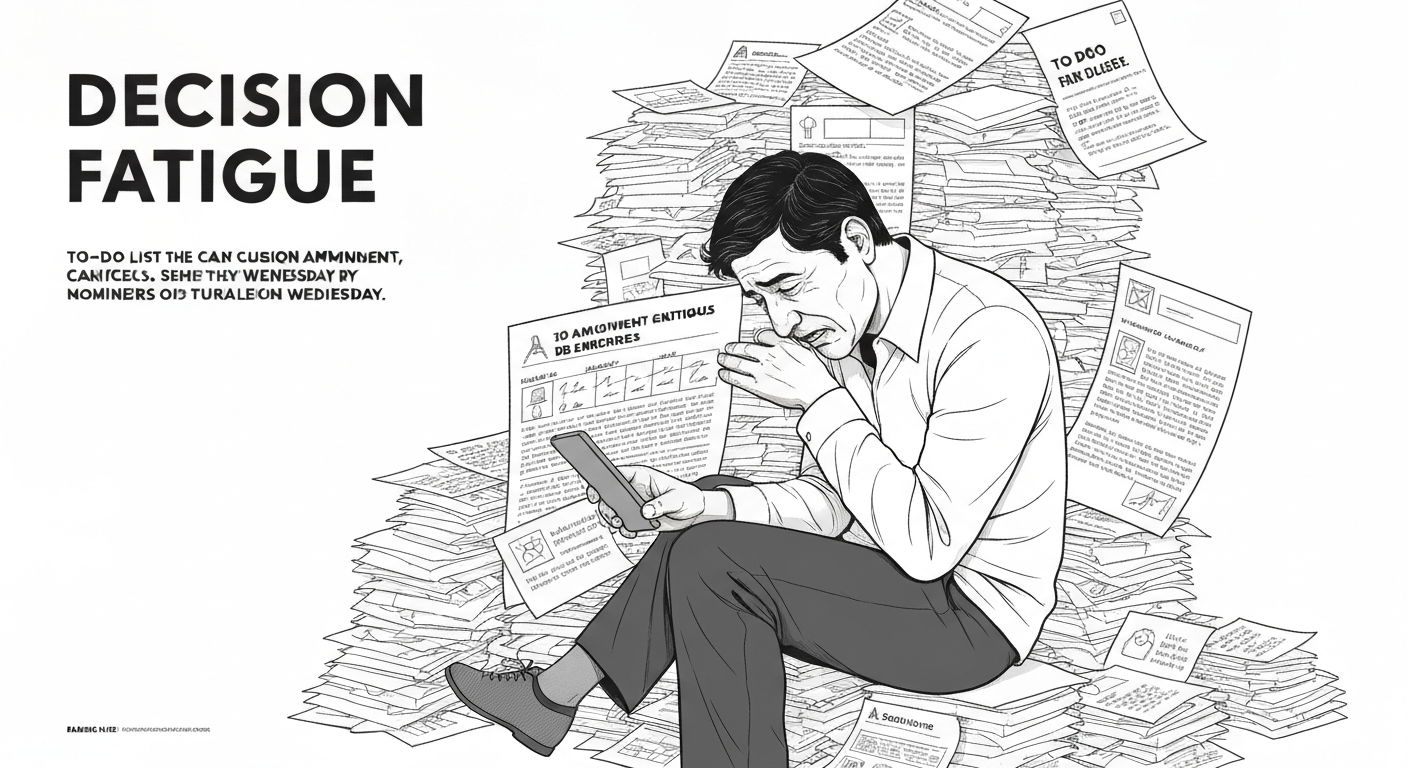
When you struggle to pick a lunch spot by Wednesday afternoon, it feels like a minor inconvenience. But the cumulative effect of constant small choices can erode your confidence, making you question your basic competence. This isn't just about feeling tired; it’s a deeper, often unacknowledged toll on your self-worth, making you feel less capable than you truly are.
Research, like social psychologist Roy Baumeister's work on "ego depletion," highlights that our mental capacity for self-control and decision-making is a finite resource. When this resource is drained, often by mid-week, it leads to poorer choices and increased impulsivity. For example, a well-known 2010 study on Israeli parole judges starkly illustrated this: judges were significantly more likely to grant parole earlier in the day or immediately after a food break, when their decision-making 'tank' was refilled. For you, these compromised choices can fuel a cycle of self-criticism and regret, chipping away at your belief in your own judgment.
"It's not about being indecisive; it's about being mentally *spent*. People think they're failing, but their prefrontal cortex is just screaming 'enough!'" — kindergarten administrator, Toronto
This persistent sense of mental depletion, often peaking as decision fatigue makes even small choices feel impossible by Wednesday, can manifest as a pervasive irritability or anxiety. Recognizing these subtle emotional shifts is the first step toward understanding the deeper impact of your weekly mental load. But how do you know if what you're experiencing is truly decision fatigue, or something else entirely?
Micro-Strategies to Reclaim Your Mental Energy (Before You Hit the Wall)
"We've seen how a few simple shifts can completely change a kindergarten teacher's week. They start Monday feeling empowered, not dreading the endless mini-decisions by Wednesday." — Early childhood program coordinator, VancouverYou can integrate these small, impactful changes into your routine to reduce the constant drain of daily choices. The table below outlines practical strategies and their immediate benefits for preserving your mental resources throughout the week.
| Strategy | How It Works (Example) | Immediate Benefit |
|---|---|---|
| Automate Morning Choices | Pre-plan outfits Sunday. Rotate breakfast menu (e.g., oatmeal M/W/F, toast T/Th). | Reduces early mental load, saving energy for critical tasks. |
| Implement 'Decision-Free Zones' | Designate 9-11 AM for deep work. Defer non-urgent emails until after lunch. | Creates mental breathing room, prevents mid-week overwhelm. |
| Set Clear Boundaries | Practice 'no' to non-essential requests. Delegate data entry tasks. | Protects cognitive resources, reduces external decision pressure. |
| Batch Similar Tasks | Group all email responses for 30 minutes at 1 PM. Process expense reports Thursday mornings. | Streamlines workflow, minimizes cognitive switching costs. |
| Strategic Breaks | Take a 15-minute walk or 5 minutes of mindful breathing after demanding tasks. | Recharges the prefrontal cortex, improves decision quality (mirroring findings from a 2010 study on parole judges). |
Is It Decision Fatigue, Burnout, or Something Else?
Many of us feel generally "off" by mid-week, struggling with simple choices like what to make for dinner or which email to answer first. It's easy to label this feeling as just "exhaustion," but understanding if you're experiencing decision fatigue: why even small choices feel impossible by Wednesday, burnout, languishing, or something else entirely is crucial for finding the right support. Misidentifying the problem can lead to ineffective solutions and prolonged struggle.
"I just kept thinking, 'Why can't I decide what cereal to buy?' It felt so silly, but the mental block was real, and I worried I was just 'lazy' or even depressed." — Senior marketing manager, Calgary
| Condition | Key Characteristics | When You Might Feel It |
|---|---|---|
| Decision Fatigue | Mental exhaustion from the sheer volume of choices; temporary paralysis; improved by rest or reduced decision load. | You feel overwhelmed by daily choices, often peaking mid-week when even small choices feel impossible. |
| Burnout | Chronic stress, emotional exhaustion, cynicism, and reduced efficacy; prolonged over weeks or months. | You experience persistent dread about work or life, complete depletion, and a loss of meaning, feeling 'used up.' |
| Languishing | A sense of stagnation, emptiness, or lack of joy and purpose; not quite depressed, but not thriving. | You feel 'meh,' unmotivated, or detached, but still functional, a quiet despair without severe sadness. |
| Mild Depression | Persistent low mood, loss of interest, changes in sleep/appetite, difficulty concentrating; clinical diagnosis. | Symptoms are more pervasive, impacting daily functioning significantly and consistently for weeks or longer, requiring professional assessment. |
Recognizing these distinctions helps you move past self-judgment and towards targeted strategies. If your struggles primarily revolve around the sheer volume of daily choices impacting your mental energy, especially as the week progresses, it’s likely decision fatigue.
When to Seek Support: Beyond Self-Help Apps and Into Sustainable Well-being
Even with micro-strategies to manage your mental energy, sometimes that feeling of persistent mental exhaustion from daily choices lingers. If you find yourself consistently overwhelmed by even small choices, or if this mental load begins to strain your relationships or significantly impact your work performance for weeks on end, it might be time to consider professional support. This isn't about being in crisis; it's about proactive care for your well-being.
When self-doubt becomes a chronic companion, making you question your fundamental competence rather than just your decision-making ability, that’s a key indicator. Perhaps you've tried self-help apps like MySerenity or simple mindfulness exercises, but they feel insufficient for the depth of your struggle. This persistent 'off-ness' might signal something more, aligning with early signs of burnout or mild depression, as we touched on in a previous section.
Many people find themselves in a unique space: feeling "too well for a therapist, too unwell for a meditation app to be enough." Seeking support from a registered therapist or counsellor in Canada isn't an admission of failure. Instead, it's a powerful, proactive step towards understanding and managing complex mental loads, especially when the persistent feeling of Decision fatigue: why even small choices feel impossible by Wednesday
starts to erode your self-worth. A professional can help you explore underlying factors and develop sustainable well-being strategies tailored just for you.
Frequently Asked Questions
What are the common signs of decision fatigue?
Signs include procrastination, impulsivity, and making poor choices, like a parent in Saskatoon ordering unhealthy takeout because deciding on a meal feels too hard. You might also feel irritable, struggle with focus, or lack motivation for even simple tasks, such as choosing an outfit for work. This mental exhaustion makes even minor decisions feel overwhelming, leading to a sense of being stuck and a general feeling of being drained.
Why do people experience decision fatigue by mid-week?
By Wednesday, the cumulative effect of daily choices, from what to wear to complex work priorities, depletes your finite mental energy. Each small decision, like a teacher in Quebec choosing between two lesson plans, uses cognitive resources. This constant drain, combined with typical workweek demands and personal responsibilities, leaves less capacity for sound judgment. This makes mid-week feel particularly taxing, and choices seem impossible due to depleted mental reserves.
How can I reduce decision fatigue and save mental energy?
To reduce decision fatigue, establish routines for minor choices, like picking out clothes the night before or meal prepping on Sundays. Prioritize your most important decisions for when your energy is highest. Delegate tasks when possible, or pre-make choices for recurring situations. For instance, a small business owner in Vancouver might set a default meeting time, saving mental effort for strategic planning and more impactful decisions.
Is decision fatigue the same as burnout or stress?
Decision fatigue is distinct from burnout or general stress, though it often contributes to both. It specifically refers to the cognitive depletion from making too many choices, leading to poorer judgment and mental exhaustion. Burnout is a broader state of emotional, physical, and mental exhaustion from prolonged stress. While decision fatigue is a symptom of cognitive overload, burnout encompasses a more pervasive sense of cynicism and ineffectiveness across your life.
Can decision fatigue impact my mood and self-esteem?
Absolutely. When decision fatigue sets in, you might make impulsive or regrettable choices, leading to feelings of frustration, guilt, or self-doubt. Repeated poor decisions, like a student in Toronto consistently missing deadlines due to indecision, can erode your confidence and make you question your own judgment. This can significantly impact your mood, fostering irritability and a sense of inadequacy, which then affects your overall well-being and sense of personal effectiveness.
Frequently Asked Questions
What are the common signs of decision fatigue?
Why do people experience decision fatigue by mid-week?
How can I reduce decision fatigue and save mental energy?
Is decision fatigue the same as burnout or stress?
Can decision fatigue impact my mood and self-esteem?
Keep reading
All articles →
Doctor's Guide: Best AI Mental Wellness Apps for High-Achievers
For high-achievers battling burnout and decision fatigue, the real challenge isn't finding an app, but rather discerning which of the "best AI mental wellness apps" offer personalized, evidence-based support beyond simple meditation. These tools address specific stressors like perfectionism or performance anxiety.

High-Achiever's Blueprint: 7 Evidence-Based Anxiety Coping Strategies
Many high-achievers see anxiety as an unavoidable cost of ambition. However, clinically proven evidence based anxiety coping strategies offer significant symptom reduction, refining your internal operating system for success.

Strategic Mood Tracking: How to Effectively Track Your Mood for Burnout & Anxiety Management
Many find basic mood logging unhelpful for preventing burnout. This guide transforms mood tracking into a strategic process for proactive self-management.