

High-Achiever's Blueprint: 7 Evidence-Based Anxiety Coping Strategies
Many high-achievers see anxiety as an unavoidable cost of ambition. However, clinically proven evidence based anxiety coping strategies offer significant symptom reduction, refining your internal operating system for success.

Taming the Inner Storm: Your Blueprint for Evidence-Based Anxiety Relief
Taming the Inner Storm: Your Blueprint for Evidence-Based Anxiety Relief
While many high-achievers assume anxiety is an unavoidable cost of ambition, the surprising truth is that clinically proven evidence based anxiety coping strategies, like Cognitive Behavioural Therapy (CBT) and Mindfulness-Based Stress Reduction (MBSR), offer significant symptom reduction for 60-80% of individuals, according to ongoing research from the NIMH. This isn't about eliminating drive; it's about refining your internal operating system.
You've likely encountered a flood of generic self-help advice, much of which lacks scientific backing and, frankly, feels like another task on an already overflowing to-do list. The frustration is real when widely recommended tactics, like basic meditation, don't "stick" or deliver lasting relief in a demanding role as a senior product manager in Calgary. This blueprint cuts through that noise, offering concrete, actionable methods supported by robust research.
Untreated anxiety doesn't just feel bad; it actively erodes productivity and decision-making, significantly increasing burnout risk in high-pressure environments, as highlighted by a 2017 WHO report on mental health at work. This makes addressing anxiety not a luxury, but a strategic imperative. We're not just giving you a list of techniques; we're providing the 'why' behind each one, empowering you to adapt powerful tools like structured CBT exercises or brief MBSR practices to fit your schedule, rather than adding more stress.
"I needed strategies that weren't just feel-good platitudes. I needed to know the science, to understand *why* something would work before I invested my precious time." — VP of Operations, Vancouver
This approach helps you build a resilient, personalized toolkit. For instance, rather than a vague suggestion to "relax," you'll learn specific CBT techniques to challenge distorted thought patterns that fuel anxiety during a crucial investor pitch. This isn't about slowing down; it's about optimizing your mental performance so you can truly thrive.
Decoding Effectiveness: What Makes a Strategy 'Evidence-Based'?
It's easy to feel lost amidst the sheer volume of advice on managing anxiety, much of it unverified and time-consuming for high-achievers. The true irony is that while many seek quick fixes, the most effective path forward demands a clear understanding of what makes an anxiety coping strategy genuinely reliable: scientific evidence.
Decoding 'Evidence-Based'
Strategies are backed by clinical trials, randomized controlled studies, and meta-analyses, not just anecdotal success stories. This means controlled environments, specific methodologies, and measurable outcomes.
They often stem from established psychological theories like Cognitive Behavioral Therapy (CBT) or Acceptance and Commitment Therapy (ACT), providing a strong theoretical foundation.
Effectiveness is quantifiable, showing specific reductions in anxiety symptoms, improved coping skills, or enhanced quality of life. For instance, CBT studies often report significant symptom reduction in 60-80% of patients.
The strategies consistently produce similar positive results across different populations and settings when applied correctly, a hallmark of scientific validity.
Leading mental health organizations and practitioners widely recognize and recommend these methods. Tools like MySerenity, for example, build their guided exercises on these proven principles.
For someone with a demanding schedule, wasting energy on unproven methods only adds to the stress. This scientific grounding is precisely why evidence based anxiety coping strategies offer a solid foundation, cutting through the noise. It’s disheartening that only 36.9% of those with anxiety disorders receive treatment, according to the ADAA (2023), underscoring the critical need for accessible, proven strategies that can be integrated into daily life.
"When we talk about 'evidence-based,' we're really talking about strategies that have
Core Strategies: CBT Techniques for Daily Anxiety Management
Core Strategies: CBT Techniques for Daily Anxiety Management
Many high-achievers find themselves trapped by their own thought patterns, where the drive for success fuels an underlying anxiety. Cognitive Behavioural Therapy (CBT) offers a structured, evidence based anxiety coping strategies framework to dismantle these patterns, providing concrete techniques you can apply even with a packed schedule.
Cognitive Restructuring: Challenge Your Thoughts
When anxiety strikes, your mind often jumps to worst-case scenarios. Cognitive restructuring involves actively questioning these thoughts. Ask yourself: 'Is this thought fact, or just a feeling?', 'What's the evidence for and against this belief?', or 'What would I tell a friend in this exact situation?'. For example, if you're anxious about a presentation, instead of "I'll definitely fail," consider "I've prepared thoroughly, and even if it's not perfect, I'll learn something."
Behavioral Experiments: Test Your Predictions
Anxiety often makes us avoid situations we fear. Behavioral experiments mean gently testing those fears. If you're worried about networking at an industry event in Calgary, commit to introducing yourself to just one new person. Observe what actually happens. Did your anxious prediction (e.g., "they'll ignore me") come true, or did you have a neutral or even positive interaction? This builds real-world evidence against your fears.
Graded Exposure: Confront Fears Gradually
This technique systematically introduces you to feared situations. If public speaking causes intense anxiety, start by practicing in front of a mirror, then a trusted colleague, then a small team meeting, before a large audience. Each step allows your anxiety to naturally decrease, or 'habituate', showing you that you can tolerate the discomfort. This is not about 'toughing it out', but about controlled desensitization.
Mindfulness & Acceptance: Integrating MBSR and ACT Principles
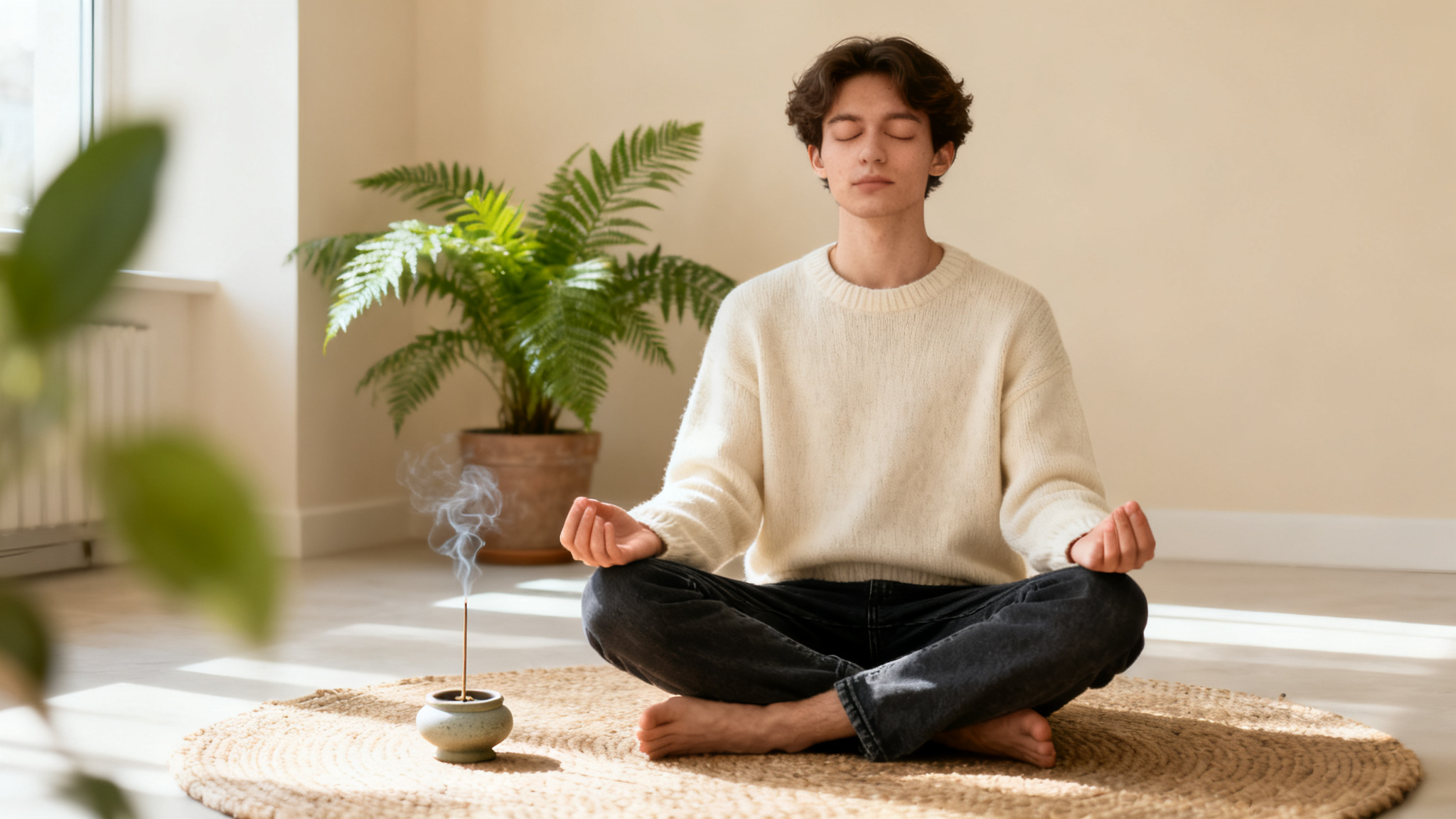
When direct thought challenging feels overwhelming, mindfulness and acceptance-based approaches offer a different path: changing your relationship with anxiety itself. These evidence based anxiety coping strategies, rooted in practices like Mindfulness-Based Stress Reduction (MBSR) and Acceptance and Commitment Therapy (ACT), help you observe anxious thoughts and sensations without getting caught in their current.
Mindful Breathing
Even a 2-5 minute focused breathing exercise can ground you. For instance, a senior kindergarten teacher in Halifax might pause between lessons to simply notice the sensation of air entering and leaving her body, anchoring her to the present moment and reducing the physiological buzz of stress.
Body Scan Meditation
Systematically direct your attention to different body parts, from your toes to your head. Notice any tension, warmth, or tingling without judgment. This practice, even for 10 minutes before a challenging meeting, cultivates present-moment awareness and helps you detach from escalating worries.
Defusion Techniques (ACT)
Learn to 'unhook' from distressing thoughts. Instead of "I am a failure," try "I'm having the thought that I am a failure." This simple rephrasing, a core ACT principle, helps you see thoughts as mental events, not absolute truths. For a project manager at a Vancouver tech firm, this might mean observing a thought about missing a deadline as just a thought, rather than an immediate catastrophe.
Values Clarification (ACT)
Identify what truly matters to you – perhaps growth, connection, or integrity. Committing
You might be surprised to learn that some of the most powerful evidence based anxiety coping strategies aren't complex therapeutic techniques, but rather the bedrock habits of daily living. High-achievers often push lifestyle factors like sleep and nutrition to the back burner, viewing them as expendable luxuries. However, neglecting these fundamentals creates a physiological vulnerability to stress, making other coping mechanisms less effective. The Anxiety & Depression Association of America (ADAA) reported in 2023 that anxiety disorders affect 40 million adults annually in the U.S., underscoring the widespread need for holistic management that starts with the body. Think of optimized sleep, nutrition, and movement not as optional extras, but as critical infrastructure for your nervous system. A senior project manager in Vancouver, for instance, found that consistently hitting 7-8 hours of sleep each night, even when deadlines loomed, dramatically reduced her tendency to ruminate. This wasn't about willpower alone; it was about giving her brain the restorative cycles it needed. Similarly, choosing nutrient-dense meals over quick, sugary fixes stabilizes blood glucose, preventing the energy crashes that mimic anxiety symptoms. Regular physical activity, like a 30-minute brisk walk through an urban park, acts as a potent anxiolytic, releasing endorphins and metabolizing stress hormones. Even adequate hydration plays a role; dehydration can subtly increase feelings of fatigue and unease, exacerbating anxiety. These habits provide a robust buffer, allowing you to approach demanding situations from a place of greater physiological calm and mental clarity. Building this strong physiological foundation doesn't just
Feeling overwhelmed by the sheer volume of anxiety advice online is common, especially when you're short on time and need effective solutions. To cut through the noise, this quick-view comparison highlights core evidence-based anxiety coping strategies, helping you pinpoint which approach aligns best with your immediate needs and long-term goals. This overview reveals that while CBT targets specific thought distortions, MBSR and ACT shift your relationship with difficult internal experiences, and lifestyle factors build foundational resilience. Many high-achievers find combining these evidence based anxiety coping strategies, perhaps using an app like MySerenity for daily CBT exercises alongside a consistent sleep schedule, creates a robust and layered toolkit for managing both acute and chronic anxiety. You know what helps, but fitting it into a packed calendar feels impossible. High-achievers often struggle less with identifying effective strategies and more with consistent implementation. The key is to integrate small, evidence based anxiety coping strategies into your existing routine, rather than attempting large, disruptive overhauls. This approach builds resilience without adding to your mental load. Start with micro-habits: tiny actions you can stack onto established daily tasks. For instance, a 90-second mindful breathing exercise immediately after pouring your morning coffee, or a quick body scan before opening your laptop. Research suggests that integrating new behaviours into existing routines significantly increases adherence. Similarly, time blocking for wellness means treating a 15-minute guided meditation, perhaps using an app like Calm or MySerenity, with the same non-negotiable importance as a client meeting. These dedicated slots, even brief ones, signal to your brain that self-care is a priority, not an afterthought. The World Health Organization's 2017 report on mental health at work highlights that untreated anxiety significantly impacts productivity; managing it is a direct investment in your output. Beyond personal scheduling, look for opportunities to delegate and prioritize. Could a junior team member handle that report? Can a non-urgent email wait until tomorrow? Freeing up mental and physical bandwidth creates space for the restorative practices that genuinely reduce anxiety. Technology can also be a powerful ally; apps like Headspace or MoodMission offer structured, evidence-based CBT exercises and guided meditations. Just ensure they genuinely support your well-being, rather than contributing to screen fatigue.The Power of Lifestyle: Sleep, Nutrition, and Movement as Foundational Coping Tools
The Unsung Heroes: Lifestyle Foundations for Anxiety Resilience
Quick-View Comparison: Choosing Your Evidence-Based Anxiety Toolkit
Feature/Aspect
Cognitive Behavioural Therapy (CBT)
Mindfulness & Acceptance (MBSR/ACT)
Lifestyle Adjustments
Primary Focus
Identifying and restructuring unhelpful thought patterns and behaviours.
Cultivating present-moment awareness; accepting difficult thoughts/feelings without judgment.
Optimizing physical health foundations: sleep, nutrition, movement.
Typical Time Commitment
Structured sessions (e.g., 8-12 weeks) with daily practice (10-30 mins).
Regular daily practice (15-45 mins); often taught in 8-week courses.
Ongoing, integrated into daily routine; requires consistent habit building.
Best for Acute Anxiety
Excellent for immediate symptom reduction and specific phobias.
Effective for reducing reactivity to sudden anxiety spikes.
Supports overall resilience, less direct for acute episodes.
Best for Chronic Anxiety
Highly effective for long-term management and preventing relapse. Studies show 60-80% symptom reduction (NIMH).
Builds long-term emotional regulation and psychological flexibility.
Essential foundational support; reduces overall stress load over time.
Practical Integration: Weaving Evidence-Based Strategies into Your Demanding Life

Practical Integration: Weaving Strategies into Your Demanding Life
"We encourage our team leads to block 20 minutes for 'focus time' or 'mindfulness' in their calendars. It normalizes taking a breath and shows that we value their well-being as much as their deadlines." — HR Director, Tech Startup, Vancouver