

Beyond the Brain Drain: 7 Doctor-Approved Strategies for High-Achievers to Conquer Decision Fatigue
High-achievers, driven by constant decisions, are uniquely vulnerable to decision fatigue. This isn't a lack of willpower, but a physiological 'brain drain' impairing judgment, much like muscle exhaustion.

Beyond the Brain Drain: Conquering Decision Fatigue as a High-Achiever
The irony for many high-achievers is that their exceptional drive, which propels them to make thousands of impactful decisions daily, also renders them uniquely vulnerable to decision fatigue. While the average adult makes countless decisions, often unconsciously, a project manager in Vancouver or a startup founder in Toronto faces higher stakes and greater cognitive load with each choice, leading not just to tiredness but a genuine 'brain drain' that impairs judgment. This isn't about lacking willpower; it's a physiological depletion of finite cognitive resources, much like muscle exhaustion after an intense workout, as research suggests.
You might feel constantly overwhelmed, struggling to maintain focus or make effective choices despite your ambition. This cognitive slowdown often manifests as procrastination or poor judgment, impacting your productivity and mental clarity. Generic self-help advice rarely addresses the specific pressures of your demanding lifestyle, leaving you searching for more robust, evidence-based solutions.
This article moves Beyond the Brain Drain: Doctor-Approved Strategies for High-Achievers to Conquer Decision Fatigue and Boost Mental Clarity. We'll introduce a step-by-step framework – your personal Decision Operating System (DOS) – designed to optimize mental energy and proactively prevent the exhaustion that erodes your peak performance. This isn't just about coping; it's about safeguarding your long-term career, relationships, and overall well-being with a strategic approach.
Understanding Decision Fatigue: Why High-Achievers Are Uniquely Vulnerable
It's easy to dismiss persistent mental exhaustion as simply "being busy," but for high-achievers, the constant drain of decision-making often masks a deeper, more insidious problem: decision fatigue. You might be excelling in your career, yet find yourself staring blankly at a restaurant menu or unable to choose a Netflix show, wondering why your usually sharp mind feels so dull.
Decision Fatigue: The High-Achiever's Silent Drain
The average adult makes thousands of decisions daily, from what to wear to how to respond to an email. Many are unconscious, yet each one consumes a sliver of your finite mental energy.
Research suggests that willpower and decision-making capacity are finite, much like a muscle that tires with overuse. Repeated choices deplete this resource throughout the day.
For high-achievers, every decision often carries higher stakes, greater responsibility, and is compounded by perfectionistic tendencies. A senior manager in a Calgary tech firm, for instance, faces daily choices impacting multi-million dollar projects, rapidly exhausting cognitive reserves.
This depletion manifests as poorer judgment, increased impulsivity in later decisions, procrastination, and a tendency to avoid making choices altogether. You might notice yourself opting for the easiest, rather than the best, path.
Paradoxically, your drive for excellence makes you more susceptible. The constant pursuit of optimal outcomes means you weigh more variables, leading to chronic mental exhaustion even when you appear to be performing well.
Understanding these physiological and neurological underpinnings is crucial. It’s not a lack of intelligence or drive; it's a measurable depletion of cognitive resources. Recognizing this 'brain drain' is the first step toward implementing Beyond the Brain Drain:
Doctor-Approved Strategies for Proactive Decision Management and Cognitive Load Reduction
Many high-achievers find themselves caught in a daily deluge of minor decisions, unwittingly depleting the very mental reserves needed for critical choices. The true irony is that preventing decision fatigue isn't about working harder, but smarter—by proactively offloading the cognitive burden of routine choices, a strategy central to developing your personal Decision Operating System (DOS).
Automate Minor Choices
Implement consistent routines for low-stakes daily tasks. For instance, a senior account manager in Vancouver might wear a pre-selected "work uniform" each day or follow a fixed morning ritual that includes a specific breakfast and coffee preparation. Research suggests that the average adult makes thousands of decisions daily; automating even 5-10 minor ones can free up significant mental energy, preserving it for high-stakes client pitches or strategic planning sessions.
Delegate Effectively
High-achievers, often driven by perfectionism, frequently resist delegating. However, strategically offloading tasks—like administrative duties to an assistant, or specific project components to a team member in a mid-sized tech firm—can drastically reduce cognitive load. A recent study published in the Journal of Applied Psychology indicates that effective delegation improves team productivity by 30% and reduces manager burnout by 15%.
"Trying to do everything yourself isn't a sign of strength; it's a fast track to mental exhaustion." — Project Lead, Calgary Tech Solutions
Implement 'Decision Defaults'
For recurring situations, establish pre-set responses or rules. This means deciding once how you'll handle common scenarios, like responding to non-urgent emails only between 3-4 PM, or automatically declining meeting requests without a clear agenda. These defaults prevent you from re-evaluating options repeatedly, preserving
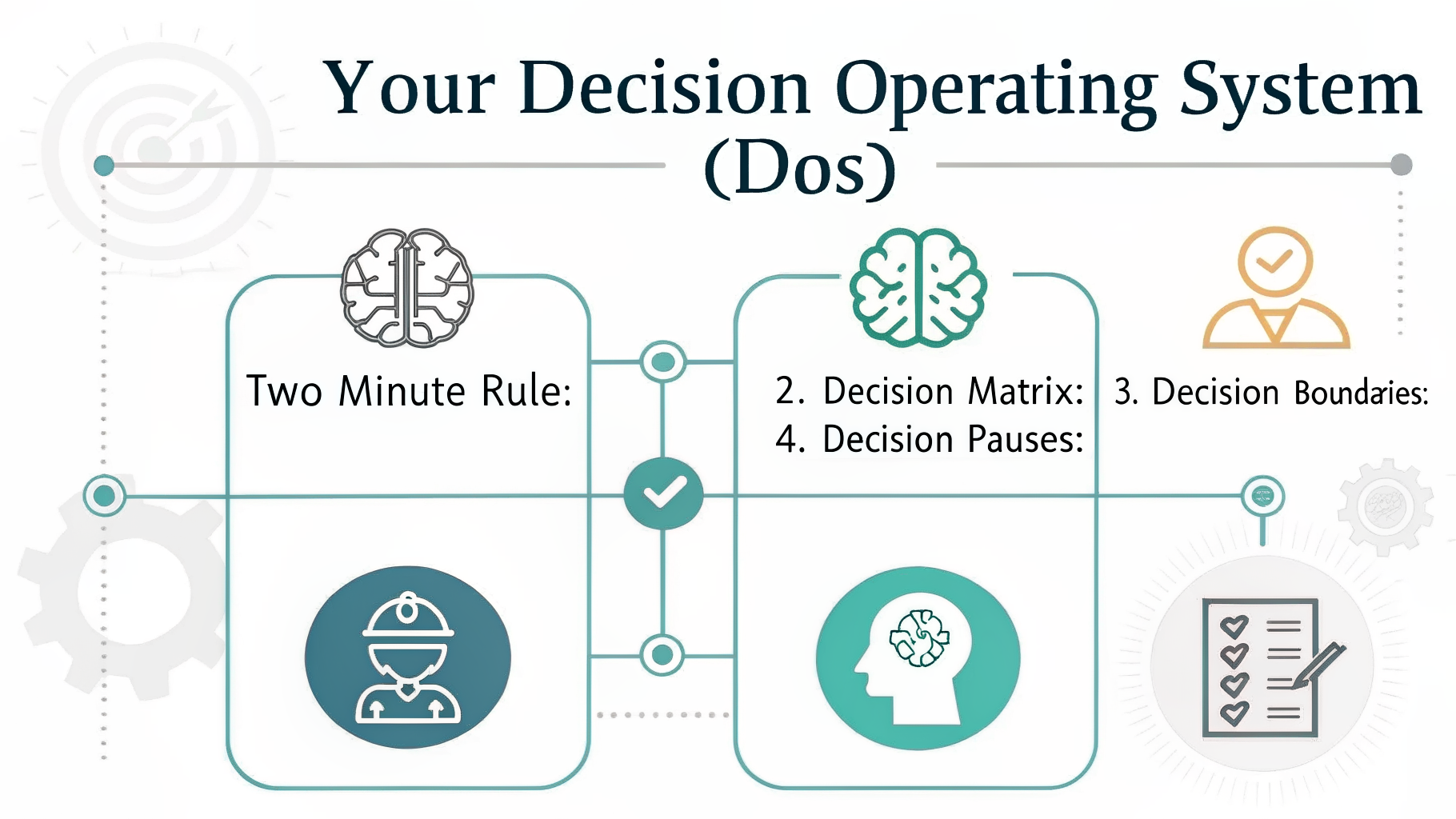
You might find it ironic that to overcome decision fatigue, you need to make a few more decisions – but these are meta-decisions, choices about *how* you'll make future choices. This is the core of your personal Decision Operating System (DOS). High-achievers, from a project manager in Vancouver to a surgeon in Montréal, often feel overwhelmed by the sheer volume of daily decisions, which research indicates can number in the thousands. A DOS provides a structured approach, allowing you to manage this cognitive load proactively and maintain mental clarity. Start by categorizing your decisions. For minor tasks, embrace the 'Two-Minute Rule': if a decision takes less than two minutes to make, do it immediately. This prevents small choices from accumulating into a larger mental burden, a key strategy in Beyond the Brain Drain: Doctor-Approved Strategies for High-Achievers to Conquer Decision Fatigue and Boost Mental Clarity. For more complex, high-stakes choices, employ a structured framework like the Eisenhower Matrix, which helps you prioritize based on urgency and importance, or a simple pros-and-cons list. Crucially, set clear decision boundaries. A marketing director in Calgary, for instance, might dedicate 9-10 AM each Tuesday for strategic planning decisions, protecting the rest of their week from constant mental engagement. Finally, integrate 'Decision Pauses' – brief, intentional breaks before critical choices. This allows for reflection and prevents impulsive decisions driven by end-of-day exhaustion, a common pitfall for those operating at peak performance. Implementing these protocols builds a robust system that not only helps you make better choices but also frees up significant mental energy. By externalizing your decision-making process into a system, you reduce the internal mental effort required, allowing you to sustain focus and creativity
Even with fewer decisions, a high-achiever can still feel mentally foggy if their cognitive engine isn't running optimally. Beyond the Brain Drain: Doctor-Approved Strategies for High-Achievers to Conquer Decision Fatigue and Boost Mental Clarity must include techniques for actively sharpening focus and enhancing mental resilience, not just managing the decision load. This means proactively training your brain to sustain peak performance. Actively incorporating these strategies isn't about adding more to your plate; it's
Many high-achievers mistakenly view rest as a luxury or a sign of weakness, an unproductive pause in their relentless pursuit of goals. Yet, the irony is that genuine recovery isn't a break from peak performance; it's the very foundation upon which sustained high performance is built. Without it, even the sharpest minds will succumb to decision fatigue, struggling with focus and effective choices, eventually leading to the dreaded 'brain drain'. Research consistently shows that willpower and decision-making capacity are finite resources, much like a muscle that fatigues with overuse. For professionals in demanding roles, like a senior architect managing multiple projects in Vancouver or a startup CEO navigating funding rounds, proactive integration of rest is not optional—it's a critical component of their "Decision Operating System" (DOS). Prioritizing adequate, consistent sleep is paramount; it's during deep sleep cycles that the brain actively clears metabolic waste and consolidates memories, directly replenishing the cognitive resources essential for making thousands of daily decisions. Scheduled micro-breaks are equally vital. Instead of pushing through until exhaustion, a 5-10 minute break every 60-90 minutes—perhaps a quick walk around the office in Calgary or a moment of mindful breathing—can reset focus and prevent the cognitive overload that precipitates fatigue. Beyond the Brain Drain: Doctor-Approved Strategies for High-Achievers to Conquer Decision Fatigue and
Many high-achievers find themselves caught in a loop: pushing harder, achieving more, yet feeling an underlying current of exhaustion that reactive coping strategies can't fully address. True resilience against decision fatigue isn't about quick fixes; it's built on a foundation of long-term habits that proactively strengthen your cognitive capacity and mental well-being, moving you Beyond the Brain Drain: Doctor-Approved Strategies for High-Achievers to Conquer Decision Fatigue and Boost Mental Clarity. Integrating regular physical activity is non-negotiable. Even a 30-minute brisk walk daily, like those favoured by busy executives in downtown Montreal, significantly improves blood flow to the brain, enhancing neurogenesis and boosting your resilience against cognitive drain. Moreover, cultivating strong boundaries is essential. Learning to decline non-essential requests – a skill many senior managers at Canadian tech firms struggle with – protects your mental energy from overcommitment. A 2023 study published by the American Psychological Association highlighted that individuals with clear professional boundaries report 40% less perceived stress. Regular self-reflection, perhaps a weekly 15-minute review of your calendar in an app like MySerenity, allows you to identify recurring decision-draining patterns. If persistent overwhelm sets in, seeking professional support from a doctor or therapist in provinces like Alberta, where mental health resources are increasingly integrated into primary care, offers personalized, evidence-based strategies. These long-term habits aren't just about managing today's decisions; they're about building a robust "Decision Operating System" that ensures sustainable high performance and prevents future burnout. Feeling overwhelmed by the sheer volume of choices, even minor ones? High-achievers often struggle to maintain focus and make effective decisions, leading to a frustrating 'brain drain' that impacts productivity. To help you structure your approach, here’s an at-a-glance overview of the core components of a robust Decision Operating System (DOS), designed to provide Beyond the Brain Drain: Doctor-Approved Strategies for High-Achievers to Conquer Decision Fatigue and Boost Mental Clarity. Conquering decision fatigue isn't about working harder; it's about working smarter, by implementing a personalized Decision Operating System (DOS) that respects your finite cognitive resources. Many high-achievers mistakenly believe more effort is the answer, but the reality, as validated by neurological research, is that willpower and decision-making capacity are finite and deplete throughout the day, much like a muscle. Your first step is identifying your biggest pain points: are you overwhelmed by minor daily choices, like what to eat for lunch or which email to answer first? Or do you struggle more with high-stakes, complex decisions affecting your career or major projects? A senior kindergarten administrator in Toronto, for instance, might find their DOS needs to prioritize automating routine classroom management choices to preserve energy for critical parent-teacher interactions. In contrast, a marketing director in Vancouver managing multiple campaigns might focus on delegating smaller tasks to their team, freeing up mental bandwidth for strategic planning. Adequate sleep, balanced nutrition, and strategic breaks are not luxuries; they are critical, doctor-approved components for replenishing cognitive resources and mitigating decision fatigue, as numerous studies on cognitive performance have repeatedly shown. Embracing routines, automating minor choices, and delegating tasks significantly reduce your daily cognitive burden, freeing up mental energy for what truly matters. Tools like MySerenity can help you schedule these breaks and monitor your well-being, but the core principle remains: protect your mental energy. By proactively building cognitive resilience and integrating strategic rest, high-achievers can move Beyond the Brain Drain: Doctor-Approved Strategies for High-Achievers to Conquer Decision Fatigue and Boost Mental Clarity. Ultimately, a well-tuned DOS allows you to achieve sustained mental clarity and well-being, transforming how you approach your demanding lifestyle. This isn'
High-achievers often face an amplified volume of choices, not just in their demanding careers but also in personal pursuits. They frequently optimize every aspect of their lives, from choosing the best school for their children in Calgary to refining a complex project plan at work. This constant pursuit of optimal outcomes, while admirable, depletes finite cognitive resources faster than for others. The sheer number of daily micro-decisions, like prioritizing emails or selecting the ideal workout, accumulates, leading to earlier onset of mental exhaustion. Doctor-approved methods focus on reducing cognitive load. Strategies include "decision batching," where similar tasks, like responding to emails or approving budget requests, are grouped and handled at specific times, much like a busy family physician in rural Alberta dedicates a block for administrative work. Automating routine choices, such as pre-selecting daily outfits or meal plans, also conserves mental energy. Prioritizing the most critical decisions early in the day, when cognitive reserves are highest, helps ensure important choices receive adequate attention before fatigue sets in. Building a personal Decision Operating System (DOS) involves establishing clear rules and routines to automate choices. Start by identifying recurring decisions and creating default actions; for instance, always declining meetings without a clear agenda or using a "two-minute rule" for small tasks. Implement a structured morning routine, like a Toronto-based UX designer might, to eliminate early-day choices about breakfast or exercise. Tools like calendar blocking or specific project management apps can further streamline your day, freeing up mental bandwidth for complex problem-solving. Absolutely. Strategic rest isn't a luxury; it's essential for cognitive restoration. Even short, intentional breaks, like a 20-minute walk in a park near a downtown Montreal office or a brief meditation session, significantly replenish mental resources. Research suggests these periods allow the brain to consolidate information and clear mental clutter, improving focus and problem-solving abilities. Prioritizing adequate sleep—typically 7-9 hours—is foundational, as it directly impacts executive functions and emotional regulation, preventing the cumulative effects of decision fatigue. Yes, recognizing early signs is key. Watch for subtle shifts like increased irritability over minor issues, such as a project manager in Calgary snapping at a colleague about a misplaced file. You might also notice procrastination on simple choices, like deciding what to eat for lunch, or feeling unusually overwhelmed by routine tasks. A decline in focus, making more impulsive decisions, or experiencing a general sense of mental fogginess are also indicators. Paying attention to these cues allows you to implement recovery strategies before reaching full overwhelm. For high-achievers battling burnout and decision fatigue, the real challenge isn't finding an app, but rather discerning which of the "best AI mental wellness apps" offer personalized, evidence-based support beyond simple meditation. These tools address specific stressors like perfectionism or performance anxiety. Many high-achievers see anxiety as an unavoidable cost of ambition. However, clinically proven evidence based anxiety coping strategies offer significant symptom reduction, refining your internal operating system for success. Many find basic mood logging unhelpful for preventing burnout. This guide transforms mood tracking into a strategic process for proactive self-management.Building Your Personal 'Decision Operating System' (DOS) for Peak Performance

Building Your Personal 'Decision Operating System' (DOS) for Peak Performance
Boosting Mental Clarity: Techniques for Sharpened Focus and Sustained Resilience
Clarity-Boosting Techniques
Common Pitfalls
Integrating Strategic Rest and Recovery into Your High-Achiever Lifestyle
Integrating Strategic Rest and Recovery into Your High-Achiever Lifestyle
"Thinking of recovery as an investment, not an expense, transformed how I approach my week. It's not just about avoiding burnout; it's about optimizing my mental output." — Senior product manager, Montreal
Beyond the Daily Grind: Long-Term Habits for Sustainable High Achievement and Well-being

Beyond the Daily Grind: Long-Term Habits for Sustainable High Achievement and Well-being
"You can't pour from an empty cup, and for high-achievers, that cup isn't just about energy; it's about finite decision-making capacity." — Senior HR Director, Vancouver
Recognizing the Early Warning Signs: When Decision Fatigue Becomes Overwhelm
Recognizing the Early Warning Signs: When Decision Fatigue Becomes Overwhelm
Many high-achievers don't notice the creeping onset of decision fatigue until it's already impacting their performance. The irony is that often, the very drive that fuels success also blinds individuals to their own cognitive limits, pushing past subtle signals like increased irritability or a sudden urge to procrastinate on a minor email. It's not just feeling tired; it's a specific depletion of the finite mental energy required for self-regulation and effective choice-making, a phenomenon well-documented in cognitive science.
You might find yourself staring at your inbox, suddenly unable to pick between two meeting times, or snapping at a colleague over a trivial matter. These aren't character flaws; they're physiological red flags. Research consistently shows that willpower and decision capacity are finite resources, similar to a muscle that fatigues with overuse. For a senior project manager in Vancouver, this could manifest as delaying critical vendor selections, or for a startup founder in Calgary, making impulsive hiring choices they later regret, rather than the thoughtful, strategic decisions they're known for.
"I used to think my brain fog was just a bad night's sleep. But when I started avoiding simple choices like what to have for dinner, I realized it was deeper. My ability to lead was suffering." — Marketing Director, Montreal
Learning to spot these early indicators is crucial for high-achievers to proactively manage their mental state, turning a reactive struggle into a proactive strategy. This self-assessment forms the foundation of a robust "Decision Operating System" (DOS) – an essential component of Beyond the Brain Drain: Doctor-Approved Strategies for High-Achievers to Conquer Decision Fatigue
Your DOS at a Glance: A Comparison of Strategies for Mental Clarity
Strategy Focus
Primary Benefit
Key Actions
Best Application
Difficulty
Proactive Decision Management
Reduces daily cognitive load
Automate routines, Delegate tasks, Batch minor choices
Preventing overwhelm from everyday decisions, like meal planning or email responses.
Low to Medium
Building Your Personal DOS
Structures complex decision-making
Implement Decision Matrix, Set firm boundaries, Integrate "decision pauses"
Navigating high-stakes professional choices or significant personal commitments.
Medium
Boosting Mental Clarity
Enhances focus & cognitive resilience
Mindfulness practices, Dedicated deep work blocks, Nutrient-rich diet
Sustaining peak performance during demanding projects or long workdays.
Medium
Strategic Rest & Recovery
Replenishes cognitive resources
Prioritize adequate sleep, Take micro-breaks, Implement digital detox periods
Preventing burnout and recovering from intense periods of decision-making, like after a major project launch.
Medium
Long-Term Habits
Sustainable well-being & resilience
Regular exercise, Clear personal/professional boundaries, Consistent reflection
Mitigating chronic fatigue and fostering holistic mental health over months and years.
High
Recognizing Early Signs
Timely intervention for fatigue
The Doctor's Verdict: Tailoring Your DOS to Conquer Decision Fatigue
Frequently Asked Questions
Why are high-achievers more prone to decision fatigue?
What are doctor-approved methods to manage decision fatigue?
How can I build a personal 'Decision Operating System' (DOS) for better focus?
Can strategic rest and recovery truly boost mental clarity for busy professionals?
Is there a way to recognize early signs of decision fatigue before it becomes overwhelm?
Frequently Asked Questions
Why are high-achievers more prone to decision fatigue?
What are doctor-approved methods to manage decision fatigue?
How can I build a personal 'Decision Operating System' (DOS) for better focus?
Can strategic rest and recovery truly boost mental clarity for busy professionals?
Is there a way to recognize early signs of decision fatigue before it becomes overwhelm?
Keep reading
All articles →
Doctor's Guide: Best AI Mental Wellness Apps for High-Achievers

High-Achiever's Blueprint: 7 Evidence-Based Anxiety Coping Strategies

Strategic Mood Tracking: How to Effectively Track Your Mood for Burnout & Anxiety Management