

The High-Achiever's Brain on Burnout: Rewiring for Sustained Performance
High-achievers often mistake burnout for a badge of honour, dismissing early symptoms as mere fatigue. However, burnout is a profound neurological dysregulation stemming from chronic stress, a serious physiological state.

What Burnout Really Is: A Neurological Perspective Beyond Just 'Feeling Tired'
Many high-achievers mistakenly believe burnout is simply a badge of honour for hard work, often dismissing early symptoms as temporary fatigue rather than a serious physiological state. This overlooks a critical distinction: burnout, recognized by the World Health Organization (WHO) in ICD-11 (2019) as an occupational phenomenon, is not just feeling tired; it’s a profound neurological dysregulation stemming from chronic stress, fundamentally different from a bad night’s sleep or a demanding week at a firm like Deloitte Canada.
For high-achievers, the journey to understanding The High-Achiever's Brain on Burnout: Understanding the Neuroscience Behind Exhaustion and How to Foster Recovery often begins with a profound sense of confusion. Unlike acute stress, which might spike before a major presentation or a tight deadline at a tech startup in Vancouver, burnout represents a prolonged siege on the brain. This sustained activation of the hypothalamic-pituitary-adrenal (HPA) axis, the body's central stress response system, eventually alters cortisol patterns and desensitizes reward pathways, leading to anhedonia and a pervasive lack of motivation.
The insidious nature of burnout for ambitious individuals lies in its gradual onset, often masked by their drive. A senior marketing manager in Toronto might attribute their growing cynicism or inability to focus to "just being busy," pushing through until the point of severe exhaustion. This dismissal of early warning signs, such as persistent irritability or difficulty concentrating on complex tasks, prevents timely intervention. Understanding that burnout is a physiological response, not a personal failing, is the first step toward strategic brain rewiring.
This neurological perspective is vital because it shifts the narrative from blame to biology. High-achievers, often prone to perfectionism and a strong internal locus of control, tend to internalize burnout as a personal inadequacy. Recognizing it as a complex state helps them approach recovery with the same strategic, evidence-based mindset they apply to their professional goals, fostering not just rest, but resilience through practices like those offered by MySerenity.
The Brain Under Siege: How Chronic Stress and Burnout Physically Alter Your High-Achiever Brain
The Brain Under Siege: How Chronic Stress Physically Alters Your High-Achiever Brain
You might believe your exhaustion is just a signal to work harder or take a short break, but the truth is more profound: chronic stress doesn't just make you feel bad; it physically alters the structure and function of key brain regions. This isn't merely about feeling overwhelmed; it's about measurable changes in the very organ you rely on for peak performance. Many high-achievers, like a senior product manager in Calgary pushing 70-hour weeks, often dismiss early fatigue, only realizing the depth of the issue when their cognitive edge starts to dull.
Prolonged exposure to stress hormones, particularly cortisol, can lead to significant changes. Research suggests the prefrontal cortex, vital for executive functions like planning, complex decision-making, and impulse control, can show reduced volume and altered connectivity. Imagine trying to strategize a multi-million dollar project when the very part of your brain responsible for that foresight is under siege. Similarly, the hippocampus, essential for memory formation and learning new skills, can shrink under these conditions. This contributes directly to the "brain fog" and difficulty retaining new information that many experiencing The High-Achiever's Brain on Burnout: Understanding the Neuroscience Behind Exhaustion and How to Foster Recovery report.
Beyond structural shifts, chronic stress dysregulates the hypothalamic-pituitary-adrenal (HPA) axis, your body's central stress response system. This leads to altered cortisol patterns—sometimes too high, sometimes too low—which further damage brain cells and impair neuroplasticity, the brain's ability to adapt and form new connections. For someone whose identity is tied to their cognitive prowess, this can feel like a devastating, permanent loss of their competitive edge.
Key Brain Regions and Neurotransmitters Involved in High-Achiever Exhaustion
It's often surprising to high-achievers that their relentless drive, while a source of success, can also be a direct pathway to neurological changes associated with burnout. The very brain mechanisms that power ambition can become dysregulated under chronic stress, fundamentally altering how you think, feel, and perform. Understanding these shifts is key to truly recovering from The High-Achiever's Brain on Burnout: Understanding the Neuroscience Behind Exhaustion and How to Foster Recovery.
Burnout isn't just a feeling; it's a physiological state involving specific brain regions and neurotransmitters. This table outlines key players and their typical dysfunctions in high-achiever exhaustion.
| Brain Region / Neurotransmitter | Role in Healthy Function | Impact in Burnout |
|---|---|---|
| Prefrontal Cortex (PFC) | Executive functions: focus, planning, decision-making, emotional regulation. | Reduced activity, impaired working memory, difficulty concentrating, poor impulse control. Research indicates structural changes with chronic stress. |
| Amygdala | Processes emotions, especially fear and anxiety; threat detection. | Hyperactivity, leading to heightened anxiety, irritability, and an exaggerated stress response even to minor stressors. |
| Hypothalamic-Pituitary-Adrenal (HPA) Axis | Regulates stress response by releasing cortisol. | Chronic activation, leading to dysregulated cortisol rhythms, disrupting sleep, mood, and energy. |
| Dopamine (Reward Pathways) | Motivation, pleasure, reward-seeking behaviour. | Desensitization, contributing to anhedonia (inability to feel pleasure) and profound lack of motivation, even for once-enjoyable tasks. |
| Serotonin | Mood stability, well-being, sleep. | Imbalance, often leading to increased feelings of sadness, anxiety, and sleep disturbances common in burnout. |
These interconnected changes explain why burnout symptoms extend far beyond simple tiredness, affecting core cognitive and emotional processes.
The personality traits common among high-achievers, such as perfectionism and a strong internal locus of control, can inadvertently fuel these neurological changes. For instance, the constant striving for flawlessness keeps the HPA axis on high alert, creating a feedback loop that exacerbates dysregulation.
Subtle Signs Your High-Achiever Brain is Signaling Burnout (Before It's Too Late)

Many high-achievers discover burnout not through a sudden crash, but through a creeping sense of unease they often dismiss as "just a bad week" or a temporary dip in their usual drive. The irony is that the very traits that fuel their success—perfectionism, relentless drive, and a strong internal locus of control—also blind them to early warning signals. They internalize these subtle shifts, believing it's a personal failing rather than a physiological response to chronic stress, delaying critical intervention.
Before the full force of exhaustion hits, your high-achiever brain sends out quieter distress signals. Persistent cognitive fatigue, for instance, isn't just feeling tired; it’s when mental tasks that once felt easy, like analyzing a complex report or leading a strategic meeting, now demand disproportionate energy, even after a full night's sleep. This points to an overtaxed prefrontal cortex, struggling with executive functions. You might also notice a creeping cynicism or emotional detachment towards work or colleagues, a sign of emotional exhaustion taking root, often tied to changes in the brain's reward pathways that dampen dopamine sensitivity.
The precision and efficiency you pride yourself on begin to falter. A senior marketing director in Vancouver might notice they're missing small details in campaign reports or struggling to recall client names, impacting their usual sharp decision-making. This decline in focus, memory, and cognitive agility isn't a character flaw; it's a measurable reduction in brain function. Furthermore, activities that once brought you genuine satisfaction—a favourite hobby, time with family—start to feel bland, reflecting a desensitization of your brain's reward system. Recognizing these shifts is the first step in addressing The High-Achiever's Brain on Burnout: Understanding the Neuroscience Behind Exhaustion and How to Foster Recovery.
Understanding these subtle, often-ignored cues is paramount, as they are early indicators that your brain is struggling, not merely that you need a stronger coffee. Ignoring them only pushes your system further into dysregulation, making recovery a more arduous process. The next step is to understand the deeper neurological changes occurring when these signals are present.
Rewiring for Resilience: Science-Backed Strategies to Heal and Optimize Your Brain Post-Burnout
For the ambitious individual, recovery from burnout isn't about passive waiting; it’s an active, strategic process of rewiring your brain. This approach moves beyond simply resting, focusing instead on science-backed methods to heal, rebuild resilience, and optimize brain function for sustained high performance, directly addressing the core issues of The High-Achiever's Brain on Burnout: Understanding the Neuroscience Behind Exhaustion and How to Foster Recovery.
Engage in Targeted Stress Reduction
Mindfulness meditation, for example, is more than just relaxation. Research indicates consistent practice can increase grey matter density in areas like the prefrontal cortex and hippocampus, brain regions often impacted by chronic stress and burnout. A 2011 study published in Psychiatry Research: Neuroimaging showed just eight weeks of mindfulness-based stress reduction led to measurable changes in these areas, enhancing executive function and emotional regulation.
Implement Strategic Downtime
High-achievers often struggle with guilt during breaks. Strategic downtime means actively disengaging, not just pausing. This could be a 30-minute walk in a local park, focusing on the surroundings, or engaging in a hobby like painting. The goal is to consciously shift your brain's attention away from work-related processing, allowing the default mode network to activate and facilitate creative problem-solving and mental restoration, rather than simply idling.
Prioritize Consistent, High-Quality Sleep
Sleep is not a luxury; it's essential for brain repair. During deep sleep, the brain clears metabolic waste products, consolidates memories, and helps regulate the HPA axis, which controls stress response. Aim for 7-9 hours nightly. Even a senior executive in Calgary understands that sacrificing sleep for an early start can undermine an entire week's cognitive performance.
Adopt Cognitive Restructuring Techniques
Burnout often fuels perfectionistic thought patterns and an identity tied solely to output. Tools from Cognitive Behavioural Therapy (CBT) can help challenge these beliefs.
Fostering Neuroplasticity: Practical Steps for Brain Repair and Enhanced Cognitive Function

Fostering Neuroplasticity: Practical Steps for Brain Repair and Enhanced Cognitive Function
Recovery from burnout isn't just about resting; it's an active process of brain repair, leveraging neuroplasticity to rebuild and strengthen neural pathways. For the high-achiever, this means strategically engaging your brain to form new, healthier connections, counteracting the structural changes chronic stress can inflict on areas like the prefrontal cortex and hippocampus. You're not merely recovering lost function; you're building a more resilient brain capable of sustained performance, even after experiencing the depths of high-achiever burnout. To actively foster this brain repair, consider targeted strategies. Deliberate learning, for instance, means engaging in novel, complex tasks – not just passive consumption. A project manager in Vancouver might learn a new programming language, or a senior engineer in Calgary could take up a musical instrument. These activities actively stimulate neurogenesis and strengthen neural networks. Additionally, brain-boosting nutrition is foundational; focus on foods rich in omega-3 fatty acids (like salmon or flaxseeds), antioxidants (berries, dark leafy greens), and B vitamins (eggs, legumes). These provide the necessary building blocks for neuronal health and function, directly supporting the brain's ability to reorganize itself.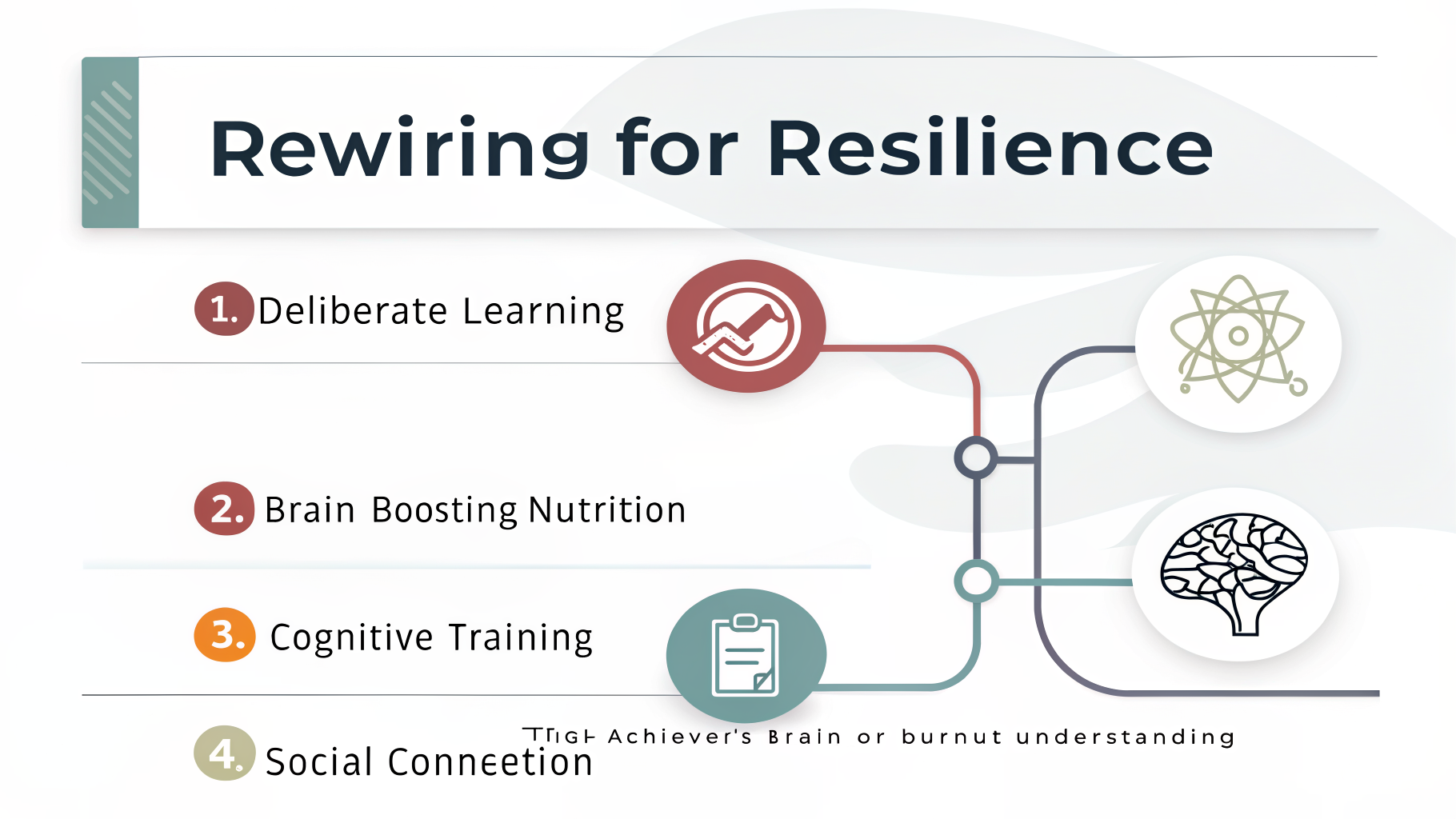
The High-Achiever's Blueprint: Preventing Burnout Relapse and Sustaining Peak Performance
Preventing Relapse: Sustaining Performance Without the Burnout Cycle
Many high-achievers find themselves caught in a frustrating loop: recover from burnout, only to slide back into old habits that trigger a relapse. The real challenge isn't just recovering, but fundamentally rewiring for sustained peak performance by building resilience *into* your ambitious lifestyle.Building Resilience Proactively
- Non-Negotiable Boundaries: Establish clear, protected blocks for personal life. This means no emails after 6 PM or work calls on weekends, like a senior marketing director in Calgary might schedule. Protecting this recovery time prevents the gradual creep of overwork, which the WHO recognizes as a key contributor to occupational burnout.
- Decouple Self-Worth from Output: Consciously separate your identity from continuous achievement. Acknowledge that your value isn't solely tied to your latest project win at a Vancouver tech firm. This reframing alleviates the internal pressure and fear of slowing down, a common psychological barrier for high-achievers.
- Burnout Early Warning System: Implement a personal "check-in" system. Regularly ask yourself: "Am I feeling the familiar mental fog or irritability?" Having pre-planned micro-interventions, like a 15-minute walk or a brief meditation, can halt the progression of subtle symptoms.
- Diversify Fulfillment: Cultivate interests outside of work. Whether it's coaching a youth soccer team in Edmonton or learning a new language, these alternative sources of satisfaction reduce the impact of work-related stressors on your overall well-being and dopamine pathways.
- Robust Support Network: Build connections with peers, mentors, or professionals who understand the high-achiever mindset. A monthly accountability call with a trusted mentor in Montreal can provide crucial perspective and support, helping you maintain a balanced approach.
Risks of Inaction
- The "Slow Creep" Backlash: Without clear boundaries, work demands gradually expand, eroding personal time and leading to a silent return of chronic stress, which dysregulates the HPA axis.
- Identity Crisis: If self-worth remains solely tied to achievement, any reduction in output, even for recovery, can trigger guilt, anxiety, and a feeling of failure, making sustainable change difficult.
- Ignoring Subtle Signals: Missing early warning signs means you only address burnout when it's severe, requiring longer recovery and potentially leading to more pronounced structural changes in the prefrontal cortex.
- Over-Reliance on Work: When work is your sole source of fulfillment, any setback or stressor there can disproportionately impact your entire emotional and psychological landscape.
- Isolation and Lack of Perspective: Without a support system, high-achievers often internalize struggles, missing external accountability and objective insights crucial for navigating recovery and preventing relapse.
Beyond Recovery: Building a Burnout-Proof Brain for Future Success
Beyond Recovery: Building a Burnout-Proof Brain for Future Success
Many high-achievers find themselves caught in a loop: recover from burnout, only to slide back into old patterns that lead to exhaustion again. The real shift isn't just about recovering; it's about actively re-engineering your brain for sustained resilience. This means moving past the initial healing phase of The High-Achiever's Brain on Burnout: Understanding the Neuroscience Behind Exhaustion and How to Foster Recovery and building proactive strategies into your daily life, transforming your brain's default settings to resist future stressors.
A critical step is embracing "proactive rest" as a performance enhancer, not a weakness. For someone accustomed to constant output, taking a strategic break can feel counterintuitive, almost like admitting defeat. Yet, research, including insights from the World Health Organization's recognition of burnout as an occupational phenomenon (ICD-11, 2019), underscores that sustained cognitive output without recovery periods leads to a desensitization of the brain's reward pathways, particularly those involving dopamine. This makes it harder to feel motivated and engaged. Strategic breaks, like a 20-minute walk through a park in downtown Vancouver or dedicating Saturday mornings to a hobby, replenish neurochemical reserves and bolster the prefrontal cortex, crucial for executive function.
Cultivating psychological flexibility is another cornerstone. High-achievers often exhibit perfectionism and a strong internal locus of control. While these traits drive success, they can also heighten burnout risk. When a project at a Montreal-based tech firm hits a snag, a rigid mindset can trigger chronic stress responses. Instead, a flexible approach allows for adaptation, reducing the sustained activation of the HPA axis (hypothalamic-pituitary-adrenal axis), which is a key neuroendocrine feature of chronic stress.
Ultimately, building a burnout-proof brain requires redefining what success looks like. It's not just about hitting targets; it's about achieving them sustainably, with your well-being intact. This proactive stance, integrating strategies like those found in programs such as MySerenity, prepares your brain not just to recover, but to thrive long-term.
Your High-Achiever Burnout Questions Answered
When you're driven, questions about burnout often come with a layer of anxiety: about permanent damage, about losing your edge, or about the shame of needing to slow down. It’s crucial to understand the science behind these concerns to foster genuine recovery.
Your High-Achiever Burnout Questions Answered
While chronic stress can lead to structural changes in areas like the prefrontal cortex and hippocampus, the brain’s neuroplasticity means significant recovery and even enhanced function are possible. Your brain can, and will, reorganize itself with targeted strategies.
Recovery timelines vary widely. Actively engaging with neuroplasticity-fostering strategies, such as those offered by platforms like MySerenity, can show noticeable improvement within months, though full optimization is an ongoing journey.
No single "magic pill" exists. However, Omega-3s, B vitamins, and adaptogens like Ashwagandha can support brain health and stress response. Always integrate these with significant lifestyle changes and consult a healthcare professional in British Columbia or your local province.
Integrate strategic, non-negotiable rest. Set firm boundaries around work, even when a major project looms. Regularly assess your energy levels and course-correct early. This allows you to channel ambition sustainably without depleting your brain’s resources or desensitizing dopamine pathways.
Absolutely. By understanding the neuroscience behind exhaustion, particularly for high-achievers, and proactively implementing resilience-building strategies, sustained high performance without the cost of burnout becomes achievable. It’s about working smarter with your brain, not just harder.
The World Health Organization (WHO) defines burnout as an occupational phenomenon, marked by exhaustion, cynicism, and reduced efficacy at work. Depression, while often co-occurring, involves pervasive low mood and anhedonia across all life domains, with distinct neurological markers like widespread neurotransmitter imbalances beyond the HPA axis dysregulation typical of burnout.
Addressing these common questions clarifies that recovery from The High-Achiever's Brain on Burnout: Understanding the Neuroscience Behind Exhaustion and How to Foster Recovery isn't about giving up ambition.
Frequently Asked Questions
What happens to a high achiever's brain during burnout?
During burnout, a high achiever's brain experiences chronic stress, leading to an overactive amygdala (the brain's alarm centre) and reduced activity in the prefrontal cortex, which handles planning and decision-making. This constant stress also depletes neurotransmitters like dopamine and serotonin, essential for motivation and mood regulation. The hippocampus, crucial for memory, can even shrink. This creates a cycle of fatigue, poor concentration, and emotional dysregulation, making it difficult to maintain high performance.
How does high-achiever burnout impact brain function?
High-achiever burnout significantly impairs core brain functions. You might notice a decline in executive functions, like difficulty concentrating on complex tasks or making sound decisions, due to reduced prefrontal cortex activity. Emotional regulation also suffers, leading to increased irritability or emotional numbness, as the amygdala remains on high alert. Memory recall can become sluggish, and sustained attention becomes nearly impossible, hindering the very performance high achievers strive for.
Can you spot burnout early in high performers?
Spotting early burnout in high performers requires looking beyond obvious exhaustion. Initial signs often include subtle shifts: increased cynicism towards work, unusual difficulty delegating tasks, or a sudden drop in creative problem-solving. They might become more withdrawn in team meetings or show uncharacteristic irritability when challenged. Physically, persistent headaches or sleep disturbances, despite feeling tired, can also signal that the brain is struggling to cope with sustained pressure.
How can I heal my brain after high-achiever burnout?
Healing your brain after high-achiever burnout involves intentional recovery. Prioritize consistent, restorative sleep to allow neural repair and neurotransmitter replenishment. Engage in regular, moderate physical activity, like a 30-minute walk, which boosts neurogenesis and reduces stress hormones. Mindfulness practices, such as daily meditation, can help calm an overactive amygdala and rebuild prefrontal cortex function. Re-establishing social connections and setting clear boundaries around work are also crucial for long-term neural recovery.
Is it possible to build a burnout-proof brain?
While no brain is entirely "burnout-proof," you can build significant resilience. This involves cultivating habits that protect your neural systems. Regular breaks throughout the day, like a 10-minute stretch, prevent chronic stress accumulation. Practicing self-compassion reduces the internal pressure often driving high achievers. Developing strong emotional regulation skills and diversifying your sources of self-worth beyond professional achievements create a more robust mental framework, making your brain less susceptible to exhaustion.
Frequently Asked Questions
What happens to a high achiever's brain during burnout?
How does high-achiever burnout impact brain function?
Can you spot burnout early in high performers?
How can I heal my brain after high-achiever burnout?
Is it possible to build a burnout-proof brain?
Keep reading
All articles →
Stress or Burnout? A Self-Check for Driven Professionals
Exhaustion is not automatically burnout, and that distinction matters. This self-check walks you through the markers that separate ordinary work stress from a pattern you can no longer manage on your own.

How to Recognize Decision Fatigue Before It Derails Your Day
Your small choices may cost more energy than your big ones, and the research behind decision fatigue is messier than most articles admit. This guide shows how to spot the warning signs early and lighten your daily load with practical habits.

Burnout or Rustout? High-Achievers' Self-Diagnosis Guide
High-achievers often misinterpret professional unease as simple exhaustion, overlooking the critical distinction between burnout and rustout. This misdiagnosis leads to ineffective solutions, leaving them feeling even more stuck.