Beyond Exhaustion: The #1 Root Cause of Burnout (800k Workers) & High-Achievers' Energy
Many high-achievers face perpetual exhaustion because traditional burnout advice misses the core issue. Gallup's study of 800,000 workers reveals the #1 root cause of burnout is unfair treatment, not just overwork.
Beyond Exhaustion: Why Your Current Burnout Solutions Aren't Working for High-Achievers
Beyond Exhaustion: Why Your Current Burnout Solutions Aren't Working for High-Achievers
Many high-achievers find themselves stuck in a cycle of perpetual exhaustion, not because they aren't working hard enough on self-care, but because traditional burnout advice often misidentifies the core issue. The #1 root cause of burnout, as revealed by Gallup's extensive 2018 study involving 800,000 workers, isn't just overwork; it's unfair treatment at work. This surprising finding suggests that strategies focused solely on ‘taking a break’ or ‘slowing down’ will fall short if the underlying systemic issues of inequity and lack of recognition remain unaddressed for high-achievers trying to reclaim their energy.
You've likely felt more than just tired. Burnout often manifests as cynicism, a reduced sense of personal accomplishment, and an emotional detachment from your work. A senior marketing manager in Vancouver, for instance, might diligently practice mindfulness and ensure eight hours of sleep, yet still feel utterly depleted by Tuesday because her contributions are consistently overlooked in favour of a less productive colleague. This isn't a problem a weekend getaway can fix.
The common narrative around burnout – “just do less” – rarely resonates with high-achievers. Your identity, momentum, and even self-worth might be deeply intertwined with your professional output. To suggest “less work” can feel like a direct threat to your success, your career trajectory, and even your sense of purpose. This disconnect leads to immense frustration; you’re trying to solve a complex problem with tools that don't fit.
"We tell people to manage their stress, but we're often asking them to manage the symptoms of a much deeper, organizational illness. It's like giving someone a band-aid for a broken bone." — HR director, Calgary
For high-achievers, the struggle often feels isolated. Your drive and apparent capability can mask internal struggles, making you resistant to generic solutions that don't acknowledge your unique situation. This section aims to challenge those easy answers, preparing you to understand the data-backed explanation for why your current efforts to combat burnout haven't yielded lasting results, particularly when addressing “Beyond Exhaustion: The #1 Root Cause of Burnout (Backed by 800,000 Workers) and How High-Achievers Can Reclaim Their Energy.” We need to move past symptom management to address the actual drivers of your exhaustion.
The '800,000 Worker' Revelation: Unpacking the #1 Root Cause of Burnout (Lack of Fairness & Recognition)
Many high-achievers assume their exhaustion stems purely from an overwhelming to-do list, yet groundbreaking research points to a more insidious culprit. The true root cause of burnout, as revealed by an extensive Gallup study involving 800,000 workers, isn't just the volume of tasks, but a profound lack of fairness and recognition at work.
This insight challenges the common belief that simply working too much is the primary driver. While unmanageable workload certainly contributes, the 2018 Gallup analysis, and subsequent research, identified five key factors predicting burnout. Crucially, "unfair treatment at work" emerged as the strongest predictor among them, even surpassing the impact of sheer hours logged. This goes a long way in explaining why many feel confused about the true underlying cause of their burnout, beyond just 'too much work'.
The study underscored that perceived injustice and unacknowledged contributions are more potent triggers for burnout than the sheer volume of tasks. Consider a senior software engineer in Vancouver, consistently delivering complex projects ahead of schedule, only to see less productive colleagues receive promotions or public praise. This repeated experience of inequity chips away at their morale far more than any single project deadline.
"It's not just about the hours anymore; it's about whether those hours feel valued and fairly compensated. That's the real breaking point for many." — HR Director, Calgary
Globally, the scale of this issue is immense, with a 2019 Deloitte survey indicating that 76% of employees experience burnout on the job at least sometimes. This widespread impact highlights that the problem extends beyond individual coping mechanisms; it reflects systemic issues within workplace cultures that often overlook the human need for equity and acknowledgement. Understanding this core driver is the first step in moving Beyond Exhaustion: The #1 Root Cause of Burnout (Backed by 800,000 Workers) and How High-Achievers Can Reclaim Their Energy.
The following table illustrates the key drivers of employee burnout, based on extensive research, emphasizing the unexpected weight of fairness and recognition:
Burnout Driver
Impact Level (Gallup Research)
Example Scenario
Unfair Treatment at Work
Highest Predictor
A marketing manager's ideas are consistently dismissed, then later adopted by a male colleague and praised.
Unmanageable Workload
Significant
A teacher in Prince Edward Island is assigned two new courses without additional planning time.
Lack of Role Clarity
Moderate-High
A new project coordinator isn't sure who to report to for specific tasks, leading to duplicated effort.
Lack of Manager Support
Moderate
A sales associate struggles with a difficult client, but their team lead offers no guidance or intervention.
Unreasonable Time Pressure
Moderate
A graphic designer is given a 24-hour deadline for a complex campaign that typically takes a week.
Why High-Achievers Are Especially Vulnerable to This Root Cause: The Psychology of Unacknowledged Effort
Why High-Achievers Are Especially Vulnerable to This Root Cause: The Psychology of Unacknowledged Effort
Many high-achievers find themselves caught in a silent struggle, not just from the volume of work, but from the invisible burden of unacknowledged contributions. The irony is that the very traits driving their success—dedication, a strong work ethic, and a deep investment in outcomes—also make them uniquely vulnerable when their efforts go unnoticed or are met with unfair treatment. A senior project manager in Vancouver, for instance, might consistently deliver projects ahead of schedule, yet feel a profound sense of injustice when a less productive colleague receives public praise or a promotion. This dynamic goes far Beyond Exhaustion: The #1 Root Cause of Burnout (Backed by 800,000 Workers) and How High-Achievers Can Reclaim Their Energy.
The psychology at play here is complex. High-achievers often tie their self-worth directly to their professional output and the recognition it garners. When that external validation is absent, or worse, when their contributions are unfairly dismissed, it triggers a heightened sense of injustice. They expect a meritocratic system where hard work and exceptional results are rewarded, and the absence of such rewards feels like a personal affront. This group frequently struggles with setting firm boundaries, making it difficult to decline extra tasks even when overloaded. This tendency to take on more only exacerbates the feeling of being taken advantage of when their significant efforts aren't explicitly valued by their organization or leadership.
"High-achievers don't just want a pat on the back; they need to know their extraordinary effort translates into meaningful impact and fair advancement opportunities." — HR Director, Calgary
Their internal drive can also mask a deep, often unspoken, need for external validation. This leads to a silent struggle where they internalize their burnout, believing they should simply 'push through' the discomfort. This isolation prevents them from articulating their needs or seeking support, perpetuating a cycle of overwork and under-recognition. Understanding this specific vulnerability is crucial for high-performers to identify and address the unique triggers for their burnout, moving beyond generic stress management techniques that often fall short for their particular challenges.
The Hidden Toll: How Unfairness and Lack of Recognition Drain Your Emotional and Physical Energy
The silent, insidious drain on your energy often isn't just about the sheer volume of work; it's the invisible burden of unfairness and lack of recognition that truly exhausts you. This isn't just anecdotal; chronic stress, particularly from perceived injustice, triggers a persistent fight-or-flight response in your body. Over time, this state goes far beyond typical fatigue, increasing your risk of serious physical health issues like heart disease, a weakened immune system, and digestive problems, as numerous medical studies confirm. You might feel a constant tightness in your chest or recurring stomach issues, signs your body is reacting to the psychological strain.
Emotionally, the constant feeling of being undervalued or unfairly treated erodes your trust and motivation. A senior kindergarten teacher in Halifax, for example, might pour hours into developing innovative lessons, only to have a new initiative rolled out with no acknowledgment of her existing expertise, fostering cynicism. This 'invisible burden' manifests as a persistent state of hypervigilance, where you constantly assess your environment for threats or slights, leading to profound mental exhaustion. It’s an energy drain deeply rooted in psychological safety and the fundamental human need for respect and belonging, making it particularly insidious and difficult to recover from without addressing the core issues.
"It wasn't the long hours that broke me; it was feeling like my extra effort was invisible, or worse, taken for granted. That's what truly hollowed me out." — Marketing Director, Vancouver
Understanding this hidden toll is crucial for high-achievers seeking to reclaim their energy, moving Beyond Exhaustion: The #1 Root Cause of Burnout (Backed by 800,000 Workers) and How High-Achievers Can Reclaim Their Energy. This isn't just about taking a break; it's about recognizing that your energy is being depleted by fundamental psychological needs not being met. The next section will unpack the data-backed revelation from 800,000 workers that pinpoints unfairness and lack of recognition as the primary drivers of this pervasive issue.
Reclaiming Your Energy: A Strategic Framework for High-Achievers to Combat Burnout
Many high-achievers find themselves trapped in a cycle of exhaustion, trying to push through with more effort, only to feel further depleted. The real irony is that traditional advice often misses the mark, telling you to "slow down" when your drive is precisely what defines you. To truly move Beyond Exhaustion: The #1 Root Cause of Burnout (Backed by 800,000 Workers) and How High-Achievers Can Reclaim Their Energy, a strategic framework is essential—one that acknowledges your ambition while redirecting your formidable energy towards sustainable engagement.
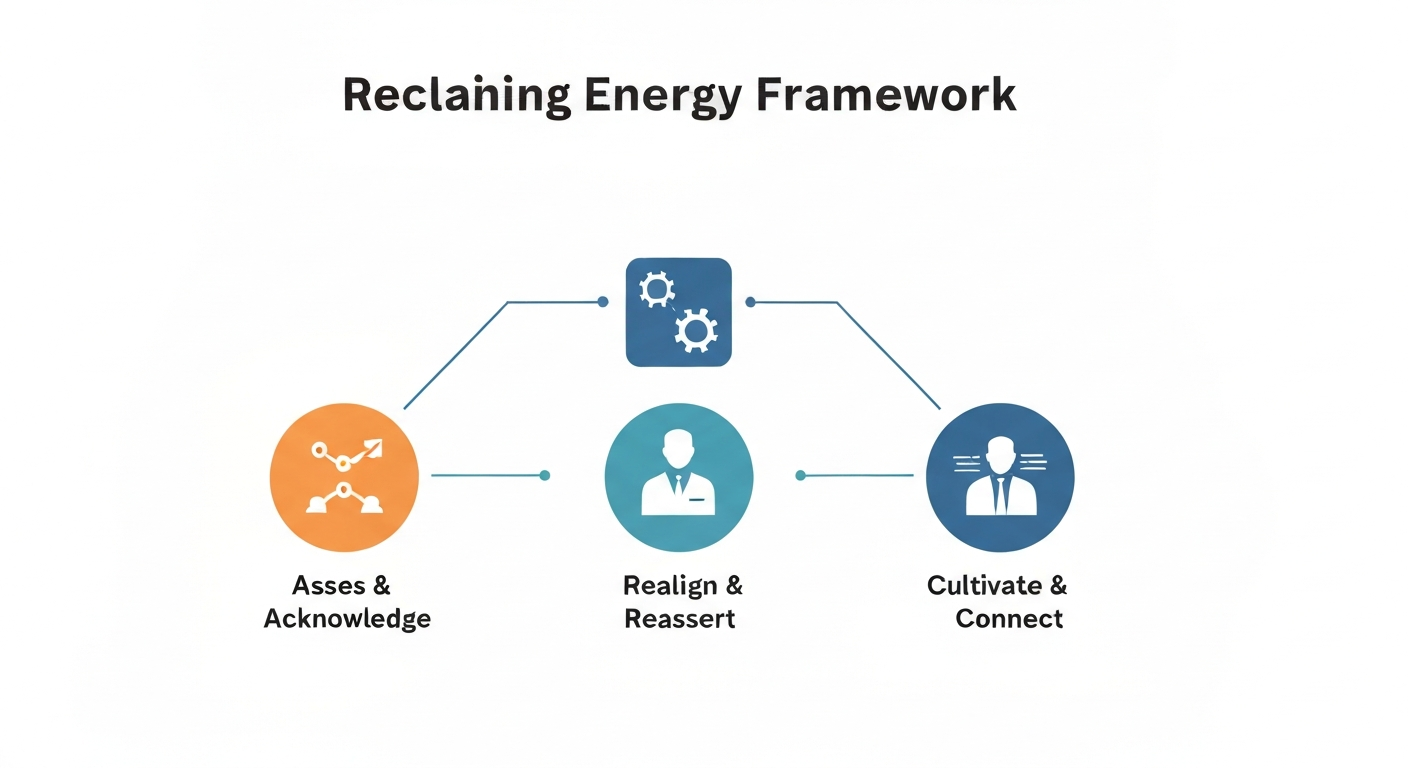
This framework isn't about managing symptoms; it targets the deep-seated issues of unfair treatment and lack of recognition that Gallup's 2018 study, involving hundreds of thousands of workers, highlighted as primary drivers of burnout. It helps you reclaim both energy and purpose by realigning your efforts with genuine value. The approach is three-pronged: first, 'Assess & Acknowledge' the specific situations where you feel undervalued or treated unfairly. This might involve recognizing that your contributions on a major project in a Vancouver tech firm went uncredited, while a colleague received praise for less work. Next, 'Realign & Reassert' your boundaries and the true value of your contributions. This means consciously choosing where to invest your time, perhaps declining an extra committee role that offers no professional growth or visibility. Finally, 'Cultivate & Connect' with environments and people who foster fairness and actively recognize your efforts. This could involve seeking out a new mentor who champions your work, or even exploring roles in organizations known for strong employee recognition programs, like those highlighted by Deloitte's annual Best Managed Companies list.
"Burnout isn't just about working too much; it's about giving your best and feeling like it doesn't matter. That feeling is corrosive." — Senior Manager, Product Development, Calgary
The goal here isn't to indiscriminately reduce your workload, which can feel counter-intuitive to a high-achiever. Instead, it’s about strategically channelling your drive into areas where your contributions are genuinely seen, valued, and reciprocated. This proactive shift empowers you to move beyond reactive exhaustion, fostering a sustainable path to well-being.
Reclaiming Energy Framework
By adopting this structured approach, you can transform your relationship with your work and personal life, ensuring your significant contributions lead to sustained satisfaction, not just further depletion. It’s about being smart with your energy, not just working harder.
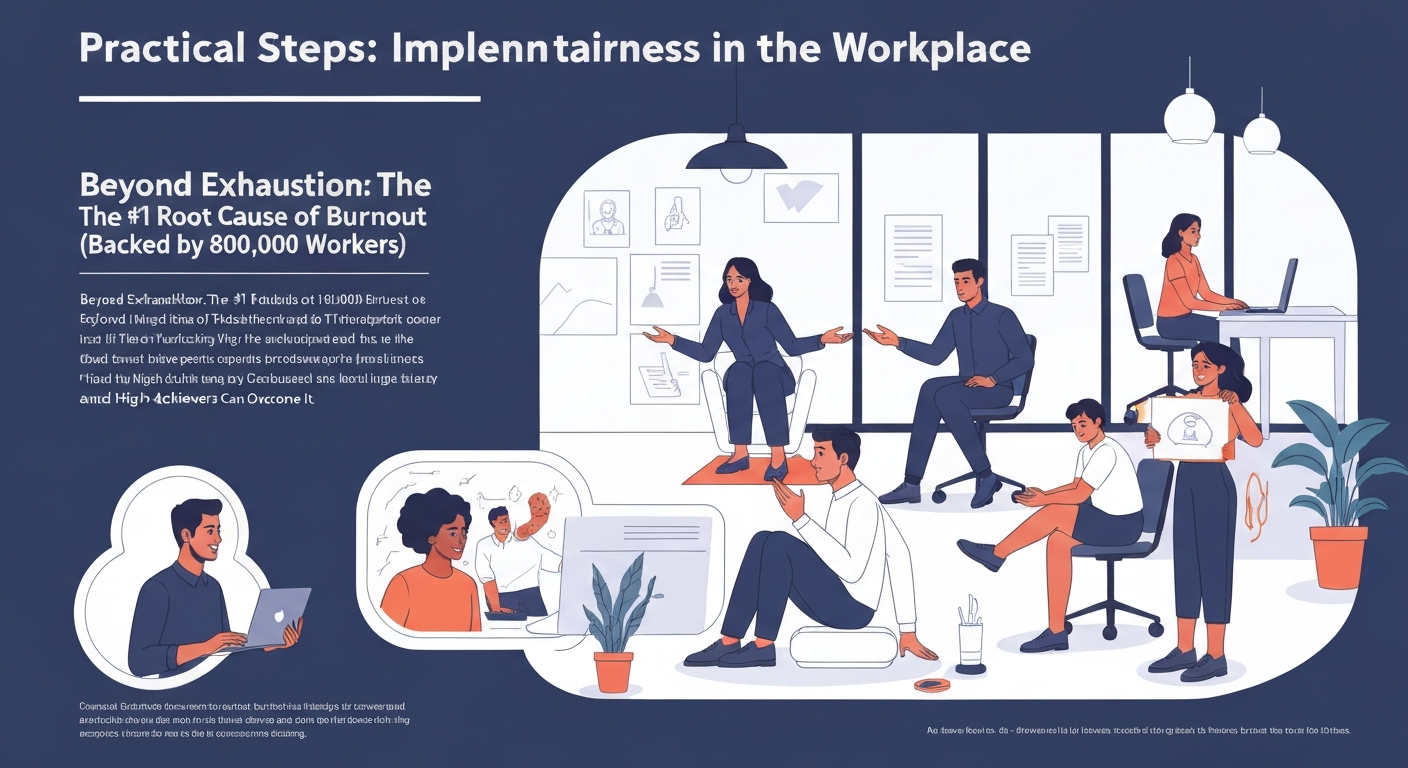
Practical Steps: Implementing Fairness, Seeking Recognition, and Cultivating Autonomy in Your Work Life
Feeling perpetually drained, even after a weekend off, points to a deeper issue than just needing more sleep. Reclaiming your energy and moving Beyond Exhaustion: The #1 Root Cause of Burnout (Backed by 800,000 Workers) and How High-Achievers Can Reclaim Their Energy requires a proactive shift from enduring unfairness to actively shaping a more equitable and recognized work environment. Here’s how to start:
1
Document & Articulate
Start a private log of instances where your contributions went unacknowledged or you experienced unfair treatment. Note the date, situation, your specific input, and the outcome. This isn't about complaining; it's about building a factual basis for future discussions. For example, if you consistently take on extra project management tasks for the Halifax team without formal recognition, record these instances. This clarity helps you move past vague feelings of resentment towards specific, actionable points.
2
Communicate & Advocate
Schedule a direct, non-emotional conversation with your manager or HR. Frame it as seeking clarity and growth, not confrontation. Use your documented examples to illustrate the impact of unacknowledged efforts on your motivation and capacity. A senior product manager in Calgary might say, "I've noticed that while I've been instrumental in delivering X and Y features, these haven't been highlighted in team updates. I'd appreciate understanding how I can ensure my contributions are more visible."
3
Set Strategic Boundaries
Learning to say 'no' is critical. High-achievers often take on too much, believing it proves their worth. Instead, evaluate new requests against your core responsibilities and energy levels. If a project doesn't align with your goals or capacity, politely decline or negotiate scope. A senior kindergarten teacher in Toronto, already managing 26 students, might decline leading an extra after-school club, explaining, "My priority is classroom engagement, and adding another commitment would dilute my focus there."
4
Cultivate Autonomy & Seek Feedback
Proactively seek feedback on your performance, and don't wait for recognition to come to you. During performance reviews or one-on-ones, highlight your achievements and ask for specific feedback on how to increase your impact and visibility. Additionally, explore ways to gain more control over your work. Could you propose managing a project end-to-end, or negotiating flexible work hours? Greater autonomy over your tasks and schedule can significantly reduce feelings of burnout, as supported by workplace psychology research.
These actions aren't
Beyond the Workplace: Applying These Principles to Personal Burnout and Relationships
Beyond the Workplace: Applying These Principles to Personal Burnout and Relationships
The insidious creep of feeling undervalued isn't exclusive to the office; it silently erodes energy in our personal lives too. Many high-achievers find they're applying the same intensity to home life, leading to a different kind of burnout when emotional labour goes unacknowledged or contributions feel imbalanced. This mirrors the workplace dynamic identified by Gallup's 2018 study, where unfair treatment was a primary driver of professional burnout.
Consider the concept of 'fair treatment' within your relationships. Are responsibilities, emotional support, and decision-making truly equitable with a partner, family member, or even close friends? For example, if you consistently manage all household finances and childcare arrangements in a Vancouver home, while your partner handles leisure planning, the imbalance can lead to resentment and exhaustion, even if both tasks are 'contributions.' A senior kindergarten teacher in Halifax, for instance, might feel drained by constantly initiating social plans for her friend group, mirroring the "unmanageable workload" she avoids at work.
Actively seeking and offering recognition is just as vital personally. A simple "Thank you for always remembering to pick up the dry cleaning," or "I really appreciate you listening to me vent last night," can prevent the slow burn of feeling unseen. This isn't about grand gestures; it's about consistent, specific acknowledgement. The absence of this can be as draining as a lack of praise from a manager.
"I realized I was burning out at home, not just at work. I was doing 80% of the mental load for our family, and no one even noticed. It felt exactly like being overlooked for a promotion." — Parent and small business owner, Calgary
Cultivating personal autonomy means setting clear boundaries. This could be saying "no" to an extra volunteer role at your child's Toronto school, protecting your Sunday mornings for personal reflection, or making choices that genuinely align with your values, even if they're unpopular. It's about owning your time and energy, rather than letting external demands dictate your capacity.
When to Seek Professional Help: Differentiating Burnout from Other Mental Health Conditions
Even when you understand the core drivers of burnout, like the lack of fairness and recognition identified in Gallup's extensive research, it's easy to confuse its symptoms with other mental health challenges. This is critical for high-achievers because pushing through what you think is just burnout could mask a deeper issue requiring professional support.
Burnout vs. Other Conditions: A Quick Reference
Burnout Defined
Specifically related to chronic workplace stress that hasn't been successfully managed. Symptoms include exhaustion, cynicism, and reduced professional efficacy. The World Health Organization (WHO) classifies it in ICD-11 as an occupational phenomenon, not a medical condition.
Depression's Scope
A pervasive mood disorder affecting all areas of life, not just work. Shares symptoms like low energy and lack of interest, but also includes persistent sadness, feelings of worthlessness, and changes in sleep or appetite unrelated to job demands.
Anxiety Disorders
Characterized by excessive worry and fear, often accompanied by physical symptoms like heart palpitations or shortness of breath. While job stress can trigger anxiety, a disorder involves persistent, uncontrollable worry across various situations, even outside of work.
When to Seek Help
If exhaustion, detachment, or reduced efficacy persist even after you've made significant changes to address workplace fairness and recognition – the core of Beyond Exhaustion: The #1 Root Cause of Burnout (Backed by 800,000 Workers) and How High-Achievers Can Reclaim Their Energy – it's time to consult a professional.
Red Flag Symptoms
Persistent feelings of hopelessness, severe anxiety attacks, thoughts of self-harm, or an inability to perform basic daily tasks (like personal hygiene or paying bills) are clear indicators that immediate professional intervention is necessary.
A mental health professional, such as a psychologist or a family doctor in British Columbia, can provide an accurate diagnosis. They can differentiate between burnout and other conditions, offering tailored treatment plans that might include therapy like Cognitive Behavioural Therapy (CBT) or, in some cases, medication. Don't hesitate to seek help if you feel overwhelmed, isolated, or if your usual coping mechanisms are no longer effective; early intervention can significantly improve outcomes and help you reclaim sustainable energy and purpose.
Frequently Asked Questions
What is the #1 root cause of burnout for high-achievers according to the 800,000 worker study?
Research spanning 800,000 workers, including many high-achievers, identifies perceived unfairness as the primary driver of burnout, not just overwork. This encompasses inequitable treatment, lack of transparency in decisions, and insufficient recognition for contributions. When high-performers consistently deliver exceptional results without commensurate acknowledgment or fair processes, their intrinsic motivation erodes, leading to deep emotional and physical exhaustion.
How can high-achievers reclaim their energy when burnout is caused by unfairness or lack of recognition?
Reclaiming energy involves strategic boundary setting and clear communication. High-achievers should document contributions, advocate for fair compensation or recognition, and articulate their needs to management. If systemic unfairness persists, exploring new roles or organizations that value their effort is crucial. Prioritizing self-care, like dedicated downtime or mindfulness practices, also helps rebuild resilience against these external stressors.
Why are high-achievers especially vulnerable to burnout from unacknowledged effort?
High-achievers often possess a strong internal drive and a deep commitment to excellence, investing significant personal energy into their work. When this extraordinary effort goes consistently unacknowledged or is met with unfair practices, it feels like a profound betrayal of their values and investment. This disparity between high input and low recognition creates a unique vulnerability, eroding their sense of purpose and leading to accelerated emotional depletion.
Can lack of fairness and recognition really drain emotional and physical energy?
Absolutely. Chronic perceived unfairness and lack of recognition trigger a sustained stress response, activating the body's fight-or-flight system. This constant state of alert depletes cortisol reserves, impairs sleep, and can manifest as physical symptoms like chronic fatigue, headaches, or digestive issues. Emotionally, it fosters resentment, cynicism, and a sense of futility, draining the mental energy needed for focus and engagement, even for tasks outside of work.
Is there a strategic framework for high-achievers to combat burnout effectively?
An effective framework for high-achievers involves three pillars: <strong>Awareness</strong> (recognizing the specific triggers of unfairness), <strong>Advocacy</strong> (proactively communicating needs and documenting contributions), and <strong>Agency</strong> (making informed decisions about boundaries, role adjustments, or career transitions). This structured approach empowers individuals to move beyond passive exhaustion, enabling them to strategically address the root causes of burnout rather than merely managing symptoms. Tools like MySerenity can support tracking and reflection.
Frequently Asked Questions
What is the #1 root cause of burnout for high-achievers according to the 800,000 worker study?
Research spanning 800,000 workers, including many high-achievers, identifies perceived unfairness as the primary driver of burnout, not just overwork. This encompasses inequitable treatment, lack of transparency in decisions, and insufficient recognition for contributions. When high-performers consistently deliver exceptional results without commensurate acknowledgment or fair processes, their intrinsic motivation erodes, leading to deep emotional and physical exhaustion.
How can high-achievers reclaim their energy when burnout is caused by unfairness or lack of recognition?
Reclaiming energy involves strategic boundary setting and clear communication. High-achievers should document contributions, advocate for fair compensation or recognition, and articulate their needs to management. If systemic unfairness persists, exploring new roles or organizations that value their effort is crucial. Prioritizing self-care, like dedicated downtime or mindfulness practices, also helps rebuild resilience against these external stressors.
Why are high-achievers especially vulnerable to burnout from unacknowledged effort?
High-achievers often possess a strong internal drive and a deep commitment to excellence, investing significant personal energy into their work. When this extraordinary effort goes consistently unacknowledged or is met with unfair practices, it feels like a profound betrayal of their values and investment. This disparity between high input and low recognition creates a unique vulnerability, eroding their sense of purpose and leading to accelerated emotional depletion.
Can lack of fairness and recognition really drain emotional and physical energy?
Absolutely. Chronic perceived unfairness and lack of recognition trigger a sustained stress response, activating the body's fight-or-flight system. This constant state of alert depletes cortisol reserves, impairs sleep, and can manifest as physical symptoms like chronic fatigue, headaches, or digestive issues. Emotionally, it fosters resentment, cynicism, and a sense of futility, draining the mental energy needed for focus and engagement, even for tasks outside of work.
Is there a strategic framework for high-achievers to combat burnout effectively?
An effective framework for high-achievers involves three pillars: Awareness (recognizing the specific triggers of unfairness), Advocacy (proactively communicating needs and documenting contributions), and Agency (making informed decisions about boundaries, role adjustments, or career transitions). This structured approach empowers individuals to move beyond passive exhaustion, enabling them to strategically address the root causes of burnout rather than merely managing symptoms. Tools like MySerenity can support tracking and reflection.
For high-achievers battling burnout and decision fatigue, the real challenge isn't finding an app, but rather discerning which of the "best AI mental wellness apps" offer personalized, evidence-based support beyond simple meditation. These tools address specific stressors like perfectionism or performance anxiety.
Many high-achievers see anxiety as an unavoidable cost of ambition. However, clinically proven evidence based anxiety coping strategies offer significant symptom reduction, refining your internal operating system for success.
Many find basic mood logging unhelpful for preventing burnout. This guide transforms mood tracking into a strategic process for proactive self-management.