

Stealth Mindfulness: 30-Second Exercises for Busy Adults
For busy professionals, 'mindfulness exercises for busy adults' often seems like an impossible task. This article introduces stealth mindfulness, offering quick, 30-second practices that fit even the most packed schedules.
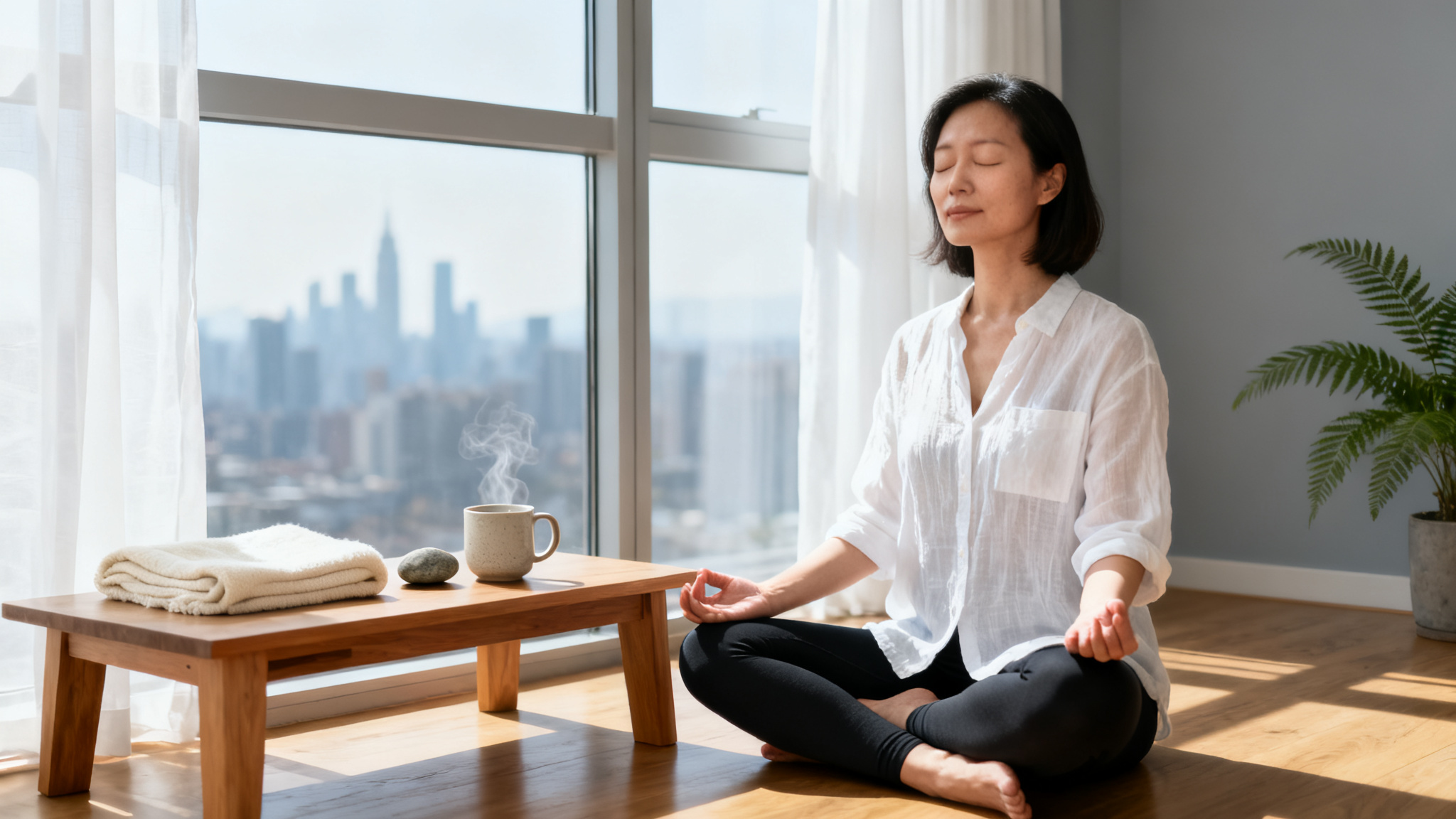
Stealth Mindfulness: 30-Second Exercises for Busy Adults
For many professionals, the very idea of "mindfulness exercises for busy adults" feels like a cruel joke, another item on an already overwhelming to-do list. While apps like Calm and Headspace have surged in popularity, their user retention often struggles beyond initial trials because dedicated 10-minute sessions are simply not feasible for busy adults juggling work deadlines and family responsibilities.
The core challenge isn't a lack of desire for calm, but a fundamental mismatch between traditional mindfulness practices and the relentless pace of modern life. Adults aged 25-45 in cities like Toronto or Seattle face unique pressures, and daily stress is common among employees worldwide. These individuals need more than generic advice; they need tools that don't demand extra time or public display, especially when work-related stress costs the U.S. economy billions annually.
This is where Stealth Mindfulness offers a different path. It's a collection of ultra-short (30-90 second) mental shifts and micro-exercises designed to integrate into your day. These aren't about sitting cross-legged or downloading another app. Instead, they're evidence-based techniques to reduce stress, anxiety, and burnout, without anyone noticing you're even doing them. Think of them as mental pit stops you can take during a commute, between meetings, or while waiting for coffee.
Why Traditional Mindfulness Fails Busy Adults (And What To Do Instead)
Why Traditional Mindfulness Misses the Mark for Busy Professionals
You've likely tried a meditation app, maybe even for a few weeks, only to find it collecting digital dust. The truth is, the very design of many traditional mindfulness approaches and generic apps often clashes with the reality of a demanding work schedule and the unique pressures faced by professionals in cities like Vancouver or Toronto.
Why Traditional Mindfulness Falls Short
Most guided meditations ask for 10-20 minutes, a luxury many don't have. For a senior manager in Calgary, even five minutes can feel like an impossible ask between back-to-back meetings.
Adding a dedicated meditation session often feels like just another item on an already overwhelming list, contributing to, rather than reducing, stress. It's not a relief; it's a chore.
Vague advice or "woo-woo" language can alienate professionals seeking concrete, evidence-based tools. They need solutions that directly address burnout and anxiety, not abstract concepts.
Despite strong growth in the meditation app market, many apps struggle to keep people engaged beyond their initial trials. People download, but don't stick with it.
Sitting in silence isn't always feasible or appropriate in a busy office environment or during a commute. The exercises need to fit the real world, not an idealized one.
This isn't to say traditional mindfulness lacks value; Mindfulness-Based Stress Reduction (MBSR) has indeed shown significant benefits for stress and anxiety. However, for many busy adults, the barrier to entry and sustained engagement remains high.
The Science-Backed Benefits of Micro-Mindfulness for Stress & Burnout
The Science-Backed Benefits of Micro-Mindfulness for Stress & Burnout
You might feel skeptical that a quick mental shift can truly make a difference when you're battling a relentless inbox or a looming project deadline. Yet, the scientific community increasingly points to brief, focused attention exercises as a potent, evidence-based approach to cultivating presence and calm. This isn't about escaping reality; it's about sharpening your mind's ability to respond, not just react, to daily pressures. For busy professionals in places like Calgary or Halifax, who simply don't have an hour for traditional Mindfulness-Based Stress Reduction (MBSR) programs, these micro-interventions offer a practical lifeline.
Even a few minutes of daily mindfulness may help improve attention, focus, and emotional regulation. This is crucial when you consider how widespread burnout has become: many employees experience daily stress, a clear precursor to burnout. These targeted mindfulness exercises for busy adults offer a direct counter to that pervasive strain.
The economic impact of unmanaged work-related stress is staggering, costing the U.S. economy billions annually in healthcare expenditures and lost productivity, as reported by the American Psychological Association in 2016. While initial skepticism about the efficacy of such short practices is natural, the cumulative benefits of consistent, brief engagement are well-documented. It's about building mental resilience brick by tiny brick, rather than waiting for a large, dedicated block of time that rarely materializes.
Stealth Mindfulness: Exercises You Can Do Anywhere, Anytime (Without Anyone Noticing)

Stealth Mindfulness: Exercises You Can Do Anywhere, Anytime (Without Anyone Noticing)
You don't need to carve out twenty minutes or download a new app to find moments of calm. Many busy professionals, particularly those in high-stakes roles in places like downtown Calgary or Toronto, find traditional meditation impractical. Stealth mindfulness offers ultra-short, discreet mindfulness exercises for busy adults, integrating mental shifts directly into your day without drawing attention.
The 3-Breath Anchor (30 seconds)
While waiting for your coffee to brew, an elevator to arrive, or a file to load, take three slow, deep breaths. Focus entirely on the sensation of air entering and leaving your body. This grounds you in the present moment, a technique validated by research on brief mindfulness interventions from institutions like Harvard Medical School, which shows improved attention and focus.
Micro-Scan (60 seconds)
During a long meeting or while walking between tasks, briefly scan your body. Notice any tension in your shoulders, jaw, or stomach. Without judgment, gently release any tightness you find. This helps you identify and mitigate physical manifestations of stress that often accumulate unnoticed.
Sensory Check-In (45 seconds)
Pick one sense and focus on it for less than a minute. What do you hear right now? The hum of the server, the distant traffic, a colleague typing? What do you smell? Your tea, the office air? This shifts your focus away from internal chatter and into your immediate environment.
Mindfulness in High-Pressure Moments: Meetings, Deadlines, & Difficult Conversations
You don't need to retreat to a quiet room to find calm when the pressure mounts. In fact, some of the most impactful mindfulness exercises for busy adults happen right in the thick of high-stakes moments – during critical meetings, tight deadlines, or difficult conversations – when clarity and emotional regulation are essential.
The Pause Before You Speak (15 seconds)
Before you respond in a tense discussion, or hit "send" on a charged email, take a single, deep breath. Notice the air filling your lungs, then slowly releasing. This micro-pause creates a crucial space between stimulus and reaction, allowing for a more thoughtful, less reactive reply. This is especially useful for professionals in fields like law or finance, where words carry significant weight.
Pre-Presentation Grounding (90 seconds)
Before stepping up to present to your team or a client, take a moment. Feel the soles of your feet firmly on the floor. Take three slow, deliberate breaths, noticing the sensation of your chest rising and falling. Acknowledge any nervousness without judgment. This grounds you, shifting focus from internal worry to present-moment stability, a technique often recommended by public speaking coaches at firms like Deloitte.
Deadline Focus Breath (30 seconds)
When a tight deadline looms, and your mind races, close your eyes briefly if possible. Take one long, slow inhale through your nose, counting to four. Hold for four. Exhale slowly through your mouth for six. Repeat twice. This simple breathing pattern can quickly reset your focus and reduce the scattered feeling of overwhelm.
Quick Reset: 60-Second Mindfulness Breaks for Your Workday
 mindfulness exercises for busy adults during a workday." loading="lazy" />
Even if you feel chained to your desk, preventing burnout and restoring focus doesn't demand a 30-minute meditation session. The real challenge for many Canadian professionals isn't a lack of desire for calm, but a lack of genuinely free time.
The 5-4-3-2-1 Sensory Check (60 seconds)
This grounding exercise, a staple in cognitive behavioural therapy, pulls you into the present. Name 5 things you see around your office, then 4 things you feel (like your chair, the keyboard, your clothing), 3 things you hear (the hum of a computer, distant chatter), 2 things you smell (your coffee, a faint scent from outside), and finally, 1 thing you taste (residual coffee, toothpaste). It's a rapid, effective circuit breaker for runaway thoughts.
Mindful Sip (30 seconds)
Before you gulp down your next drink, pause. Whether it's water, coffee, or tea, bring the cup to your lips. Notice its temperature against your skin. As you sip, pay full attention to the taste, the texture, and the sensation as you swallow. This micro-practice of mindfulness exercises for busy adults transforms a mundane act into a moment of presence.
Conscious Breath Anchor (90 seconds)
Set a silent timer. Close your eyes briefly, or soften your gaze. Place one hand on your belly. For 90 seconds, simply observe the rise and fall of your abdomen with each breath. Don't try to change your breathing, just notice it. When your mind wanders, gently guide your attention back to the physical sensation of your breath. This simple act can re-regulate your nervous system.
Mindful Transitions: Shifting Gears Without Overwhelm
Mindful Transitions: Shifting Gears Without Overwhelm
You know the feeling: one meeting ends, and your mind is already racing to the next, carrying the weight of the last conversation. This constant mental carry-over fuels stress and burnout, a common experience for many employees who report daily stress. Mindful transitions offer a simple antidote, creating intentional mental breaks that prevent stress from accumulating throughout your day.
The Doorway Reset (10 seconds)
As you walk through any doorway – whether into a new meeting room, your office, or arriving home – pause for just a breath. Intentionally acknowledge the shift in environment and mentally leave the previous context behind. This simple act creates a clean slate for what's next.
Desk Clear & Breathe (45 seconds)
Before diving into a new task, take a moment to clear your immediate workspace. Put away old notes, close unnecessary tabs, and then take three slow, deep breaths. This physical and mental decluttering signals a fresh start and helps improve focus for the upcoming activity.
The Commute Unwind (60-90 seconds)
Before you even step out of your car or off the bus after work, take a minute to consciously release the day's events. Notice the sounds around you, feel your feet on the ground, and take a few slow breaths. This brief pause helps you transition from "work mode" to "home mode," reducing the carry-over of professional stress.
Meeting-to-Meeting Micro-Pause (30 seconds)
Between back-to-back virtual meetings, resist the urge to immediately check emails.
Comparing Stealth Mindfulness Techniques for Your Day
Choosing the right mindfulness technique when your day is packed can feel like another decision to make. This quick reference table helps you pinpoint which stealth mindfulness exercises for busy adults best fit your immediate need, whether you're battling a deadline or transitioning between tasks.
| Technique Category | Best Use Case | Typical Duration | Primary Benefit | Ease of Integration |
|---|---|---|---|---|
| Stealth Mindfulness (Anywhere, Anytime) | Routine tasks (typing, walking), waiting in line at a Toronto coffee shop. | 15-30 seconds | Sustained presence, reduced general stress. | No pause required. |
| High-Pressure Moments | Before a client presentation, during a difficult conversation with a colleague. | 30-60 seconds | Calm under pressure, improved focus. | Immediate; just before or during. |
| Quick Reset Breaks | Between back-to-back virtual meetings, after a challenging email. | 60-90 seconds | Mental clarity, emotional regulation. | Requires a brief, intentional pause. |
| Mindful Transitions | Switching from work to home life, moving between projects. | 30-90 seconds | Reduced overwhelm, clear mental boundaries. | Integrated into natural shifts. |
This side-by-side view clarifies that micro-mindfulness isn't one-size-fits-all. Instead, it offers a strategic toolkit, allowing you to deploy specific mental shifts precisely when and where they'll have the most impact, without adding another item to your already overflowing calendar.
Beyond the App: Integrating & Troubleshooting Mindfulness for High Achievers
Generic mindfulness apps often struggle with retention; many busy professionals in cities like Vancouver or Toronto try them, only to abandon them after a few weeks. The true power of mindfulness for high achievers isn't found in dedicated 20-minute sessions or guided meditations that feel like another item on an endless to-do list. Instead, it lies in integrating micro-mindfulness – brief, 30-to-90-second mental shifts – directly into your existing routine, without needing to stop or draw attention. This approach directly tackles the "lack of time" pain point, a key reason why many professionals, especially those experiencing burnout, don't sustain traditional practices. The key is consistency over intensity. Even brief mindfulness exercises may help improve attention, focus, and emotional regulation. Forgetting to practice is a common hurdle. Try linking a specific micro-mindfulness exercise to an existing habit: a few mindful breaths before opening your email, or a quick body scan while waiting for your coffee to brew. This makes it automatic, not an extra task. If it feels forced, simplify. Focus on one sensation – the feeling of your feet on the floor, the sound of traffic outside your office in Calgary – for just 30 seconds. Embracing these "stealth" mindfulness exercises for busy adults is a powerful step towards lasting relief from stress and burnout, building resilience one micro-moment at a time. This accessible, evidence-based approach helps create space in your mind, even when your schedule feels packed.Frequently Asked Questions
What is stealth mindfulness and how does it work for busy people?
Stealth mindfulness integrates mindful awareness into routine daily activities, making it accessible without requiring dedicated meditation time. Instead of blocking out 20 minutes, you might mindfully drink your morning coffee, noticing its warmth and aroma, or pay attention to your breath while walking to a meeting. This approach allows a busy professional in Calgary to weave moments of presence into their packed schedule, transforming mundane tasks into opportunities for calm and focus throughout the day.
Why don't traditional mindfulness methods work for busy professionals?
Traditional mindfulness often requires dedicated, uninterrupted blocks of time, which are scarce for many busy professionals. A marketing director in Montreal, juggling client calls and team meetings, rarely has 30 minutes to sit in silence. The perceived pressure to 'do it perfectly' or find a quiet space can feel overwhelming, leading to avoidance rather than engagement. This time constraint is the primary barrier, not a lack of interest in the benefits of mindfulness.
How can I practice mindfulness quickly during my workday?
You can practice mindfulness quickly by integrating micro-moments throughout your day. Try a 60-second mindful breathing exercise before a virtual meeting, focusing solely on your inhale and exhale. When waiting for your computer to load, notice the sensations in your feet or hands. Even a mindful sip of water, truly tasting and feeling it, can reset your focus. Tools like MySerenity also offer guided one-minute meditations for quick, effective resets.
Are there science-backed benefits to micro-mindfulness for stress and burnout?
Research consistently shows that even micro-mindfulness practices offer significant benefits for stress and burnout. Studies, including those from institutions like the University of Toronto, indicate that short, frequent moments of mindfulness can reduce cortisol levels, improve emotional regulation, and enhance cognitive flexibility. These brief interventions help busy adults, like a project manager in Halifax, interrupt stress cycles, fostering greater resilience against chronic workplace pressure and preventing burnout.
Can mindfulness help manage high-pressure work situations like meetings or deadlines?
Mindfulness can significantly help manage high-pressure work situations by fostering a calmer, more focused response. Before a critical client presentation or during a tight deadline, a few deep, mindful breaths can activate your parasympathetic nervous system, reducing fight-or-flight responses. This allows you to think more clearly and react less impulsively. A senior analyst facing a demanding quarterly report can use these brief moments to centre themselves, improving decision-making and reducing anxiety.
Frequently Asked Questions
What is stealth mindfulness and how does it work for busy people?
Why don't traditional mindfulness methods work for busy professionals?
How can I practice mindfulness quickly during my workday?
Are there science-backed benefits to micro-mindfulness for stress and burnout?
Can mindfulness help manage high-pressure work situations like meetings or deadlines?
Keep reading
All articles →
Stress or Burnout? A Self-Check for Driven Professionals
Exhaustion is not automatically burnout, and that distinction matters. This self-check walks you through the markers that separate ordinary work stress from a pattern you can no longer manage on your own.

How to Recognize Decision Fatigue Before It Derails Your Day
Your small choices may cost more energy than your big ones, and the research behind decision fatigue is messier than most articles admit. This guide shows how to spot the warning signs early and lighten your daily load with practical habits.

Burnout or Rustout? High-Achievers' Self-Diagnosis Guide
High-achievers often misinterpret professional unease as simple exhaustion, overlooking the critical distinction between burnout and rustout. This misdiagnosis leads to ineffective solutions, leaving them feeling even more stuck.