

Stealth Mindfulness: Daily Mindfulness Without Meditation for High-Achievers
Traditional meditation often feels like a chore for high-achievers with demanding schedules. Discover daily mindfulness without meditation: quick, scientifically-backed techniques that seamlessly fit into your routine.

Stealth Mindfulness: Your Guide to Daily Calm Without Meditation
Stealth Mindfulness: Your Guide to Daily Calm Without Meditation
Many high-achievers in Canada and the US find traditional meditation, with its emphasis on stillness and long sessions, feels more like another chore than a source of calm, despite knowing the benefits of mindfulness. In fact, industry data shows high churn rates for many meditation apps after just a few weeks, suggesting that many users struggle to integrate lengthy practices into demanding schedules. Daily mindfulness without meditation offers a practical alternative: quick techniques that fit into your existing routine, potentially helping with stress and focus without needing a quiet room or dedicated time block.
It's perfectly normal if the idea of sitting for 20 minutes feels unattainable amidst a packed schedule of client calls and project deadlines. The common perception that mindfulness is only for lengthy, formal sessions often adds to your stress, rather than reducing it. You need tools that work within your reality, not against it.
This is where 'stealth mindfulness' comes in: discreet, effective practices that don't require special equipment or a quiet space. Research, including adaptations of MBSR programs, indicates that even short, informal mindfulness practices can be as effective as formal meditation for outcomes like stress reduction and improved well-being. These aren't just "hacks"; they are evidence-based methods designed to help you manage the chronic stress and anxiety that many employees experience at least sometimes. You can integrate these moments throughout your day, building resilience one micro-moment at a time.
Why Traditional Meditation Might Not Be Your Path (And That's Perfectly Fine)
Many high-achievers find the very idea of traditional seated meditation more stressful than calming, and that's a perfectly valid response. You might feel a pang of guilt scrolling past an app notification, knowing you "should" meditate for 20 minutes but simply can't quiet your mind or carve out the time. This isn't a personal failing; it's a common experience, especially for those with packed schedules in places like downtown Vancouver or Toronto's financial district.
Industry data confirms this struggle: many popular meditation apps report high churn rates within weeks, indicating that lengthy, formal sessions don't resonate or stick with a large segment of users. The image of serene, cross-legged practitioners can feel miles away from your reality of back-to-back Zoom calls and demanding deadlines.
Mindfulness isn't a one-size-fits-all solution, nor is it an unattainable state reserved for monks. Research, including adaptations of MBSR from the 2010s, suggests that informal practices can be just as effective as formal meditation for stress reduction and improved well-being. You can absolutely cultivate daily mindfulness without meditation, finding your unique path to calm that fits into your life, rather than adding another burden.
Defining 'Mindfulness Without Meditation' & Its Science-Backed Benefits
Many high-achievers feel a subtle pressure to meditate, only to find the practice difficult to sustain or simply not a fit for their demanding schedules. But what if mindfulness didn't require a quiet room or a cushion? “Mindfulness without meditation” is precisely that: intentionally bringing your attention to the present moment, on purpose, without judgment, as you go about your everyday activities. It's not about emptying your mind or achieving a specific 'zen' state; it’s about noticing the texture of your coffee cup, the sounds of traffic outside your office in downtown Vancouver, or the rhythm of your breath during a quick walk between meetings.
This approach to daily mindfulness without meditation offers a practical alternative to formal sessions, especially for those who struggle to commit to traditional practices. Research suggests that integrating brief mindful moments throughout the day can lead to cumulative benefits, helping to 'buffer' against daily stressors and prevent the build-up of anxiety and overwhelm. For instance, even two to five minutes of focused attention can reduce stress and improve focus, a crucial benefit when facing tight deadlines at a Toronto tech firm.
Many people want better mental wellness, but traditional methods often don't stick.
Our Criteria for Effective Daily Mindfulness Without Meditation
Many high-achievers feel that mindfulness is a luxury they can't afford, believing it demands lengthy meditation sessions they simply don't have time for. This perception, often reinforced by generic advice, actually adds to their stress rather than alleviating it. Our approach to daily mindfulness without meditation tackles this head-on, focusing on practicality and tangible results.
Our Criteria for Effective Stealth Mindfulness
Practices must fit into micro-breaks, lasting 30 seconds to 5 minutes. This acknowledges that many employees experience burnout, demanding accessible, brief interventions.
No special equipment or dedicated space needed. You can practice in an open-plan office in Calgary, on a busy Toronto subway, or during a child's hockey practice in Vancouver.
Grounded in psychological and neurological research, not just 'feel-good' platitudes. Informal mindfulness can be as helpful as formal meditation for everyday stress.
Provides clear, step-by-step instructions for common high-pressure scenarios, like processing a demanding email inbox or waiting for a flight at Pearson Airport.
Designed to weave into professional or high-pressure environments without drawing attention or requiring a change in routine.
Micro-Mindfulness: Quick, Evidence-Based Practices for Any Moment
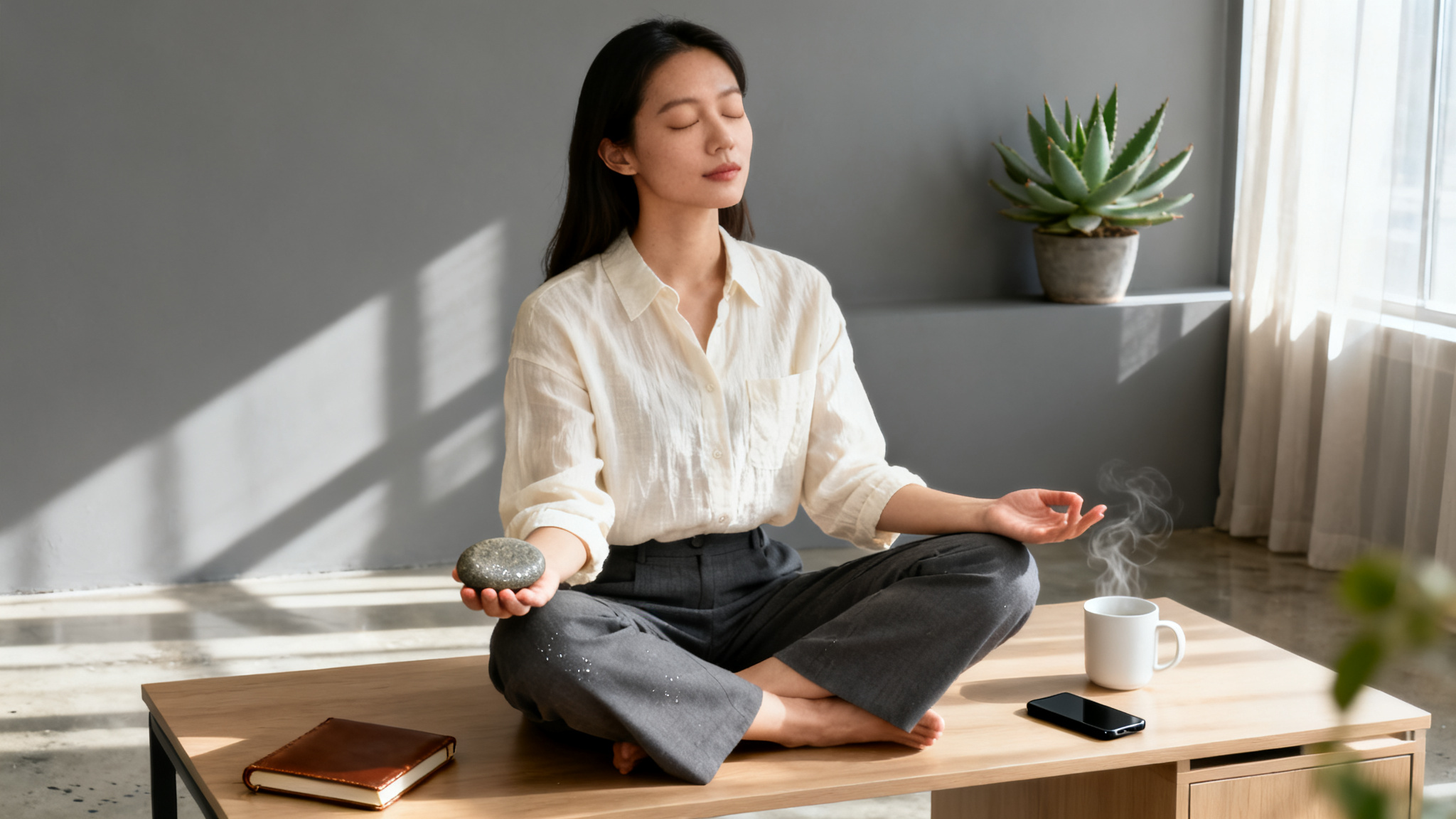
Micro-Mindfulness: Quick, Evidence-Based Practices for Any Moment
You don't need to carve out 20 minutes for a formal sit to reap the benefits of mindfulness. The truth is, many high-achievers find lengthy meditation sessions daunting or even impossible to fit into their demanding schedules, contributing to the high churn rates seen in many meditation apps. This is where "micro-mindfulness" steps in: intentional pauses, often lasting just 2-5 minutes, that transform mundane daily tasks into potent opportunities for mental reset and stress reduction.
Micro-mindfulness is about weaving brief moments of awareness into your existing routine, rather than adding another item to your already packed to-do list. For instance, instead of rushing through a transition, a senior project manager in Calgary might use the 90-second walk between meeting rooms to consciously notice their breath and the feeling of their feet on the floor. Research, including adaptations of MBSR programs, increasingly shows that these informal practices can be as effective as formal meditation for outcomes like stress reduction and improved well-being.
The power of daily mindfulness without meditation lies in its cumulative effect. Just like small deposits grow a savings account, brief mindful breaks throughout the day act as buffers against stress, preventing the build-up of anxiety that often plagues busy professionals. These quick mindfulness exercises for work and daily life offer a practical way to integrate mental wellness, ensuring that even when deadlines loom, you have a reliable toolkit for staying grounded.
The 'Inbox Breath' for Mindful Email Processing
The 'Inbox Breath' for Mindful Email Processing
Opening your inbox often feels like diving into a cold ocean of demands, triggering immediate stress. Yet, you can interrupt this reactive cycle with a simple, potent technique: the 'Inbox Breath.' This practice involves taking three deliberate, conscious breaths before you even click open your email client or draft a reply to a particularly challenging message. It’s a form of daily mindfulness without meditation, designed to fit into even the most intense workdays.
This micro-practice is ideal for professionals swamped by digital communication, especially those who find themselves firing off quick, unconsidered responses or feeling drained by constant notifications. Many Canadian workers report that their email volume has grown since 2020, which can add to digital burnout. The 'Inbox Breath' takes approximately 30-60 seconds, requires no special apps or quiet spaces, and immediately shifts your state from reactive urgency to intentional engagement. For example, before responding to a tense client email about a project in Calgary, a senior account manager could pause, take three deep breaths, and then approach the keyboard with a clearer head.
By pausing to breathe, you create a tiny but significant gap between stimulus (the email) and your response. This brief moment of awareness helps regulate your emotional state, preventing the autopilot scroll and fostering a more thoughtful, less stressed approach to your digital workload. It's about bringing conscious presence to a task that often pulls us into distraction and overwhelm, helping you stay grounded even when the inbox demands otherwise.
Mindful Movement: The 'Transition Walk' Between Meetings
Mindful Movement: The 'Transition Walk' Between Meetings
You often rush from one meeting to the next, brain still buzzing from the last discussion. Instead of letting that chaotic energy spill into your next task, try the 'Transition Walk.' This practice transforms the short distance between your office and a boardroom, or even just to the kitchen for a coffee, into a moment of daily mindfulness without meditation. It's about consciously shifting your focus for 1-5 minutes, grounding yourself before the next demand hits.
To practice, simply direct your attention to the sensations of walking: the feel of your feet on the floor, the rhythm of your steps, the subtle swing of your arms. Notice the ambient sounds in your office hallway or the light filtering through a window. This isn't about clearing your mind entirely, but about anchoring your awareness in the present physical experience. For a project manager in Calgary with back-to-back client calls, even a 60-second walk to the printer can become a powerful mental reset.
This technique is ideal for anyone with a packed schedule or those prone to feeling constantly rushed. It fits into your existing workday, requiring no extra time or special equipment, and offers a discreet way to de-stress and re-centre. Even brief informal mindfulness moments can help reduce perceived stress and improve focus, challenging the idea that only lengthy meditation sessions are truly beneficial.
The 'Line Observer' for Mindful Waiting

The 'Line Observer' for Mindful Waiting
There’s an irony in modern life: we often feel most impatient when we're forced to do nothing at all. Instead of reflexively pulling out your phone during those inevitable waiting periods – for a coffee, in a grocery queue, or while a large file downloads – try the 'Line Observer' technique. This practice turns frustrating downtime into an opportunity for daily mindfulness without meditation, reclaiming moments that typically add to your stress load. It's especially effective for high-achievers who find themselves frequently battling impatience or anxiety during unavoidable pauses in their demanding schedules.
The method is simple: gently shift your attention to your immediate surroundings. Notice the colours, sounds, and textures around you. Feel your feet on the floor, the weight of your bag, or the temperature of the air. Acknowledge any thoughts about being late or bored, but let them pass without judgment. This isn't about clearing your mind; it's about observing what's already there. Research on informal mindfulness practices, like those adapted from MBSR programs in the 2010s, suggests these brief moments can significantly reduce stress and improve well-being, even without formal meditation sessions.
The standout benefit? You transform potentially irritating downtime into a calming, self-aware experience. Whether it's 30 seconds at a crosswalk or five minutes in a bank line, these small shifts accumulate. Instead of feeling like wasted time, you're actively buffering against the daily build-up of anxiety, a critical skill given that many employees experience burnout at least occasionally.
Mindful Hydration: The 'Water Break Reset'
Mindful Hydration: The 'Water Break Reset'
Many high-achievers find that the simplest, most frequent actions offer the best anchors for daily mindfulness without meditation. The "Water Break Reset" leverages your existing habit of hydrating, turning a routine into a powerful, repeated moment of calm. This isn't about lengthy contemplation; it's a 15-30 second practice easily repeated several times a day.
Before your lips touch the glass, pause. Notice the weight of the cup in your hand, the coolness or warmth of the water, its clarity. Feel the sensation as you lift it, the first drops on your tongue, and the smooth journey down your throat. This quick, sensory check-in acts as a subtle mental reset, helping to "buffer" against daily stressors, a technique supported by neuroscience research on attention and emotional regulation from the 2000s onwards.
This technique is ideal for anyone who struggles to remember to hydrate, or who needs frequent, subtle reminders to re-centre without disrupting their flow. Industry data indicates that many meditation apps see high churn rates, suggesting traditional methods don't always stick. By embedding mindfulness into an existing healthy habit, you gain cumulative benefits for managing anxiety and preventing burnout without adding "another thing" to your schedule.
Integrating Mindfulness into Your Workday and Daily Routine
You don't need to overhaul your entire schedule to cultivate calm. Integrating daily mindfulness without meditation means weaving short, intentional moments into your existing rhythm, transforming mundane tasks into opportunities for mental clarity and stress reduction. This approach acknowledges that you're already busy and offers a practical framework.
Identify 'Anchor' Activities
Pinpoint existing daily habits that are already fixed points in your day. For instance, the two minutes your coffee machine brews, the walk from your car to the office door, or waiting for a large file to load on your computer. Attach a single mindful breath or a quick body scan to these moments. A senior architect in Vancouver might use their morning commute on the SkyTrain as an anchor, focusing on the sounds of the train for 60 seconds.
Schedule 'Micro-Breaks'
Use your calendar or phone alarms for intentional 2-5 minute mindfulness pauses. Set a reminder for 10:30 AM and 2:30 PM. When it rings, close your eyes briefly, focus on your breathing, or notice three things you can see, hear, and feel. Research on informal mindfulness, like studies from the 2010s on MBSR adaptations, suggests even brief practices can reduce stress and improve well-being.
Start Small and Build
Don't try to implement five new practices at once.
Comparing 'Stealth Mindfulness' Techniques: A Quick Reference
When you're constantly moving, choosing the right mental reset matters. This comparison table offers a quick guide to integrating daily mindfulness without meditation into your demanding schedule, helping you pinpoint which 'stealth' technique best fits your current moment.
| Technique | Ideal Scenario | Key Benefit | Time Commitment |
|---|---|---|---|
| Inbox Breath | Email overload, pre-meeting jitters | Reduces reactivity, improves focus | 30-60 seconds |
| Transition Walk | Moving between tasks/meetings, commute | Grounds, clears mind, boosts energy | 1-5 minutes |
| Line Observer | Waiting in line (e.g., for coffee, traffic) | Fosters patience, reduces frustration | Varies (30 secs - several min) |
| Water Break Reset | Any time you drink water | Frequent resets, subtle grounding | 15-30 seconds |
Consider your most frequent stressors or transition points throughout the day. By matching these moments with a specific 'stealth mindfulness' practice, you can begin to build a personalized menu of techniques that genuinely supports your well-being without adding another item to your already packed to-do list.
Overcoming Obstacles & Your Personalized 'Mindfulness Menu'
It’s easy to feel a surge of motivation after learning about daily mindfulness without meditation, only to find yourself forgetting to actually practice it amidst a busy Tuesday. Many high-achievers struggle with this initial hurdle, often compounded by a perfectionist streak that demands flawless execution or nothing at all. This isn't a failure of willpower; it's a common response to integrating new habits into an already packed schedule, where burnout is something many employees experience at least sometimes.
The key is to release the pressure. Informal mindfulness practices, even in 2-5 minute bursts, accumulate benefits over time. If skepticism creeps in, remind yourself that research consistently shows even brief mindful moments can reduce stress and improve focus, challenging the old belief that only lengthy sessions are effective. Instead of aiming for a perfect, silent moment, simply acknowledge when your mind wanders during your "Inbox Breath" or "Transition Walk," and gently guide it back. This gentle return is the practice itself.
Building your own "Mindfulness Menu" is about experimentation. Not every technique will resonate with you, and that's perfectly fine. A senior manager in Calgary might find the "Water Break Reset" incredibly grounding, while a marketing director in Montreal might prefer the "Line Observer" during their commute. Your needs will also shift; what works during a high-stress product launch might feel different during a quieter quarter. Flexibility is your greatest asset.
Frequently Asked Questions
What is daily mindfulness if I don't want to meditate?
Mindfulness without meditation means intentionally focusing on the present moment during ordinary activities. It's not about clearing your mind or sitting cross-legged; it's about bringing full awareness to tasks like drinking your morning coffee, feeling the warmth of the mug, or truly listening to a colleague in a meeting. This practice trains your attention, helping you notice thoughts and sensations without judgment, much like a senior kindergarten teacher observes children's play without immediate intervention. It's a foundational skill for mental presence, accessible to everyone.
How can I practice mindfulness throughout my workday without traditional meditation?
Integrate mindful moments into routine work tasks. For instance, before checking emails, take three deep breaths, noticing your posture. During a virtual meeting, actively listen to one speaker, focusing solely on their words and tone, rather than multitasking. A quick "mindful minute" can involve feeling your feet on the floor or observing the sounds around your office in Calgary. Tools like MySerenity offer short, guided micro-practices, but simply pausing to notice your breath before a client call or walking mindfully to the printer can significantly enhance presence and reduce stress.
Why is mindfulness without meditation a good option for busy people?
For busy professionals, like a project manager in Vancouver balancing deadlines and team meetings, traditional meditation can feel like another item on an overwhelming to-do list. Mindfulness without meditation offers flexibility; it doesn't require dedicated time slots. You integrate it directly into existing activities, transforming mundane moments into opportunities for mental clarity and stress reduction. This approach acknowledges that time is a precious resource, allowing you to cultivate presence and focus without adding extra demands, making it sustainable even during peak work periods.
Are there simple, quick mindfulness techniques I can do anywhere?
Absolutely. Many effective techniques take less than a minute. Try the "3-breath pause": simply notice three full inhales and exhales, feeling the air enter and leave your body. Another is a "sensory scan": wherever you are – perhaps waiting for a bus in Montreal or standing in line at a grocery store – notice five things you can see, four things you can hear, three things you can feel, two things you can smell, and one thing you can taste. These micro-practices anchor you to the present, offering a quick reset without needing special equipment or a quiet space.
Can I really integrate mindful moments into a hectic daily routine?
Yes, it's entirely possible and often more effective than trying to force a traditional meditation practice. Consider a parent juggling school drop-offs and remote work in Ottawa. Instead of adding another task, they can mindfully drink their morning tea, truly tasting it, or consciously walk from one room to another, feeling their feet. The goal isn't perfection, but consistent, small shifts in attention. Even a 30-second pause before opening an email or a mindful stretch during a break can build resilience and improve focus over time, embedding presence into your day.
Frequently Asked Questions
What is daily mindfulness if I don't want to meditate?
How can I practice mindfulness throughout my workday without traditional meditation?
Why is mindfulness without meditation a good option for busy people?
Are there simple, quick mindfulness techniques I can do anywhere?
Can I really integrate mindful moments into a hectic daily routine?
Keep reading
All articles →
Stress or Burnout? A Self-Check for Driven Professionals
Exhaustion is not automatically burnout, and that distinction matters. This self-check walks you through the markers that separate ordinary work stress from a pattern you can no longer manage on your own.

How to Recognize Decision Fatigue Before It Derails Your Day
Your small choices may cost more energy than your big ones, and the research behind decision fatigue is messier than most articles admit. This guide shows how to spot the warning signs early and lighten your daily load with practical habits.

Burnout or Rustout? High-Achievers' Self-Diagnosis Guide
High-achievers often misinterpret professional unease as simple exhaustion, overlooking the critical distinction between burnout and rustout. This misdiagnosis leads to ineffective solutions, leaving them feeling even more stuck.