

Beyond Overwhelm: Doctors' Strategies for Decision Fatigue
High-achievers often feel exhausted despite productivity, vulnerable to burnout and decision fatigue. Doctors' top strategies offer smarter cognitive resource allocation, including pre-commitment and decision-free zones, to boost mental clarity.

Beyond Overwhelm: Doctors' Strategies for Decision Fatigue
High-achievers often experience a surprising disconnect: the very drive that fuels their success also makes them uniquely vulnerable to burnout, leading to a quiet guilt over feeling exhausted despite their visible productivity. Doctors' top strategies for high-achievers to combat decision fatigue and boost mental clarity aren't about working less, but about smarter cognitive resource allocation, much like managing a financial budget. These strategies include proactive decision pre-commitment, strategic delegation, and implementing structured 'decision-free zones' to preserve finite mental energy, as supported by research on ego depletion from academics like Baumeister.
You might feel like you're failing when mental exhaustion sets in, especially when colleagues in demanding roles, say, a lead surgeon at St. Paul's Hospital in Vancouver or a tech CEO in Waterloo, seem to operate endlessly. This feeling of weakness is a common, yet often unacknowledged, pain point for high-performers. Generic self-help advice, like "just meditate more" or "take a walk," often falls short because it doesn't address the relentless, high-stakes complexity of your daily environment.
Instead, medical professionals advocate for a systemic, proactive approach: the 'Decision Budget' framework. This isn't just about coping; it's about preventing cognitive overload before it starts, treating your mental capacity as a finite resource – like actual dollars in a bank account – that needs careful investment and protection. This framework offers specific, doctor-approved 'investment' strategies tailored precisely for leaders and high-performers who navigate constant pressure and complex problem-solving, aiming for maximum mental return on investment.
The 'Decision Budget' Framework: Our Guiding Principles
The 'Decision Budget' Framework: Our Guiding Principles
Many high-achievers feel a quiet shame around mental exhaustion, mistaking it for a personal failing rather than a natural consequence of their demanding roles. Our approach to Beyond Overwhelm: Doctors' Top Strategies for High-Achievers to Combat Decision Fatigue and Boost Mental Clarity flips this script, treating cognitive resources as a finite "decision budget" that requires proactive, strategic management, much like financial capital.Our Framework's Core Pillars
Instead of reacting to burnout, we emphasize preventing it. This means setting up systems to reduce cognitive load *before* decision fatigue sets in, unlike generic advice that often focuses on post-exhaustion recovery.
Every strategy is rooted in science, drawing from research on ego depletion (e.g., Baumeister et al., 1998) and cognitive load theory. We explain the 'why' behind the advice, building trust for high-stakes professionals.
We target specific challenges like analysis paralysis in complex projects or the difficulty delegating in leadership roles, offering concrete steps beyond generic mindfulness tips. For instance, using a "default diary" to pre-decide routine choices.
Recognizing that lack of mental clarity is often a direct symptom of cognitive overload, our strategies link improved focus directly to making better, faster decisions, rather than treating them as separate issues.
We address the unique hurdles high-achievers face, such as perfectionism or the fear of losing control when delegating tasks. Strategies include structured delegation protocols and "good enough" frameworks
Many high-achievers find themselves paradoxically struggling with decision-making, not from a lack of skill, but from an invisible drain on their cognitive reserves. It's not a moral failing or a sign of weakness; it's decision fatigue, a well-documented phenomenon where making too many choices depletes your mental energy, leading to poorer judgment, impulsivity, and even procrastination. Unlike physical exhaustion, this mental weariness often goes unrecognized until you're staring blankly at an email, unable to choose between "reply all" or "reply." Research on "ego depletion," such as the foundational work by Baumeister et al. in 1998, demonstrates that willpower and decision-making capacity are finite resources that diminish with use throughout the day. For high-achievers, who constantly navigate complex problems and high-stakes environments—like a hospital administrator allocating resources for a new wing in Calgary, or a tech CEO deciding on a critical product pivot—this depletion occurs at an accelerated rate. These individuals are uniquely susceptible to decision fatigue because their roles demand continuous, high-level cognitive engagement, explaining why high achievers struggle with decision making despite their impressive track records. This constant pressure and cognitive load mean that by late afternoon, prioritizing effectively becomes a battle, often resulting in analysis paralysis. Recognizing this fundamental depletion is the first step toward implementing Beyond Overwhelm: Doctors' Top Strategies for High-Achievers to Combat Decision Fatigue and Boost Mental Clarity, moving beyond reactive coping to proactive prevention. You might feel guilty for mental exhaustion, believing it’s a sign of weakness, but the reality is physiological: sustained cognitive effort literally depletes your brain's fuel. When you're making complex decisions for an investment portfolio or managing a large team in Calgary, your prefrontal cortex, the brain region handling executive functions like self-control and rational thought, consumes glucose at an accelerated rate. Research on ego depletion, notably by Baumeister et al. (1998), demonstrates that this finite resource dwindles throughout the day, directly impacting your ability to make sound choices. A lack of mental clarity isn't simply a focus issue; it's a direct symptom of this cognitive overload. Your brain, running on fumes, struggles to process information efficiently. This depleted "decision budget" forces your brain to seek shortcuts, increasing reliance on mental heuristics, emotional responses, or even avoidance behaviours like procrastination. For high-achievers seeking Beyond Overwhelm: Doctors' Top Strategies for High-Achievers to Combat Decision Fatigue and Boost Mental Clarity, understanding this neurobiological basis is crucial. The sheer volume of decisions, many unconsciously, contributes to this constant drain. Imagine a senior architect in Vancouver reviewing blueprints:
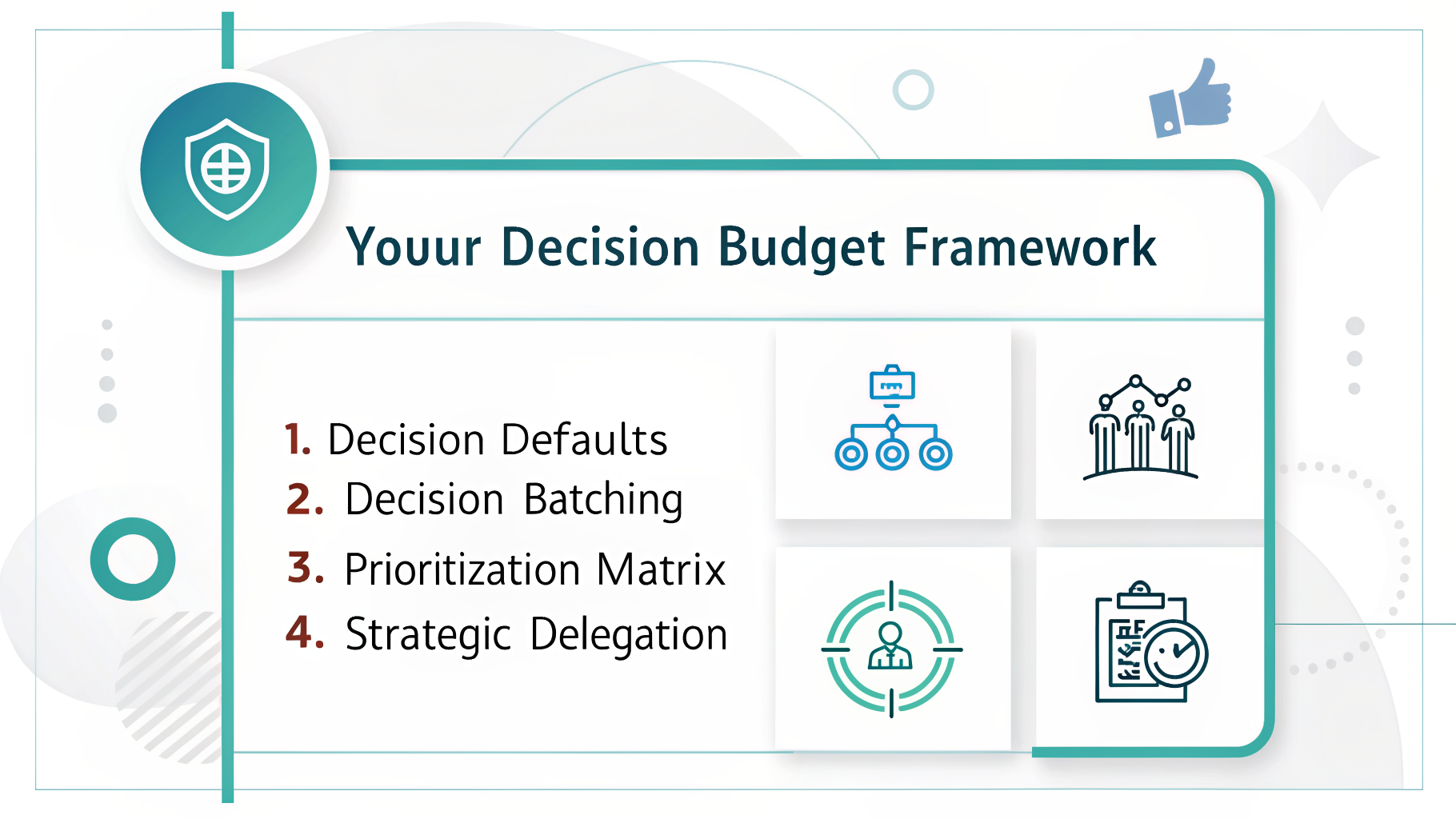
Many high-achievers mistakenly believe their cognitive capacity is limitless, leading to chronic mental drain. Just as you manage financial capital, strategically allocating your 'Decision Budget' involves consciously choosing where to invest finite cognitive energy. This framework, central to Beyond Overwhelm: Doctors' Top Strategies for High-Achievers to Combat Decision Fatigue and Boost Mental Clarity, empowers you to prioritize effectively and minimize unnecessary mental expenditure. To protect this budget, implement 'decision defaults' for low-stakes choices. For instance, a senior executive in Calgary might adopt a "uniform" of five go-to outfits or pre-plan weekly meals, freeing up mental bandwidth. Research confirms that willpower and decision-making capacity are finite resources that deplete with use, making these small wins significant. Practice 'decision batching' by grouping similar tasks; instead of answering emails sporadically, dedicate two specific blocks daily. This reduces the cognitive switching costs that silently erode your budget. Furthermore, apply frameworks like the Eisenhower Matrix to categorize decisions by urgency and importance, helping avoid the analysis paralysis common among leaders facing complex problems. For the best ways to reduce cognitive load for executives, strategic delegation is paramount—distributing cognitive load is an investment, not a sign of weakness. For example, delegating project coordination to an assistant frees up a CEO's capacity for high-level strategic thinking, directly boosting their mental ROI. By actively managing your 'Decision Budget' through these methods, you transition from reactively coping with overwhelm to proactively preserving your most valuable mental assets, setting the stage for sustained clarity and peak performance. Translating the 'Decision Budget' framework into your demanding schedule isn't about radical change, but strategic, incremental adjustments. Many high-achievers feel guilty for mental exhaustion, viewing it as a weakness, but proactive management is a strength, not a flaw. Instead of overhauling your entire routine, pick one or two strategies from Beyond Overwhelm: Doctors' Top Strategies for High-Achievers to Combat Decision Fatigue and Boost Mental Clarity. Perhaps implement a 15-minute "decision-making window" each morning, or pre-select your work outfits for the week. This builds confidence and makes the change sustainable. Designate specific blocks in your calendar—say, Tuesdays and Thursdays from 10:00 AM to 11:00 AM—for reviewing proposals or making critical project choices. This consolidates cognitive effort, protecting other times for focused work and reducing the constant drain of ad-hoc decisions throughout the day. To overcome overwhelm as a leader, foster a culture where team members, like a senior project manager in Calgary, are empowered to make decisions within defined parameters. This isn't offloading; it's distributing cognitive load and building team capacity. Research from the University of Waterloo suggests effective delegation can reduce a leader's decision count by up to 30% weekly. To help you proactively manage your cognitive resources and implement Beyond Overwhelm: Doctors' Top Strategies for High-Achievers to Combat Decision Fatigue and Boost Mental Clarity, this comparison table outlines the core components of each doctor-approved approach. Think of these as different investment vehicles for your 'Decision Budget,' each with unique returns and considerations. Each strategy offers a distinct pathway to protect your mental energy, a finite resource that research on ego depletion suggests diminishes throughout the day. By consciously selecting and integrating these methods, high-achievers can
Ultimately, mastering decision fatigue and boosting mental clarity isn't about working harder; it's about proactively managing your 'Decision Budget' as if it were financial capital. High-achievers often feel guilty about mental exhaustion, but research by Baumeister et al. (1998) on ego depletion clearly shows that willpower and decision-making capacity are finite resources that drain throughout the day. Recognizing this limit is a strength, not a weakness. To move Beyond Overwhelm: Doctors' Top Strategies for High-Achievers to Combat Decision Fatigue and Boost Mental Clarity, start by selecting just one or two strategies from this article to implement immediately. Perhaps it's committing to a "no-decision morning" until 9 AM, or using an app like MySerenity for guided mindfulness breaks. The goal is to make small, consistent deposits into your cognitive account rather than constantly making withdrawals. Self-compassion is your most crucial asset here. Many high-performers push past the point of exhaustion, believing it’s necessary for success. However, chronic decision fatigue significantly contributes to professional burnout, impacting both performance and well-being. Investing in your 'Decision Budget' means acknowledging your human limits, which paradoxically leads to improved decision quality, reduced stress, and greater overall life satisfaction. By framing mental clarity as a direct return on investment from your cognitive capital, you can shift from reactive coping to proactive,
Decision fatigue is the mental exhaustion that comes from making too many choices, leading to poorer decisions and reduced willpower. High-achievers often face an elevated number of complex, high-stakes decisions daily, from strategic business moves to personal commitments. This constant demand on their executive function depletes their limited cognitive energy faster than others. For instance, a physician managing patient care, research, and administrative duties can find their capacity for sound judgement diminishing by day's end. To create a personal 'decision budget,' begin by identifying your daily, recurring choices that drain mental energy. Automate or pre-decide as many as possible. For example, plan your meals for the week on Sunday, lay out your clothes the night before, or establish a fixed morning routine. Delegate tasks where appropriate, and set clear boundaries around decision-making times. This deliberate reduction in minor choices frees up significant cognitive capacity for your most critical decisions, enhancing your overall mental clarity and focus throughout the day. High-achievers often operate under immense self-imposed pressure and external expectations, making them uniquely vulnerable to cognitive overload. Their drive for excellence means they meticulously analyze every option, fearing suboptimal outcomes. This tendency to overthink, combined with juggling multiple demanding roles—like a surgeon balancing complex operations with administrative duties and family life—rapidly depletes their finite mental bandwidth. They often struggle to say "no," accumulating more decisions and responsibilities than their cognitive resources can sustainably handle. Doctors often recommend several strategies to prevent overwhelm and boost focus. These include prioritizing tasks using frameworks like the Eisenhower Matrix, practicing single-tasking to avoid context switching, and scheduling regular short breaks to reset your attention. Incorporating mindfulness exercises, ensuring adequate sleep, and engaging in regular physical activity are also crucial for cognitive resilience. Delegating non-essential decisions and establishing clear boundaries around work and personal time further reduces mental load, helping you maintain sharper focus throughout your day. Absolutely, implementing a 'decision budget' significantly aids sustained concentration. By pre-determining or automating minor daily choices—like what to wear or eat—you conserve precious cognitive energy. This deliberate reduction in mental clutter prevents your brain from becoming fatigued by trivial decisions, freeing up your willpower and attention for more complex, high-priority tasks. You'll find it easier to enter and maintain a state of deep focus, allowing you to concentrate for longer periods on work that truly matters, rather than being sidetracked by endless small choices. For high-achievers battling burnout and decision fatigue, the real challenge isn't finding an app, but rather discerning which of the "best AI mental wellness apps" offer personalized, evidence-based support beyond simple meditation. These tools address specific stressors like perfectionism or performance anxiety. Many high-achievers see anxiety as an unavoidable cost of ambition. However, clinically proven evidence based anxiety coping strategies offer significant symptom reduction, refining your internal operating system for success. Many find basic mood logging unhelpful for preventing burnout. This guide transforms mood tracking into a strategic process for proactive self-management.What is Decision Fatigue and Why High-Achievers Are Especially Vulnerable
The Hidden Cost of Constant Choices for High-Achievers
"We see it all the time: brilliant people, sharp as tacks, getting bogged down by a cascade of small decisions. It's like running a marathon on an empty tank." — Senior HR Director, Vancouver
The Science Behind It: How Cognitive Overload Impacts Your Brain and Performance

The Science Behind It: How Cognitive Overload Impacts Your Brain and Performance
Doctor-Approved Pillars for Prevention: Building Resilience Against Overwhelm and Decision Fatigue
Doctor-Approved Pillars for Prevention: Building Resilience Against Overwhelm and Decision Fatigue
Many high-achievers feel guilty about mental exhaustion, believing it signals weakness rather than a depleted "Decision Budget." Doctors emphasize proactive prevention to prevent decision fatigue in demanding careers, focusing on foundational strategies that build cognitive resilience long before overwhelm sets in. These aren't reactive fixes but strategic investments in your brain's long-term capacity.
Proactive Resilience Builders
Risks of Neglecting Prevention
Mastering Your 'Decision Budget': Strategic Allocation of Cognitive Resources
Mastering Your 'Decision Budget': Strategic Allocation of Cognitive Resources
Boosting Mental Clarity: Techniques for Sustained Focus and Sharper Thinking
When your brain feels perpetually crowded, achieving mental clarity isn't about trying harder; it's about strategic optimization. High-achievers often mistake mental exhaustion for a personal failing, yet it's often a symptom of cognitive overload, directly impacting their ability to make sound judgments. Doctor-recommended tips for mental clarity and focus emphasize proactive strategies to sustain sharp thinking, even amidst high pressure.
Practices for Sharper Thinking
Common Obstacles for High-Achievers
Practical Implementation: Integrating Strategies into Your High-Paced Life

Start Small, Build Momentum
Schedule Decision Windows
Empower Through Delegation
Recognizing the Red Flags: When to Seek Professional Support for Chronic Overwhelm
Recognizing the Red Flags: When to Seek Professional Support for Chronic Overwhelm
Even with the most robust 'Decision Budget' in place, high-achievers sometimes find themselves teetering on the edge of burnout, mistaking chronic mental drain for normal stress. The irony is that your drive for excellence can mask significant internal struggles, making it harder to admit when you need help. While our *Beyond Overwhelm: Doctors' Top Strategies for High-Achievers to Combat Decision Fatigue and Boost Mental Clarity* article offers powerful proactive tools, it's vital to distinguish between temporary cognitive strain and the persistent symptoms of high-functioning burnout.
Chronic decision fatigue, left unchecked, is a significant contributor to professional burnout. This manifests not just as exhaustion, but as cynicism, reduced professional efficacy, and a growing sense of detachment from your work and colleagues. A senior kindergarten administrator in Toronto once observed, "It's not about being tired. It's when every small choice feels like moving a mountain, and you start to question why you even bother. That's a red flag."
Research by the Mayo Clinic highlights these as core indicators of burnout.
When self-help strategies, even the most effective ones, no longer restore your mental equilibrium, it's time to consider professional guidance. This might look like persistently poor sleep despite good habits, a noticeable drop in your typical productivity over several weeks, or a constant feeling of dread before starting your workday. Seeking support from a therapist, coach, or doctor isn't a sign of weakness; it's a strategic investment in your long-term well-being and sustained performance, much like consulting a financial advisor for complex investments.
Comparison of Doctor-Approved Strategies for Cognitive Resilience
Strategy
Primary Benefit
Best Application
Key Challenge
Decision Defaults
Reduces daily micro-decisions, conserving finite willpower.
Routine tasks (e.g., morning routines, wardrobe choices).
Requires initial setup and commitment to pre-made choices.
Strategic Delegation
Distributes cognitive load, freeing up high-value decision-making.
Leaders, team-based projects, administrative tasks.
Overcoming perfectionism and building trust in others' capabilities.
Deep Work & Focus Blocks
Enhances mental clarity and high-quality output for complex problems.
Strategic planning, creative problem-solving, critical analysis.
Protecting uninterrupted time from constant interruptions.
Mindfulness & Breaks
Builds cognitive resilience and reduces stress accumulation.
Preventing overwhelm, emotional regulation during high pressure.
Consistency, overcoming the perceived time cost of pausing.
Prioritized Sleep & Nutrition
Provides foundational brain health for sustained performance.
Maintaining long-term cognitive function and well-being.
Discipline, making consistent lifestyle changes amidst demands.
Your Personalized 'Decision Budget' Action Plan
Frequently Asked Questions
What is decision fatigue and why does it affect high-achievers?
How can I create a personal 'decision budget' to improve mental clarity?
Why are high-achievers particularly vulnerable to cognitive overload?
What are doctor-approved strategies to prevent overwhelm and boost focus?
Can implementing a 'decision budget' really help with sustained concentration?
Frequently Asked Questions
What is decision fatigue and why does it affect high-achievers?
How can I create a personal 'decision budget' to improve mental clarity?
Why are high-achievers particularly vulnerable to cognitive overload?
What are doctor-approved strategies to prevent overwhelm and boost focus?
Can implementing a 'decision budget' really help with sustained concentration?
Keep reading
All articles →
Doctor's Guide: Best AI Mental Wellness Apps for High-Achievers

High-Achiever's Blueprint: 7 Evidence-Based Anxiety Coping Strategies

Strategic Mood Tracking: How to Effectively Track Your Mood for Burnout & Anxiety Management