

Strategic Journaling Blueprint: How It Reduces Anxiety Symptoms
Many dismiss journaling as just "writing feelings," but its true power in reducing anxiety symptoms comes from a structured, evidence-based approach. This method systematically externalizes and processes anxious thoughts, moving beyond generic reflection.

The Strategic Journaling Blueprint: How Journaling Reduces Anxiety Symptoms
The Strategic Journaling Blueprint: How Journaling Reduces Anxiety Symptoms
Many adults, particularly those in high-stress roles in cities like Vancouver or Toronto, often dismiss journaling as merely "writing down feelings," having tried it without real impact. Yet, the true power of journaling in reducing anxiety symptoms lies not in free-form rambling, but in a structured, evidence-based approach that systematically externalizes and processes anxious thoughts. This method, often called expressive writing, directly interrupts rumination and worry cycles, moving beyond generic reflection to offer targeted techniques that foster emotional regulation and shift perspective, as demonstrated by early research like Pennebaker & Beall (1986) which showed significant reductions in psychological distress.
Our ‘Strategic Journaling Blueprint’ directly addresses this skepticism. It acknowledges that ‘just writing’ rarely works for people who experience moderate to high levels of anxiety. Instead, this blueprint focuses on actionable, time-efficient methods, making it accessible even for busy individuals who are concerned about adding another task to their already packed schedules. It's about purposeful writing, not passive note-taking.
By externalizing thoughts and emotions onto paper or a digital canvas like the MySerenity app, individuals gain critical distance from their internal chatter. This process isn't just cathartic; it allows for cognitive restructuring, helping you identify patterns in your anxiety and develop new responses. This blueprint helps you understand precisely how journaling reduces anxiety symptoms, transforming a vague concept into a tangible, mental wellness tool.
Understanding Anxiety: How Journaling Interrupts the Cycle of Worry and Stress
Interrupting the Cycle: Journaling as an Anxiety Disruptor
Anxiety often feels like a relentless loop, a hamster wheel of rumination and persistent worry that seems impossible to escape. You might find your mind replaying conversations from yesterday or catastrophizing about a presentation next month, trapping you in negative thought patterns. This internal dialogue not only drains energy but actively fuels the anxiety, making it difficult to find mental quiet.
Journaling offers a tangible way to break this cycle. Instead of letting anxious thoughts swirl chaotically in your head, the act of writing them down externalizes them. This shifts those overwhelming internal dialogues onto a piece of paper or screen, transforming them from an amorphous threat into a concrete, manageable format. For instance, someone might write down their worries about a student's behavioural changes, which helps them see the situation more clearly than just thinking about it.
This physical act creates a crucial psychological distance. You're no longer consumed by the thought; you're observing it. This allows for a more objective analysis, much like reviewing a map from above rather than being lost within the terrain. Research, including foundational work by Pennebaker and Beall (1986) on expressive writing, shows that this process can significantly reduce psychological distress, including anxiety, by helping individuals process stressful events.
Regular journaling provides a structured opportunity to process stressors, preventing them from escalating into full-blown anxiety attacks. This consistent practice is how journaling reduces anxiety symptoms over time, fostering emotional regulation and self-awareness. By regularly noting your thoughts and feelings, you begin to identify triggers and patterns in your anxiety, which is the essential first step toward effective management and reduction of symptoms. This self-discovery is pivotal for moving beyond reactive anxiety responses to proactive coping strategies.
The Science of Serenity: Neurological and Psychological Mechanisms of Journaling for Anxiety
The Science of Serenity: Neurological and Psychological Mechanisms of Journaling
Many people dismiss journaling as "just writing," overlooking the profound neurological shifts it triggers. The surprising truth is that simply putting words on paper can directly influence your brain chemistry and thought patterns, offering a concrete pathway to reduce anxiety symptoms. This isn't about vague self-help; it's about engaging specific brain functions to regain a sense of calm. When you write about your worries, you're not just venting; you're activating your parasympathetic nervous system. This system is responsible for your body's "rest and digest" response, directly counteracting the "fight or flight" mode that anxiety triggers. A kindergarten teacher, for example, might use a quick five-minute journaling session before a parent-teacher interview to shift their physiological state from apprehension to readiness. This process helps to quiet the amygdala, the brain's alarm centre, reducing the intensity of anxious feelings. Research, including landmark work by Pennebaker and Beall (1986), demonstrates that expressive writing significantly reduces psychological distress. This occurs because journaling provides a safe, private space to explore and label emotions, a critical step in improving emotional regulation. For someone struggling with generalized anxiety, identifying the specific triggers and feelings in their journal allows for a more structured approach to managing them, rather than being overwhelmed by a vague sense of dread. Regular journaling also acts as a powerful deterrent to rumination and worry. By externalizing thoughts onto paper, you create distance from them, making it easier to examine them objectively. This cognitive restructuring allows you to challenge irrational thoughts and gain new perspectives on stressors, directly impacting how journaling reduces anxiety symptoms. Furthermore, consistent practice has been linked to physiological benefits beyond mental calm, such as improved sleep quality and even better immune function, underscoring its holistic impact on well-being.Beyond Free-Form: Evidence-Based Journaling Techniques for Specific Anxiety Symptoms

Beyond Free-Form: Targeted Techniques for Anxiety Relief
If your past journaling attempts felt like aimless scribbling, you're not alone. Many people abandon journaling because they don't move beyond generic free writing, missing the specific, evidence-based techniques that truly show how journaling reduces anxiety symptoms. The real impact comes from applying targeted methods, each designed to address a particular facet of anxious thought or feeling.
| Technique | Best For | How It Works (Example) |
|---|---|---|
| Cognitive Restructuring Journaling | Challenging rumination, negative thought patterns | Identify a thought like "I'm going to fail this presentation." Then list evidence for and against it, reframing it to "I'm prepared, and even if it's not perfect, I'll learn." |
| Worry Dump / Brain Dump | Acute overwhelm, mental clutter, pre-sleep anxiety | Spend 5-10 minutes writing down every single worry, task, or thought swirling in your head, no matter how small or illogical. Externalize it all. |
| Emotional Check-in & Labeling | Improving emotional regulation, reducing intensity of feelings | "Right now, I feel a tight chest (sensation) and intense dread (emotion). I'm calling this 'anticipatory anxiety' about tomorrow's meeting." |
| Gratitude Journaling | Shifting focus from worry, promoting positive affect | List 3-5 specific things you're genuinely grateful for today: the quiet morning coffee, a colleague's helpful email, the comfortable chair you're sitting in. |
These structured approaches move beyond simply venting, offering concrete pathways to process and reframe anxiety-provoking thoughts. A person with a busy day, for instance, might use a worry dump before bed to clear their mind of daily concerns, making space for more restful sleep. This systematic application of writing techniques helps you actively dismantle anxious cycles, rather than just observing them.
Practical Prompts for High-Achievers: What to Write When You're Overwhelmed
Practical Prompts for High-Achievers: What to Write When You're Overwhelmed
Feeling overwhelmed often stems from a swirling vortex of unaddressed concerns, making the thought of "just writing" feel like another burden. Many busy professionals in cities like Vancouver or Toronto, already juggling demanding careers and family life, might dismiss journaling as a luxury they can't afford. However, strategic prompts can cut through that mental fog, turning a daunting task into a focused, time-efficient anxiety reduction tool. The goal isn't literary genius; it's clarity and emotional regulation, even if you only have five minutes. Instead of staring at a blank page, specific questions guide your thoughts toward resolution. This focused approach helps you externalize worries, a key mechanism in how journaling reduces anxiety symptoms by interrupting rumination. When thoughts are on paper, they're less likely to loop endlessly in your mind, as research on expressive writing by figures like James Pennebaker has consistently shown. These prompts are designed to be quick yet impactful, helping you move from a state of generalized overwhelm to specific, actionable insights. By consistently engaging with these targeted questions, you build a mental muscle for problem-solving and emotional processing, preparing you for more advanced techniques that further interrupt the anxiety cycle.Integrating Journaling into Your Busy Life: Time-Saving Strategies and Consistency Tips
Integrating Journaling into Your Busy Life: Time-Saving Strategies and Consistency Tips
The idea of adding another task to an already packed schedule can feel impossible, especially when anxiety already steals your time and focus. But you don't need hours to discover how journaling reduces anxiety symptoms; even a few focused minutes can make a difference. The key is to make it a sustainable habit, not another source of stress.
Micro-Journaling: 5-10 Minutes a Day
Forget lengthy prose. Dedicate just 5-10 minutes. A commuter, for example, might use their 7-minute bus ride to jot down three specific worries that surfaced during the morning, or three things they're grateful for. Focus on concise, targeted prompts rather than exhaustive entries.
Theme Days to Reduce Decision Fatigue
Remove the "what should I write?" hurdle. Assign specific journaling techniques to different days. Perhaps Mondays are for a "worry dump" in a MySerenity digital journal, Wednesdays for gratitude, and Fridays for noting small wins. This structure streamlines your practice and reduces cognitive load.
Digital vs. Analog: Find Your Flow
While many find the tactile experience of pen and paper soothing, it's not for everyone. If traditional journaling feels too slow or cumbersome, experiment with digital apps like Day One, or even voice memos on your phone. The goal is to externalize thoughts, not to produce a handwritten manuscript.
Stacking Habits for Smooth Integration
Pair your journaling with an existing, non-negotiable habit. An urban professional in Vancouver might journal during their morning coffee, or a parent in Calgary could write for five minutes after tucking in their children. This makes journaling feel like a natural extension of your routine, not an extra chore.
Remember, consistency is about showing up, not perfection.
Troubleshooting Common Journaling Roadblocks: When It Feels Hard or Doesn't Seem to Work

Troubleshooting Common Journaling Roadblocks
It's common to hit a wall when you start journaling, especially if you're feeling anxious or overwhelmed. Many people in British Columbia's busy urban centres, for instance, report feeling worse initially or struggling to find the right words. These hurdles don't mean journaling isn't for you; they're normal parts of the process.Common Roadblocks & Solutions
- I don't know what to write. Start with a simple "How am I feeling right now?" Specific prompts, like those in a MySerenity guided journal, can also kickstart the process.
- Some people feel worse after writing. Processing difficult emotions can be intense. Always include a "closing ritual," such as writing a positive affirmation or planning a small, achievable action step for tomorrow.
- "It feels like a waste of time": Remind yourself of the scientific backing – expressive writing reduces psychological distress, as documented by Pennebaker & Beall in 1986. Track subtle shifts in your mood over a few weeks to observe the cumulative impact.
- My thoughts are too messy. Journaling isn't about perfect prose. Embrace the chaos as an authentic reflection of your internal state; don't edit or censor. The act of externalizing thoughts is the goal.
- Reflect on your method. If free-form didn't help how journaling reduces anxiety symptoms for you, experiment with structured techniques like gratitude lists or cognitive reframing exercises. Immediate, dramatic shifts are rare; consistency is key.
When Journaling Might Feel Hard
- Initial emotional discomfort: Confronting difficult emotions can be uncomfortable before it becomes cathartic. This is a sign you're engaging with underlying feelings.
- Lack of immediate gratification: The benefits of journaling, like improved emotional regulation and reduced rumination, often accrue gradually rather than instantly.
- Feeling overwhelmed by choice: Too many prompts or styles can lead to decision paralysis, especially when anxiety is high. Stick to one simple method to start.
- Self-judgment or perfectionism: The urge to write "well" or "correctly" can block genuine expression. Remember, this is for you alone.
Journaling as Part of a Holistic Strategy: Combining with Other Mental Wellness Tools
Journaling as Part of Your Holistic Strategy
You might feel that adding journaling to your routine is just another task, especially when you are already managing mindfulness, exercise, or therapy. The truth is, journaling isn't a standalone solution; it's a powerful accelerant for other mental wellness tools. For instance, a 10-minute pre-bed "brain dump" journaling session may help some people clear their minds of the day's worries, which can make it easier to sleep, since chronic anxiety often disrupts sleep quality. This practice supports healthy sleep hygiene, a critical factor for overall well-being.
Journaling significantly enhances the effectiveness of other anxiety-reducing practices. It deepens self-awareness gained during meditation, providing a concrete space to process insights. As an adjunct to therapy, journaling allows you to track progress, explore difficult topics between sessions, and reinforce techniques like cognitive restructuring learned from your therapist. Combining journaling with physical activity, such as a brisk 30-minute walk, creates a synergistic effect; both help regulate mood and reduce stress hormones. For high-achievers, integrating journaling with time management methods, like using a planner to prioritize tasks, can directly reduce the anxiety stemming from overwhelm and a perceived lack of control. This strategic approach to how journaling reduces anxiety symptoms makes it an invaluable part of a comprehensive mental wellness plan.
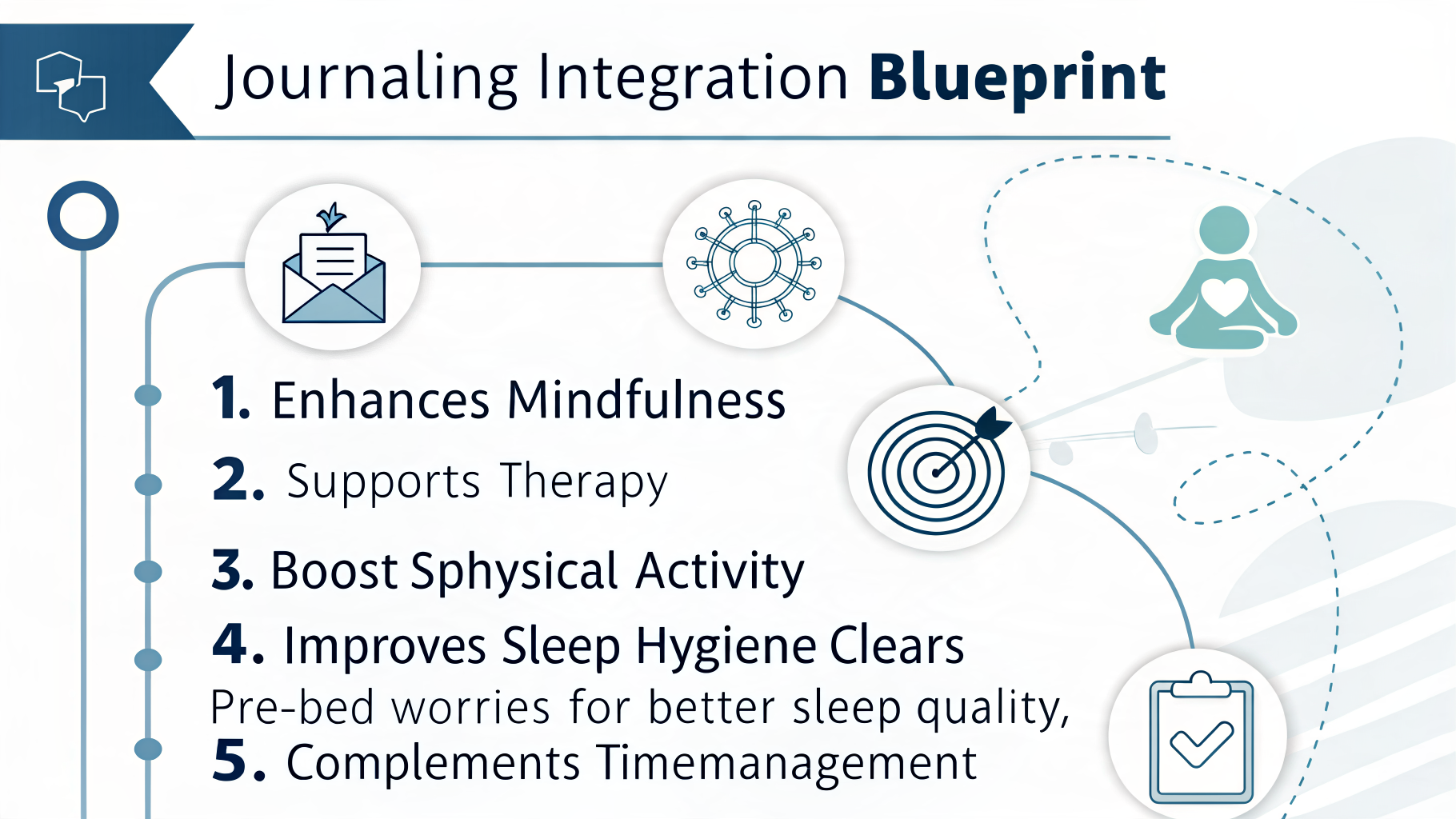
By viewing journaling not as an isolated activity but as a connective tissue for your existing wellness efforts, you can amplify its impact. It provides a reflective space that makes every other self-care action more potent, helping you build a robust defence against anxiety symptoms.
When to Seek Professional Support: How Journaling Complements Therapy
When to Seek Professional Support: How Journaling Complements Therapy
While journaling offers a powerful path to self-awareness and can significantly reduce everyday anxiety, it is never a substitute for professional diagnosis or treatment. Many individuals find relief from mild to moderate stress through regular writing practices, but if you're experiencing severe anxiety disorders, frequent panic attacks, or persistent feelings of hopelessness, professional help is essential. For instance, if your anxiety prevents you from attending work in downtown Calgary for over a week, or if social interactions at family gatherings in Vancouver become unbearable, those are clear indicators that journaling alone might not be enough.
Recognizing when to seek expert guidance is a sign of strength and responsible self-care. If anxiety symptoms are significantly impairing your daily life, relationships, or work performance, or if you ever experience suicidal thoughts, please reach out to a mental health professional immediately. A therapist can provide tailored strategies, discuss medication options if appropriate, and offer a safe, structured environment to process trauma or deeply rooted anxiety that expressive writing alone may not fully address. Think of it this way:
In many cases, journaling becomes an excellent complement to therapy. It provides a personal, unfiltered record of your thoughts, feelings, and progress between sessions, which you can share and discuss with your therapist. This synergy can deepen therapeutic insights and accelerate your journey towards greater well-being. Tools like MySerenity can help you track these entries, making them easy to share. Understanding how journaling may ease feelings of anxiety is useful, but knowing its limits helps you recognize when professional support is needed for lasting mental health.
Frequently Asked Questions About Journaling for Anxiety
When you're dealing with persistent worry or stress, practical questions often arise about how journaling actually works. You might wonder if it's worth your limited time, or if it will genuinely make a difference. These common concerns are valid and deserve clear answers.Your Journaling Questions, Answered
Even 5-10 minutes daily can be effective. Consistency, rather than long sessions, is key, especially when using targeted prompts to focus your thoughts.
While some immediate emotional release can occur, sustained reduction in anxiety symptoms typically develops over weeks or months of consistent practice. Think of it as building a mental muscle.
Research indicates benefits like reduced amygdala activity (the brain's fear centre), improved emotional regulation, lower stress hormones like cortisol, and enhanced self-awareness.
For high-functioning anxiety, focus on prompts that specifically address perfectionism, imposter syndrome, and boundary setting, alongside general anxiety techniques. MySerenity, for example, offers guided prompts for these specific challenges.
Initially, processing difficult emotions might feel intense or uncomfortable. If journaling consistently heightens your anxiety without leading to any resolution or insight, ensure you have strong coping strategies or consider discussing it with a mental health professional in Montreal or your local area.
Begin simply. Grab a basic notebook or use a digital app, find a quiet time slot, and try a structured prompt like "What's one thing causing me stress today, and how can I reframe it?" to guide your first entry.
Frequently Asked Questions
How does writing in a journal help reduce anxiety?
What are the best journaling techniques for managing anxiety symptoms?
Why is journaling effective for calming an anxious mind?
Can journaling alone replace therapy for anxiety?
Is journaling a good strategy for daily stress and worry?
Keep reading
All articles →
Stress or Burnout? A Self-Check for Driven Professionals
Exhaustion is not automatically burnout, and that distinction matters. This self-check walks you through the markers that separate ordinary work stress from a pattern you can no longer manage on your own.

How to Recognize Decision Fatigue Before It Derails Your Day
Your small choices may cost more energy than your big ones, and the research behind decision fatigue is messier than most articles admit. This guide shows how to spot the warning signs early and lighten your daily load with practical habits.

Burnout or Rustout? High-Achievers' Self-Diagnosis Guide
High-achievers often misinterpret professional unease as simple exhaustion, overlooking the critical distinction between burnout and rustout. This misdiagnosis leads to ineffective solutions, leaving them feeling even more stuck.