

High-Achiever's Blueprint: 7 Holistic Approaches to Stress Reduction
Many high-achievers dismiss holistic approaches to stress reduction, yet growing evidence supports their efficacy. True holistic stress reduction addresses mind, body, spirit, and environment for lasting resilience.

Understanding 'Holistic': More Than Just a Buzzword for Stress Reduction
Understanding 'Holistic': More Than Just a Buzzword for Stress Reduction
Many high-achievers dismiss "holistic approaches to stress reduction" as vague, unscientific, or simply "woo-woo," yet a 2018 review in JAMA Internal Medicine highlighted the growing evidence for mind-body therapies in managing chronic pain and stress. True holistic stress reduction moves beyond isolated remedies to address the interconnectedness of your mind, body, spirit, and environment, recognizing that lasting resilience requires a multi-dimensional strategy. It’s about understanding that the generic meditation app offering 10-minute "calm" might provide temporary relief, but it rarely tackles the underlying causes of the burnout that 77% of professionals reported experiencing in a 2023 Deloitte survey.
For individuals accustomed to data-driven decisions, the "holistic" label can feel like a departure from scientific rigor. However, this framework is fundamentally about identifying and addressing the root causes of stress, offering integrative solutions rather than just suppressing symptoms. Consider a project manager in Vancouver struggling with chronic fatigue; a holistic view wouldn't just suggest more sleep, but would also investigate nutritional deficiencies, workplace culture, screen time habits, and even their sense of purpose.
This comprehensive perspective explains why many generic stress-reduction solutions often fall short. They treat symptoms in isolation. A basic breathing exercise, while beneficial, won't resolve the systemic issues causing chronic stress if your work environment is toxic or your sleep hygiene is poor. A truly holistic approach helps you build a personalized, evidence-backed toolkit that accounts for the complex interplay of factors contributing to your specific stressors, moving beyond the limited scope of single-solution apps or books.
Why Generic Stress Relief Falls Short for High-Achievers (and What You Actually Need)
Why Generic Stress Relief Falls Short for High-Achievers
You've likely tried the popular stress-reduction apps or heard the well-meaning advice to "just relax." For many high-achievers, these generic solutions often feel like a band-aid on a gushing wound, offering temporary calm but failing to address the relentless pressures of a demanding career. It's not that these tools are inherently bad; it's that they rarely account for the systemic performance anxiety, chronic time constraints, and the sheer volume of responsibilities that define your daily life.
The reality is, what works for someone managing mild, occasional stress often falls critically short for those experiencing burnout. A 2023 Deloitte survey, for instance, found that a striking 77% of respondents had experienced burnout at their current job. This isn't a personal failing; it's a clear signal that the typical advice doesn't match the scale of the problem. Your need isn't just for a moment of quiet, but for robust, evidence-backed holistic approaches to stress reduction that integrate into your demanding schedule without adding another item to your already overwhelming to-do list.
These figures aren't just statistics; they represent countless individuals like you, grappling with the profound impact of unmanaged stress. The economic cost alone, estimated at $300 billion annually in the U.S. due to work-related stress, underscores how insufficient current strategies are at a societal level. For high-achievers, this manifests as a cycle where basic solutions provide fleeting relief, only for the underlying physiological and psychological mechanisms of chronic stress to resurface, increasing risks for serious health issues like heart disease or type 2 diabetes.
"Telling someone with chronic work stress to just 'do a 10-minute meditation' is like handing a teaspoon to someone bailing out a sinking boat. It misses the point entirely." — kindergarten administrator, Toronto
What you actually need are practical, low-barrier tools and holistic mental wellness strategies tailored for busy professionals. These must address your unique stressors, offering sustainable relief that doesn't demand more of your precious time but instead integrates seamlessly, becoming a natural part of how you operate at your peak.
The Science-Backed Pillars of Holistic Stress Resilience (Mind, Body, Environment, Connection)
The Science-Backed Pillars of Holistic Stress Resilience
Many high-achievers find themselves chasing quick-fix solutions for stress, only to discover that generic apps and basic tips offer fleeting relief. The deeper truth, often overlooked, is that lasting stress resilience isn't about isolated techniques; it emerges from intentionally nurturing four interconnected pillars: Mind, Body, Environment, and Connection. Ignoring any one of these creates a weak point in your defence against chronic stress, which, as a 2023 Deloitte survey highlighted, contributes to burnout for 77% of professionals.
Holistic approaches to stress reduction acknowledge that your internal state is a complex interplay. Your Mind isn't just about thinking positive thoughts; it involves neuroplasticity – your brain's ability to rewire itself. Techniques like cognitive behavioural therapy (CBT) help reframe stress responses, moving beyond simple meditation to actively reshape neural pathways. Similarly, the Body is far more than a vessel; its physiological health, including the gut-brain axis and hormonal balance, profoundly dictates your stress response. Targeted nutrition, regular movement, and consistent, quality sleep directly impact your nervous system's ability to regulate.
"We've seen that when students improve their sleep or nutrition, their capacity for emotional regulation in the classroom improves dramatically. It's not just about teaching coping skills; it's about building the physiological foundation for them." — elementary school principal, Calgary
Your external world, the Environment you inhabit, also plays a critical role. This includes both your physical space – a cluttered office can heighten anxiety – and your digital hygiene. Setting boundaries with devices and curating a calm workspace directly reduces sensory overload, a common stressor for busy professionals. Finally, Connection, through strong social ties and a sense of purpose, acts as a powerful buffer against stress. Neurobiological research consistently shows that community involvement and meaningful engagement release oxytocin and reduce cortisol, enhancing overall well-being. A 2018 review in JAMA Internal Medicine specifically validated the interconnectedness of these pillars, noting strong evidence for mind-body therapies like yoga and acupuncture in managing chronic pain and stress.
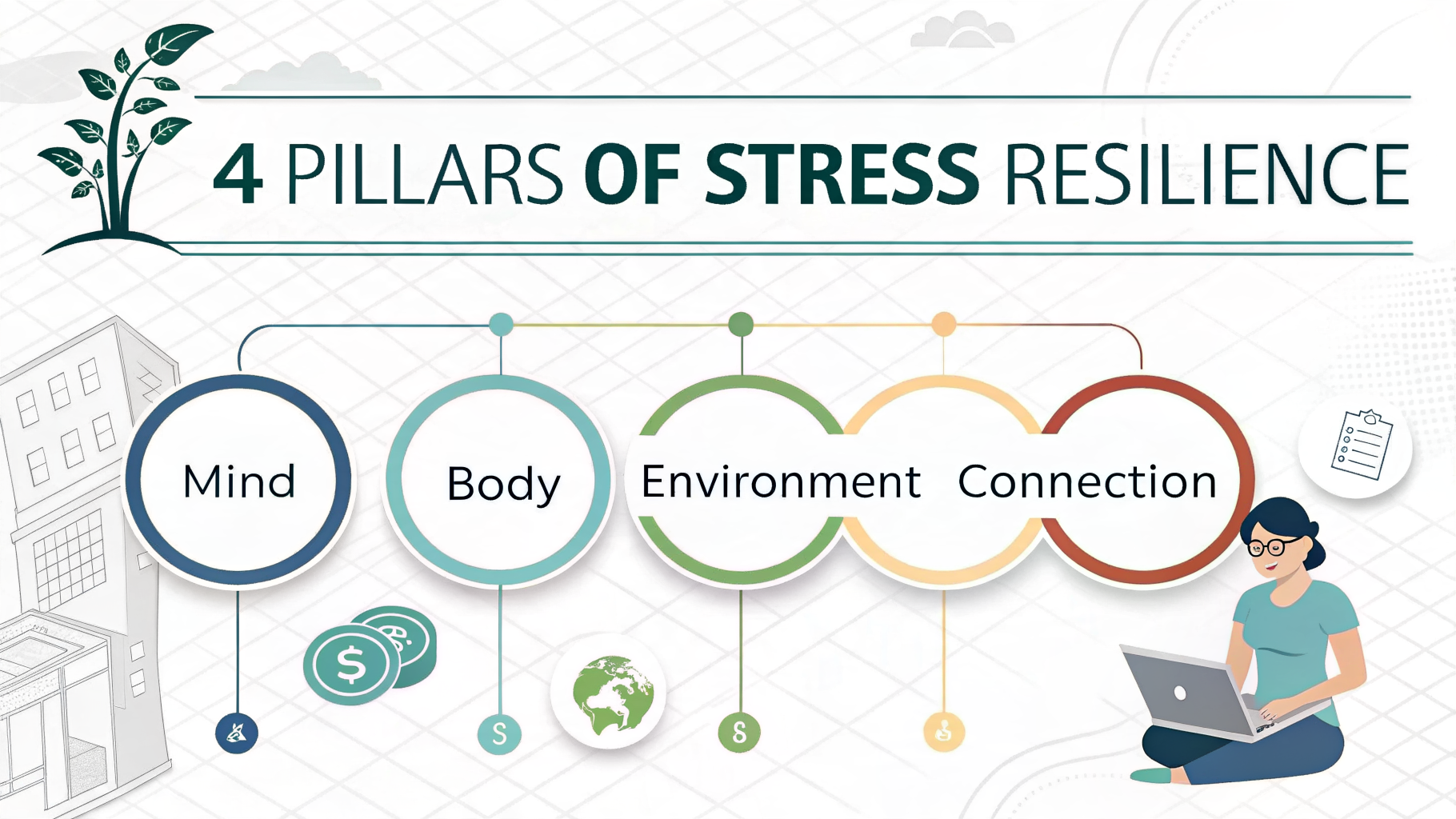
Understanding these pillars isn't just academic; it's the groundwork for building a personalized, sustainable strategy that moves beyond generic solutions and addresses the root causes of stress in your high-achieving life.
Building Your Personalized Holistic Stress Toolkit: Practical Strategies for Busy Lives

Feeling overwhelmed by countless "holistic" remedies, unsure which actually work or fit your demanding schedule? Many high-achievers find generic apps and self-help books fall short, leaving them burned out despite their best efforts. Building a truly effective, personalized toolkit for holistic approaches to stress reduction requires a structured, evidence-based strategy.
Assess Your Stressors & Symptoms
Before you build, understand what you're building for. Pinpoint the specific triggers that elevate your stress—is it project deadlines, team conflicts, or the constant influx of emails? Note your body's specific reactions: chronic headaches, disrupted sleep patterns, or persistent irritability. A 2023 Deloitte survey noted 77% of professionals experienced burnout, underscoring the need for precise self-assessment over one-size-fits-all solutions.
Prioritize Evidence-Based Practices
Your time is valuable, so invest it in what works. Look for techniques with scientific backing. For instance, a 2018 review in JAMA Internal Medicine highlighted the efficacy of mind-body therapies like yoga and meditation for chronic stress. Instead of chasing every new trend, consider accessible options like a 10-minute progressive muscle relaxation sequence or a brisk walk during your lunch break, both supported by physiological research.
Start Small, Integrate Gradually
Don't try to overhaul your entire routine at once. Introduce one or two new practices, focusing on consistency. Perhaps begin with 5 minutes of mindful breathing before your first meeting, or switch one evening coffee for herbal tea. The goal is sustainable integration, not perfection. A senior marketing manager in Vancouver might start by blocking 15 minutes for a guided meditation using an app like MySerenity, gradually increasing the duration as it becomes routine.
Track & Adjust Your Toolkit
Monitor the impact of your chosen strategies. Keep a simple journal or use a mood tracking app to note changes in your energy levels, sleep quality, and overall sense of calm. If a specific technique isn't yielding results after a few weeks, don't hesitate to swap it out. This iterative process ensures your toolkit remains dynamic and genuinely effective for your unique needs.
While many high-achievers instinctively reach for quick fixes, the most profound and lasting stress reduction begins with the body's fundamental needs. It's an irony that those pushing their mental limits often neglect the very physiological pillars that support cognitive function and emotional resilience. True holistic approaches to stress reduction acknowledge that your brain cannot perform optimally if your body is under constant physiological duress from poor diet, inactivity, or insufficient rest. Consider your plate as a powerful tool against the impacts of chronic stress. An anti-inflammatory diet, rich in omega-3 fatty acids, probiotics, and whole foods, directly supports gut-brain axis health and neurotransmitter production. For instance, a senior accountant in Calgary, often working 60+ hour weeks, might find stabilizing blood sugar with balanced meals and healthy fats prevents the energy crashes that exacerbate irritability and anxiety. Research consistently shows that nutrient-dense eating patterns, like the Mediterranean diet, are linked to lower rates of depression and anxiety, offering more than just temporary relief by addressing underlying physiological imbalances. Movement, too, is far more than just burning calories. For a marketing executive experiencing burnout in Montreal, a brisk 30-minute walk during lunch can downregulate the nervous system, releasing endorphins that naturally reduce cortisol levels. This isn't about high-intensity interval training (HIIT) adding more stress; it's about accessible, consistent movement like yoga, stretching, or even gardening that actively supports parasympathetic nervous system activity. A 2018 review in JAMA Internal Medicine specifically highlighted the growing evidence for mind-body therapies like yoga in managing chronic pain and stress, demonstrating its tangible benefits beyond just flexibility. Finally, sleep is non-negotiable for resilience. Chronic stress significantly increases the risk of sleep disorders, which in turn exacerbate stress and health issues. Implementing evidence-based sleep hygiene strategies—like maintaining a consistent sleep schedule even on weekends, optimizing your bedroom environment for darkness and cool temperatures, and limiting screen time before bed—directly impacts your body's ability to repair and restore. A project manager in Toronto, struggling with 3 AM wake-ups, might find that even small shifts, like moving their last coffee to before noon and using MySerenity's guided sleep meditations, significantly improve sleep quality over time, making them more resilient to daily pressures. These foundational practices are not just add-ons; they are the bedrock upon which all other mental wellness strategies must be built. Integrating these elements provides a robust base for sustained energy and calm amidst demanding schedules, ensuring you have the physiological capacity to not just cope, but thrive. Understanding the physiological impacts of chronic stress underscores why foundational practices are essential. The table below illustrates how common stressors manifest physically and how
While high-achievers often focus on internal strategies like mindfulness, a significant oversight is the profound impact of external factors: our social connections and physical surroundings. It's an irony that in striving for peak performance, many inadvertently isolate themselves or neglect their immediate environment, creating invisible stressors that undermine even the most diligent internal work. Meaningful relationships, for instance, act as a powerful buffer against stress, with research consistently showing that strong social ties correlate with lower rates of anxiety and depression. Consider the impact of a senior project manager in Vancouver who, despite a demanding schedule, dedicates 30 minutes weekly to a virtual coffee chat with a mentor and joins a local hiking group twice a month. These seemingly small commitments provide critical emotional support and perspective, directly countering the isolation often felt in high-pressure roles. Similarly, a well-designed physical space can significantly reduce cognitive load. An organized desk, natural light, and even a few plants in an office can decrease perceived stress, as opposed to a cluttered, dimly lit environment that constantly pulls at your attention and energy. By proactively shaping your external world through these holistic approaches to stress reduction, you build a supportive ecosystem that reinforces your internal strategies. These external adjustments are not mere add-ons; they are crucial components of an integrative approach to managing chronic stress, creating a foundation upon which other wellness practices can thrive. Even with a robust personalized toolkit of holistic approaches to stress reduction, there are moments when professional guidance becomes essential. It’s an act of strength, not failure, to recognize when your well-being requires more than self-managed strategies. For instance, if you experience persistent feelings of hopelessness for weeks, severe anxiety that interferes with daily tasks at your Calgary office, or if your sleep quality remains poor despite consistent efforts with mindfulness and exercise, these are clear signals to seek help. A 2023 Deloitte survey found that 77% of respondents experienced burnout, underscoring how common and impactful chronic stress can be, sometimes necessitating external support. Professional support takes many forms, each complementing your existing holistic practices. Cognitive Behavioural Therapy (CBT) or Dialectical Behaviour Therapy (DBT) with a registered psychologist in Vancouver can equip you with structured techniques to reframe thought patterns. A certified stress coach might help you develop actionable plans for time management and boundary setting, directly addressing the work-related pressures that contribute to burnout. You might also explore functional medicine practitioners, who can investigate physiological root causes of fatigue or mood swings, such as nutrient deficiencies or hormonal imbalances, which traditional holistic methods might not fully address. These aren't replacements but powerful augmentations. When you engage with a mental health professional, be upfront about your existing holistic practices. Share that you use an app like MySerenity for guided meditations, practice yoga three times a week, or prioritize whole foods. This transparency allows your therapist or coach to integrate these efforts into a truly comprehensive treatment plan, validating your journey and ensuring all strategies work in concert. This combined approach addresses both the immediate symptoms of stress and the deeper, underlying issues contributing to chronic stress and burnout, building a far more resilient framework for your mental wellness. You’ve seen the headlines, heard the buzz, and maybe even tried a few things. It’s natural to have questions about how holistic approaches to stress reduction fit into your already packed life, especially if past attempts felt like more work than relief. Forget hour-long sessions. Integrate "micro-practices" – 5-10 minute bursts of mindfulness during your commute, a few deep breaths before a meeting, or a quick walk during lunch. Consistency, even in small doses, builds resilience over time. Many holistic methods have solid scientific backing. Mindfulness, yoga, and specific nutritional interventions are supported by research; a 2018 review in JAMA Internal Medicine, for instance, highlighted strong evidence for mind-body therapies in managing chronic stress and pain. You’re not alone. Many high-achievers find basic meditation apps offer temporary relief but don't address root causes of burnout. This article focuses on personalized, integrative approaches that go beyond surface-level relaxation, targeting your unique stressors. Some benefits, like improved focus or calm, can appear quickly. However, building lasting stress resilience is a gradual process. Expect weeks to months of consistent practice to truly integrate these changes and feel their full impact. For many, holistic strategies significantly reduce everyday stress. However, for severe or chronic stress, they are best used as complementary tools alongside professional medical or psychological support. Always consult a healthcare provider for significant concerns. The journey towards holistic stress reduction isn't about finding a single magic bullet, but rather curating a personalized toolkit that resonates with your life. By addressing these common concerns, you can move forward with confidence, knowing that effective, evidence-backed strategies are within reach, even for the busiest schedules. A holistic approach to stress reduction considers the whole person – mind, body, and spirit – and their environment. It moves beyond isolated techniques like a single meditation session, integrating practices such as balanced nutrition, regular movement like daily walks, adequate sleep, and fostering strong social connections. For instance, addressing chronic sleep deprivation alongside practicing gratitude can significantly enhance overall resilience, rather than just managing symptoms. Building a personalized toolkit starts with self-awareness. You might track your energy levels after a 10-minute nature walk versus a guided breathing exercise. Experiment with different strategies, like journaling for emotional processing or incorporating a 5-minute stretching routine into your workday. The key is finding what genuinely resonates and fits into your specific schedule, perhaps using a mindfulness app like MySerenity during your commute, to create sustainable habits. Nutrition, movement, and sleep form the bedrock because they directly impact your physiological stress response. A balanced diet stabilizes blood sugar, preventing energy crashes that heighten irritability. Regular physical activity, like a brisk 30-minute walk, releases endorphins, improving mood and reducing tension. Quality sleep allows your body to repair and regulate hormones, enhancing your resilience to daily stressors and preventing burnout. Mindfulness extends beyond formal meditation; it's about cultivating present-moment awareness without judgment in everyday life. While meditation is a practice to build this skill, mindfulness applies to activities like mindfully eating a meal, truly listening during a conversation, or noticing sensations during a walk. It helps you observe stressful thoughts without getting entangled, fostering a calmer, more responsive approach to daily challenges. Absolutely, professional therapy, such as Cognitive Behavioural Therapy (CBT) or talk therapy, can powerfully complement holistic strategies. Therapy helps you identify and reframe unhelpful thought patterns or process underlying emotional issues that holistic practices might only soothe superficially. For example, combining weekly therapy sessions with daily yoga and improved sleep creates a robust, multi-faceted approach, addressing both the symptoms and root causes of chronic stress. For high-achievers battling burnout and decision fatigue, the real challenge isn't finding an app, but rather discerning which of the "best AI mental wellness apps" offer personalized, evidence-based support beyond simple meditation. These tools address specific stressors like perfectionism or performance anxiety. Many high-achievers see anxiety as an unavoidable cost of ambition. However, clinically proven evidence based anxiety coping strategies offer significant symptom reduction, refining your internal operating system for success. Many find basic mood logging unhelpful for preventing burnout. This guide transforms mood tracking into a strategic process for proactive self-management.Nutrition, Movement, and Sleep: Foundational Holistic Practices for Energy & Calm
Nutrition, Movement, and Sleep: Foundational Practices for Energy & Calm
"We often tell our staff to 'power through,' but you can't out-willpower a body starved for nutrients or rest. Investing in these basics is not a luxury; it's a performance strategy." — HR Director, Tech Startup, Vancouver
Mindfulness & Emotional Regulation: Beyond Basic Meditation Techniques

Mindfulness & Emotional Regulation: Beyond Basic Meditation Techniques
Many high-achievers find generic meditation apps only scratch the surface of their stress. True resilience often requires moving past basic guided sessions to engage with deeper mindfulness and emotional regulation practices that reshape how your brain processes stressors.
Why Go Deeper?
Potential Challenges
Cultivating Connection & Environment: External Factors for Internal Peace
Cultivating Connection & Environment: External Factors for Internal Peace
"We often tell ourselves we don't have time for social connection or tidying up, but these aren't luxuries. They're foundational elements of a resilient mind, especially when you're operating at a high level." — wellness director, major Canadian tech firm
Integrating Holistic Approaches with Professional Support: When and How to Combine Strategies
"Combining my meditation practice with regular therapy sessions helped me understand not just *what* I was feeling, but *why*, and gave me concrete tools to shift those patterns. It was the missing piece." — Senior Marketing Manager, Montreal
FAQs: Your Holistic Stress Reduction Questions Answered
Your Holistic Stress Reduction Questions Answered
Frequently Asked Questions
What does a holistic approach to stress reduction actually involve?
How can I build a personalized holistic stress toolkit for my busy life?
Why are nutrition, movement, and sleep considered foundational for holistic stress relief?
Is mindfulness more than just basic meditation for holistic stress management?
Can professional therapy be integrated with holistic strategies for stress reduction?
Frequently Asked Questions
What does a holistic approach to stress reduction actually involve?
How can I build a personalized holistic stress toolkit for my busy life?
Why are nutrition, movement, and sleep considered foundational for holistic stress relief?
Is mindfulness more than just basic meditation for holistic stress management?
Can professional therapy be integrated with holistic strategies for stress reduction?
Keep reading
All articles →
Doctor's Guide: Best AI Mental Wellness Apps for High-Achievers

High-Achiever's Blueprint: 7 Evidence-Based Anxiety Coping Strategies

Strategic Mood Tracking: How to Effectively Track Your Mood for Burnout & Anxiety Management