

Doctor's Guide: How AI Chatbots Help Anxiety for High-Achievers
AI chatbots offer high-achievers accessible, structured therapeutic support for anxiety, delivering evidence-based techniques like CBT and DBT skills on demand. They provide a confidential space to process emotions and build coping mechanisms, circumventing traditional therapy barriers.

How AI Chatbots Help Anxiety: A Doctor-Approved Overview
While many assume AI chatbots merely offer generic self-help, their true power in addressing anxiety for high-achievers lies in providing accessible, structured therapeutic support that often circumvents traditional barriers. These tools deliver evidence-based techniques like Cognitive Behavioural Therapy (CBT) and Dialectical Behaviour Therapy (DBT) skills on demand, offering a confidential space to process emotions and build coping mechanisms without the wait times or scheduling conflicts common in traditional therapy. For instance, a high-achieving professional in downtown Vancouver can engage with an AI chatbot at 11 PM after a long workday, something rarely possible with human therapists.
Anxiety disorders affect over 300 million people globally, with significant prevalence across North America, highlighting a critical need for accessible solutions, as reported by the World Health Organization (WHO). Traditional mental health care in Canada and the US often struggles with shortages and long wait times, leaving many without timely support, according to data from the Canadian Medical Association and the American Psychological Association. This gap is precisely where AI chatbots are emerging as a promising tool, offering an immediate and private avenue for support.
For high-achievers who often prioritize demanding careers, the convenience and discretion of AI mental wellness tools are particularly appealing. You might feel a surge of stress before a major presentation or struggle with sleep anxiety after a demanding week; an AI chatbot like MySerenity can offer guided breathing exercises or reframing techniques instantly. This article will equip you with a critical framework to understand precisely how AI chatbots help anxiety, ensuring you can vet and choose legitimate, effective tools that move beyond generic advice to provide targeted, evidence-based support.
Understanding Anxiety: Why Traditional Solutions Fall Short for High-Achievers
High-achievers often find themselves caught in a paradox: their drive for excellence, while rewarding, can inadvertently amplify anxiety, leaving them feeling isolated and underserved by conventional mental wellness strategies. The relentless pace of demanding careers, common in cities like Vancouver or New York, often means that traditional, fixed-hour therapy appointments feel like an impossible addition to an already packed schedule. This isn't just about scheduling; it's about a fundamental mismatch between their needs and available support.
Generic self-help tools, like many popular meditation apps, frequently fall short. While helpful for general stress reduction, they often lack the structured, targeted interventions necessary for the complex anxiety patterns experienced by someone managing a high-stakes project or leading a team. A senior marketing director in Calgary, for example, might find guided breathing insufficient for managing imposter syndrome before a major presentation. This often leads to a frustrating cycle of trying and abandoning tools, reinforcing the belief that nothing truly helps.
"High-achievers don't just want to relax; they want actionable strategies they can integrate into their day, not another item on their already overwhelming to-do list." — corporate wellness consultant, Toronto
The stigma surrounding mental health remains a significant barrier, especially for those in leadership roles, making discreet, private solutions highly appealing. Furthermore, accessing traditional mental health professionals presents its own challenges. Long wait times—often months in provinces like Ontario or British Columbia—and the significant cost of private therapy, which can exceed $200 per session in many Canadian cities, push many to seek more accessible alternatives. This is where the question of how AI chatbots help anxiety becomes particularly relevant, offering a different pathway to support.
These practical barriers, combined with a preference for concrete, actionable strategies over purely relaxation-based techniques, underscore why high-achievers are increasingly exploring digital tools. They need solutions that fit their lives, respect their privacy, and deliver tangible skills for managing anxiety without demanding an overhaul of their demanding routines.
The Science Behind the Screen: How AI Chatbots Deliver Therapeutic Support
The Science Behind the Screen: How AI Chatbots Deliver Therapeutic Support
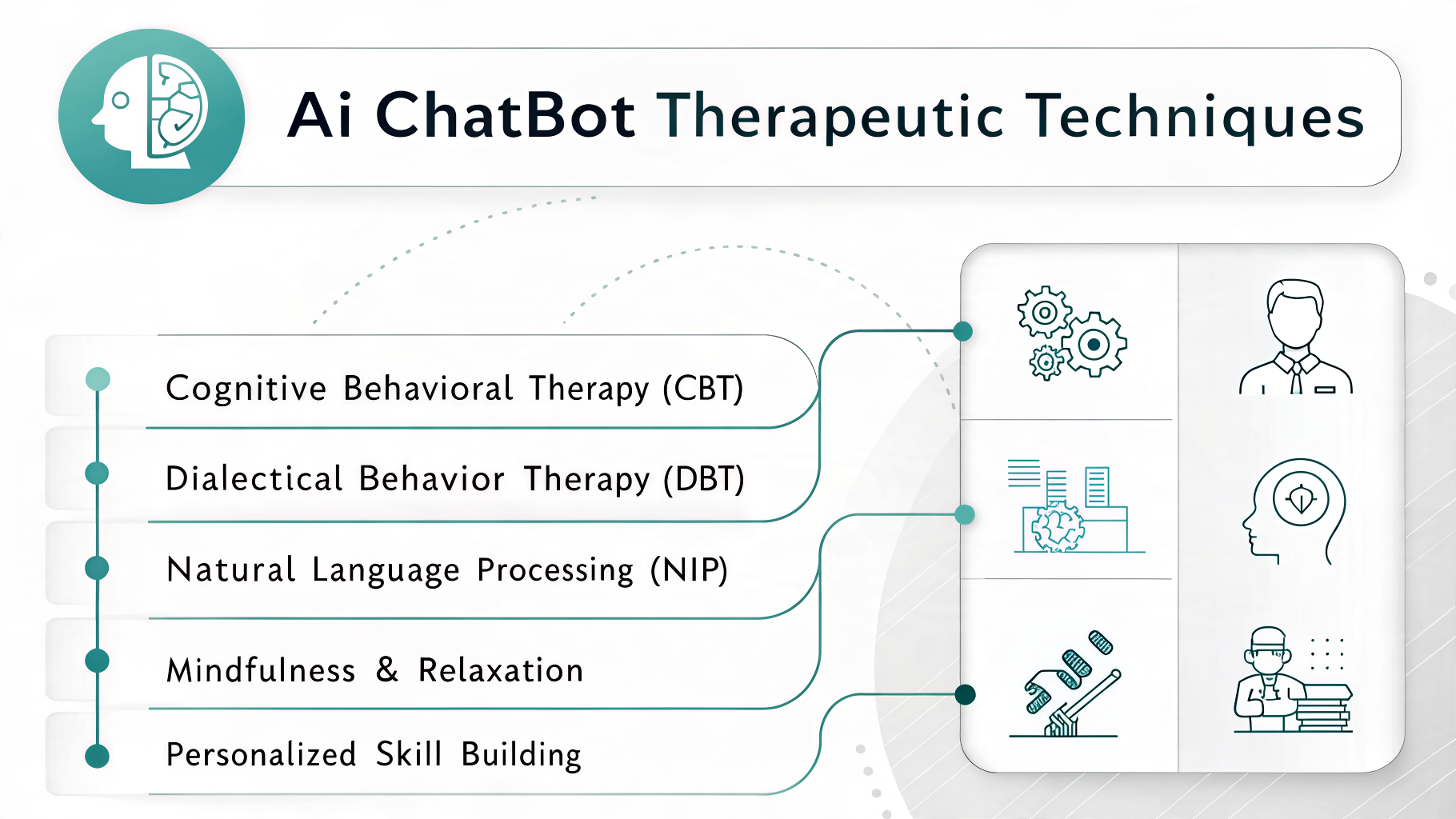
Many high-achievers assume AI chatbots for anxiety offer only superficial reassurance, but the reality is more nuanced: these tools are specifically engineered to deploy evidence-based therapeutic techniques. Instead of just "talking," AI platforms leverage sophisticated natural language processing (NLP) to understand your input and respond with prompts rooted in established psychological frameworks. This allows them to deliver structured support, moving far beyond generic advice found in many meditation apps.
A core mechanism behind how AI chatbots help anxiety involves integrating principles from Cognitive Behavioural Therapy (CBT). For instance, a chatbot might guide you through identifying automatic negative thoughts after a stressful meeting, then gently challenge their validity, much like a therapist would. Tools like Woebot have demonstrated efficacy in reducing anxiety symptoms by systematically helping users recognize and reframe unhelpful thought patterns. Some advanced bots also incorporate Dialectical Behaviour Therapy (DBT) skills, focusing on areas like emotional regulation and distress tolerance. This could involve a bot prompting you to practice a "STOP" skill during an intense moment, or reflecting on interpersonal effectiveness after a difficult conversation with a colleague.
"These aren't just glorified chat programs; they're delivering structured, evidence-based interventions in a format that's accessible and non-judgmental." — clinical psychologist, Vancouver
Beyond CBT and DBT, many AI anxiety tools also integrate mindfulness and relaxation techniques, but within a goal-oriented framework. Rather than just offering a guided meditation, a chatbot might connect a specific breathing exercise to a trigger you've identified, helping you build a personalized coping strategy. The interactive nature is key: the bot tailors its responses and suggestions based on your input, creating a dynamic learning environment for skill-building and self-reflection. This personalized approach addresses the common frustration high-achievers feel with one-size-fits-all wellness solutions, providing targeted support for their specific stressors.
Understanding these underlying therapeutic mechanisms is crucial for vetting an AI tool. It ensures you're choosing a digital companion that’s not just conversational, but genuinely designed to foster resilience through proven psychological methods. This moves us towards a clearer framework for evaluating their true value.
Evidence-Based Efficacy: What Research Says About AI for Anxiety Relief

Despite the common skepticism that AI can truly address complex emotional issues, a growing body of research indicates that specific AI chatbots effectively reduce symptoms of anxiety and depression. The irony for high-achievers is that the very tools they might dismiss as superficial often offer a discreet, accessible entry point to mental wellness they struggle to find in traditional settings.
Studies offer concrete evidence of how AI chatbots help anxiety. For example, research published in the Journal of Medical Internet Research in 2017 demonstrated that Woebot, an AI-powered chatbot, significantly reduced symptoms of anxiety and depression in young adults over two weeks. These reductions were comparable to the effects seen in face-to-face therapy for mild-to-moderate cases. Another prominent AI app, Wysa, has shown efficacy in improving mental well-being and reducing anxiety across various user groups, as highlighted in a 2023 JMIR study.
"I was surprised how much I opened up to an AI. There's no judgment, no scheduling hassle. It just listens and offers tools when I need them most." — Marketing Director, Vancouver
The global AI in mental health market is projected to grow by approximately 25-30% annually, reflecting increasing investment and confidence in these tools. This growth underscores a shift in how mental wellness support is delivered, especially for high-achievers who value efficiency and privacy. Research suggests the anonymity and immediate accessibility of AI encourage users to engage more openly than they might in initial human therapy sessions, bypassing the common barriers of stigma or time constraints. However, it's crucial to differentiate between well-researched AI therapy bots and unproven applications, emphasizing the need for a rigorous vetting framework.
To illustrate the varying levels of evidence and adoption, consider the following data:
| AI Chatbot/Metric | Research Efficacy (Anxiety/Depression) | Typical User Engagement | Global Market Growth (CAGR) | |||||||||||||
|---|---|---|---|---|---|---|---|---|---|---|---|---|---|---|---|---|
| Woebot | Significant reduction (JMIR 2017) | High; average ~25 sessions/user | N/A (established leader) | |||||||||||||
| Wysa | Proven efficacy (
Beyond the Hype: Key Benefits of AI Chatbots for Busy ProfessionalsBeyond the Hype: Key Benefits of AI Chatbots for Busy ProfessionalsFor high-achievers, the appeal of AI chatbots for managing anxiety often boils down to a surprising paradox: these tools offer a structured, evidence-based approach to mental wellness while simultaneously providing unprecedented flexibility. While many might assume a digital tool lacks the human touch, its true strength for busy individuals lies in its ability to deliver consistent, accessible support exactly when and where it’s needed, sidestepping the logistical hurdles of traditional therapy. Consider the professional juggling deadlines and family commitments in Vancouver or Toronto. Finding a regular 9-to-5 appointment with a human therapist can feel impossible. This is precisely how AI chatbots help anxiety: they are always on, ready to engage at 3 AM during an acute stress episode or during a lunch break, offering immediate, confidential support. This 24/7 availability transforms how mental health support integrates into a demanding schedule, moving it from a scheduled obligation to an on-demand resource. 20-30% CAGRProjected growth of the AI in mental health market (industry reports)
~80% lessTypical cost of AI anxiety apps vs. traditional therapy
300M+Global population affected by anxiety disorders (WHO)
These figures highlight a critical shift. The significant growth in the AI mental health market isn't just about technological advancement; it reflects a genuine, unmet need for accessible and affordable mental wellness tools. For individuals in Canadian provinces like Alberta or Nova Scotia, where wait times for psychological services can stretch for months, AI chatbots like MySerenity offer a vital bridge, providing immediate, structured support that might otherwise be out of reach or too expensive. Moreover, the inherent discretion of interacting with an AI removes the fear of judgment, allowing high-achievers to discuss sensitive topics more openly than they might in person. "I can't always make a 4 PM therapy session, but I can check in with my AI chatbot for 15 minutes before bed. That flexibility is non-negotiable for me." — marketing director, Montreal This personalized pace, where users can revisit CBT exercises or mindfulness techniques as often as needed without incurring extra costs, is particularly appealing to self-directed professionals. It allows for a tailored journey through therapeutic content, making the path to anxiety relief both The Fine Print: Limitations, Ethical Concerns, and Data Privacy in AI Mental HealthThe Fine Print: Limitations, Ethical Concerns, and Data Privacy in AI Mental HealthWhile AI chatbots can offer accessible support for anxiety, it's vital to recognize their inherent limitations and the ethical landscape surrounding them. An AI, no matter how advanced, cannot replicate the genuine empathy or nuanced understanding of a human therapist. It misses non-verbal cues and the complex emotional context that a person brings to a conversation. Data privacy stands as a critical concern for many users. Research from the Pew Research Center between 2020 and 2022 consistently showed that a significant percentage of mental health app users worry about the security of their sensitive information. This makes vetting apps for robust privacy policies paramount, especially for high-achievers sharing personal stressors. Look for apps that explicitly detail their data encryption, anonymization practices, and adherence to regulations like PIPEDA in Canada or HIPAA in the US. "While an AI can offer coping strategies, it can't sit with you in your pain or truly understand the silence. That human connection is irreplaceable for deep healing." — mental health advocate, Vancouver Crucially, AI chatbots are not equipped for crisis intervention. They cannot diagnose conditions, prescribe medication, or manage severe mental health emergencies. If you're experiencing suicidal thoughts or a severe panic attack, these tools are not a substitute for immediate professional help or emergency services. Furthermore, AI models learn from vast datasets, which can introduce biases, leading to generalized or culturally insensitive responses that don't fully acknowledge an individual's unique background. Understanding these limitations is not to diminish how AI chatbots help anxiety in specific contexts, but to ensure you approach them with realistic expectations. They serve as valuable complements, offering tools and strategies, but they cannot replace the profound, relational aspect of human therapy. Vetting Your Digital Companion: A Framework for Choosing the Right AI Chatbot Choosing an AI chatbot for anxiety can feel overwhelming, like navigating a new city without a map. With so many options claiming to offer relief, discerning legitimate, effective tools from unproven ones requires a clear, doctor-approved framework. This guide helps high-achievers vet potential digital companions, focusing on evidence and ethical practices, to truly understand how AI chatbots help anxiety.
1
Evidence-Based FoundationPrioritize apps that explicitly state their therapeutic approach—like Cognitive Behavioural Therapy (CBT) or Dialectical Behaviour Therapy (DBT)—and cite peer-reviewed research. For example, apps like Woebot have published studies in the Journal of Medical Internet Research demonstrating efficacy for mild-to-moderate anxiety symptoms.
2
Data Privacy & SecurityScrutinize privacy policies for clear statements on data encryption, anonymization, and sharing. Look for compliance with standards like HIPAA in the US or GDPR in Canada and Europe. A 2022 Pew Research Center study indicated significant user concerns about sharing sensitive mental health data, so robust security is non-negotiable.
3
Clinical Oversight & TransparencyVerify if licensed mental health professionals developed or oversee the app’s content and algorithms. A trustworthy app, like MySerenity, openly communicates its limitations and clearly advises when to seek human professional support, ensuring clinical integrity.
4
User Experience & EngagementAn intuitive interface and features that encourage consistent engagement are vital for integrating AI into a busy schedule. Look for apps that offer personalized check-ins or skill-building exercises, rather than generic prompts, to sustain long-term use. By applying these criteria, you move beyond marketing hype to select an AI chatbot that aligns with your needs and offers genuine, evidence-backed support for managing anxiety. This careful selection ensures your digital companion is a reliable part of your wellness toolkit. Integrating AI into Your Wellness Toolkit: Practical Tips for Lasting ReliefIntegrating AI into your daily routine offers a powerful way to sustain mental wellness, but it requires strategy, not just downloading an app. Many high-achievers already juggle demanding schedules and might initially view another "tool" as added pressure. The real benefit of understanding how AI chatbots help anxiety comes from weaving them seamlessly into your existing life, using them as a consistent, low-barrier support for skill-building rather than a one-time fix. Think of it like a daily vitamin for your mind, complementing your other healthy habits. Setting realistic expectations is paramount. An AI chatbot like MySerenity can provide cognitive behavioural therapy (CBT) techniques or mindfulness prompts, as studies on similar tools like Woebot have demonstrated, but it won't replace the nuanced empathy and complex diagnostic capabilities of a human therapist. Instead, consider it a personal coach for practicing specific coping mechanisms, like reframing anxious thoughts or deep breathing exercises. For instance, a marketing director in Vancouver might use a chatbot for 10 minutes each morning to prepare for a high-stakes presentation, focusing on managing public speaking anxiety. Consistent, brief engagement is more effective than sporadic, long sessions. Much like physical exercise, building mental resilience requires regular practice. Schedule short interactions, perhaps 5-15 minutes daily, to reinforce skills learned and to reflect on your emotional state. This sustained interaction helps build new neural pathways and strengthens your ability to manage stress responses over time. By integrating AI chatbots strategically into your existing wellness practices – whether it's pairing a quick chatbot session with your morning coffee or using it to unwind before bed – you create a robust, multi-faceted approach to managing anxiety. This thoughtful integration moves beyond the initial hype to deliver tangible, sustained relief, allowing you to maintain your high-performance while prioritizing mental well-being.When AI Isn't Enough: Recognizing When to Seek Human Professional SupportEven for high-achievers who value efficiency, there's a critical point where the structured support of an AI chatbot for anxiety reaches its limits. While AI tools like MySerenity can offer robust, accessible coping strategies, they are not replacements for human connection and clinical expertise, especially when symptoms become severe or complex. Recognizing when to pivot from digital support to a human professional is not a sign of failure, but rather a smart, self-aware decision. It ensures you receive the most appropriate care for your specific needs, moving beyond what even the most advanced AI can provide. Consider these distinctions:
If you find that your anxiety is worsening, or if you're not experiencing progress despite consistent use of tools that show how AI chatbots help anxiety, it's a clear signal to consult a licensed therapist or physician. A human professional can offer the diagnostic clarity, integrated care, and deep, empathetic connection that an algorithm simply cannot replicate, ensuring your path to wellness is comprehensive and truly effective. Frequently Asked Questions About AI Chatbots for AnxietyMany high-achievers wonder if AI chatbots can truly offer meaningful support for anxiety or if they're just another tech trend. The truth lies in understanding their specific capabilities and limitations, especially when considering how AI chatbots help anxiety. Quick Answers: AI Chatbots for Anxiety
Do AI therapy bots work for anxiety?
Yes, for mild-to-moderate symptoms, especially those built on Cognitive Behavioral Therapy (CBT) or Dialectical Behavior Therapy (DBT) principles. Studies on apps like Woebot have shown significant symptom reduction.
What are the best AI apps for anxiety in Canada/US?
Look for apps with clinical backing and strong privacy, such as Woebot or Wysa. Always vet them against an evidence-based framework, focusing on transparency and user reviews.
How much does an AI anxiety app cost?
Costs vary widely. Many offer free basic versions. Premium subscriptions typically range from $10-$60 CAD/month, which is considerably less than traditional therapy sessions in Toronto or Vancouver.
Are privacy in AI mental health apps truly secure?
Reputable apps like MySerenity use robust encryption and adhere to privacy regulations like HIPAA in the US or PIPEDA in Canada. Always read the privacy policy carefully before sharing personal data.
Can AI replace human therapy for severe anxiety?
No. AI is a supplementary tool. It cannot replace human therapy for severe anxiety, crisis intervention, or complex mental health conditions requiring professional diagnosis and personalized care.
What should I look for in an AI chatbot for anxiety relief?
Prioritize apps employing evidence-based techniques, transparent privacy policies, clear clinical oversight, and consistent positive user feedback regarding their effectiveness. The landscape of AI mental health tools is expanding rapidly, with industry reports projecting significant growth. While they offer accessible support, particularly for the 300 million people globally affected by anxiety disorders, understanding these key points helps high-achievers make informed decisions, moving beyond generic promises to effective, secure solutions. Frequently Asked QuestionsWhat are the main benefits of using AI chatbots for anxiety relief?AI chatbots offer immediate, confidential support for anxiety, bypassing common barriers like waitlists or scheduling conflicts. You gain access to structured coping mechanisms, such as cognitive behavioural therapy (CBT) exercises, whenever you need them—even at 3 AM. This accessibility can be a significant relief, offering a private space to explore feelings and practice techniques without judgment, like a digital guide available on your phone. How do AI chatbots actually help reduce anxiety symptoms?These chatbots help reduce anxiety by guiding you through evidence-based techniques. They often employ principles from cognitive behavioural therapy (CBT), like thought challenging and journaling prompts, to reframe anxious thoughts. Many also incorporate mindfulness exercises, deep breathing techniques, and grounding strategies, such as the 5-4-3-2-1 method, to help you manage acute symptoms and develop healthier coping patterns in real-time. Is AI therapy for anxiety supported by scientific research?Yes, a growing body of scientific research supports the efficacy of AI chatbots for managing anxiety symptoms. Studies published in journals like the *Journal of Medical Internet Research* indicate that AI-powered interventions, often based on cognitive behavioural therapy (CBT) principles, can significantly reduce anxiety levels. While not a replacement for traditional therapy, these tools offer evidence-based support, making them a valuable component of a comprehensive mental wellness plan for many individuals. Can AI mental health apps keep my personal data private?Reputable AI mental health apps prioritize your data privacy through robust security measures. They typically use end-to-end encryption for all communications and adhere to strict privacy regulations like HIPAA in the US, GDPR in Europe, and PIPEDA in Canada. Always check an app's privacy policy to understand how your data is collected, stored, and used, ensuring it aligns with your comfort level and local laws. Why are AI chatbots a good option for busy professionals managing anxiety?For busy professionals, AI chatbots offer unparalleled flexibility and discretion. You can access support during a short break, commute, or late evening, without the need to schedule appointments or travel to a clinic. This convenience means a marketing manager in Toronto can engage with an app like MySerenity for a quick mindfulness exercise between meetings, integrating mental wellness into a demanding schedule without disruption. Keep readingAll articles → Doctor's Guide: Best AI Mental Wellness Apps for High-AchieversFor high-achievers battling burnout and decision fatigue, the real challenge isn't finding an app, but rather discerning which of the "best AI mental wellness apps" offer personalized, evidence-based support beyond simple meditation. These tools address specific stressors like perfectionism or performance anxiety.  High-Achiever's Blueprint: 7 Evidence-Based Anxiety Coping StrategiesMany high-achievers see anxiety as an unavoidable cost of ambition. However, clinically proven evidence based anxiety coping strategies offer significant symptom reduction, refining your internal operating system for success.  Strategic Mood Tracking: How to Effectively Track Your Mood for Burnout & Anxiety ManagementMany find basic mood logging unhelpful for preventing burnout. This guide transforms mood tracking into a strategic process for proactive self-management. |