

Beyond Exhaustion: Subtle Burnout Signs High-Achievers Miss
High-achievers often miss burnout's earliest whispers, rationalizing initial symptoms as 'just part of the grind.' Instead of overt fatigue, you might first notice a persistent, low-grade cynicism about your work.

Beyond Exhaustion: Unmasking the Subtle Burnout High-Achievers Miss
Beyond Exhaustion: Unmasking the Subtle Burnout High-Achievers Miss
While the World Health Organization defines burnout by “feelings of energy depletion or exhaustion,” high-achievers often miss its earliest whispers because their identity is so tied to productivity, making them rationalize away initial symptoms as “just part of the grind.” Instead of overt fatigue, you might first notice a persistent, low-grade cynicism about your work – a “what's the point?” feeling that a senior project manager in Vancouver might dismiss as merely a bad week, rather than an insidious onset of burnout.
This “Blind Spot Detector” helps you pinpoint those non-obvious indicators of burnout you’re likely overlooking. Driven individuals, especially in fields like tech or finance where over 50% report significant burnout symptoms, are particularly adept at pushing through discomfort, often viewing early warning signs as temporary inconveniences or even badges of honour. For example, a marketing director in Toronto might interpret their new habit of snapping at colleagues as “being more direct,” rather than a sign of increased irritability – a key emotional red flag.
To move Beyond Exhaustion: Subtle Early Warning Signs of Burnout High-Achievers Often Miss (and How to Spot Them) requires a conscious shift from rationalization to honest self-assessment. It means recognizing that your body and mind communicate distress long before they shut down completely. This guide provides a practical toolkit to help you distinguish between healthy pressure and the insidious onset of burnout, offering actionable self-assessment techniques to address these quiet warnings before they escalate into full-blown crisis.
Our High-Achiever's Blind Spot Framework: Defining Subtle Burnout
High-achievers often miss early burnout signals not because they aren't present, but because their inherent drive and perfectionism cleverly disguise them. We need a specific lens to see Beyond Exhaustion: Subtle Early Warning Signs of Burnout High-Achievers Often Miss (and How to Spot Them), one that accounts for their unique blind spots and rationalizations.
Our High-Achiever's Blind Spot Framework
We look past obvious physical exhaustion towards shifts in emotional regulation, cognitive function, and behavioural patterns. For example, a senior project manager in Vancouver might notice they're snapping at colleagues more often, rationalizing it as "just a busy week."
Our framework directly addresses the tendency of high-performers to attribute symptoms to external factors ("the client is demanding") or temporary stress, rather than internalizing them as potential burnout. This self-deception is a common barrier.
Each subtle symptom is paired with common high-achiever rationalizations. This helps you identify when you're dismissing a genuine warning sign as "normal pressure" or "part of my work ethic."
The World Health Organization (WHO) highlights increased mental distance from one's job and reduced professional efficacy as key burnout indicators. For a high-achiever, this might look like a sudden lack of satisfaction from a successful presentation they once would have celebrated.
We provide specific
For high-achievers, burnout isn't just about feeling tired; it's a quiet erosion of purpose, a loss of the very drive that defines you. Many professionals, particularly in demanding fields like tech and finance, mistakenly view burnout as simply needing a long weekend. The truth is more complex: it's a chronic state of emotional, physical, and mental exhaustion caused by prolonged or excessive stress, as recognized by the World Health Organization (WHO) in its ICD-11 (2019) classification. This WHO definition pinpoints three core dimensions: feelings of energy depletion or exhaustion, increased mental distance or cynicism related to one's job, and reduced professional efficacy. For someone accustomed to pushing limits, physical fatigue is often ignored or powered through. Instead, the early signs might surface as a creeping indifference to projects that once sparked excitement, or a subtle detachment from colleagues you used to connect with deeply. It’s the loss of passion, not just the loss of sleep, that often signals the true onset of burnout. These statistics, drawn from various industry reports, underscore that burnout is a pervasive issue, particularly among those who excel. It's not a temporary dip in motivation; it’s a fundamental shift that impacts your core identity and capacity. A senior product manager in Vancouver, for instance, might rationalize their growing disinterest in new features as 'just
It's an uncomfortable truth: the very drive that fuels high-achievers often blinds them to the early glimmers of burnout. You might rationalize away subtle shifts, believing they're just part of the high-pressure landscape, or that you're immune. This internal dialogue creates a dangerous blind spot, preventing you from seeing Beyond Exhaustion: Subtle Early Warning Signs of Burnout High-Achievers Often Miss (and How to Spot Them) until they become undeniable. Your identity often intertwines with your output, making any sign of struggle feel like a personal failing. Admitting you're stretched thin can feel like a threat to your carefully constructed image of competence, especially in fields like finance or tech where demanding schedules are normalized. A 2023 survey of Canadian professionals, for instance, found that over 60% of high-performers feared being perceived as "weak" if they voiced mental health struggles, contributing to an optimism bias where you believe "it won't happen to me." These ingrained patterns mean you're more likely to ignore the quiet whispers of your body and mind, focusing instead on pushing through. Recognizing these internal barriers is the critical first step to developing your personal early warning system. For high-achievers, the earliest signs of burnout rarely announce themselves with a crash. Instead, they whisper through quiet emotional and psychological shifts, often dismissed as "just a bad week" or "normal stress." Recognizing these subtle cues is key to spotting Beyond Exhaustion: Subtle Early Warning Signs of Burnout High-Achievers Often Miss (and How to Spot Them) before it takes hold. Your body is a surprisingly honest messenger, often whispering distress signals long before your mind registers true exhaustion. High-achievers, however, are experts at silencing these whispers, attributing physical symptoms to everything but the insidious creep of burnout. Consider the subtle physical shifts that often precede full-blown burnout. These aren't always dramatic, but they represent your body's early SOS, crucial for understanding the topic of Beyond Exhaustion: Subtle Early Warning Signs of Burnout High-Achievers Often Miss (and How to Spot Them). These seemingly minor physical complaints, often dismissed as normal inconveniences, are your body's direct feedback on sustained physiological stress, a common precursor to burnout, especially in fields like finance and tech where high-pressure environments are the norm. Even when you feel mentally sharp and productive, your daily actions can betray an underlying struggle. High-achievers often rationalize behavioural shifts as heightened focus or necessary sacrifice, overlooking them as Beyond Exhaustion: Subtle Early Warning Signs of Burnout High-Achievers Often Miss (and How to Spot Them). These aren't weaknesses; they are your body and mind signalling energy depletion, often before you consciously recognize it. It's easy to dismiss early burnout signals as just "part of the grind" when you're driven. High-achievers, in particular, often rationalize away symptoms, seeing them as minor inconveniences or even signs of their dedication, rather than as critical indicators of Beyond Exhaustion: Subtle Early Warning Signs of Burnout High-Achievers Often Miss. This decoder helps you cut through your own blind spots, recognizing that what feels like "normal" intensity or a personal quirk might actually be your body and mind sending crucial distress signals. Ignoring these can lead to the serious health consequences and reduced professional efficacy that unaddressed burnout often causes, as highlighted by numerous industry reports. Many high-achievers mistakenly believe their discomfort is merely the price of ambition, a transient state of "normal" stress. This rationalization masks the insidious onset of burnout, which is not just more stress, but a fundamentally different, chronic condition. The World Health Organization (WHO) recognized burnout in its ICD-11 (2019) as an occupational phenomenon distinct from stress, characterized by specific symptoms like energy depletion and increased mental distance from one's job. Understanding these distinctions is the first step in recognizing Beyond Exhaustion: Subtle Early Warning Signs of Burnout High-Achievers Often
You're likely accustomed to solving problems head-on, but spotting your own burnout requires a different kind of precision. This self-assessment toolkit offers a structured way to look beyond exhaustion and detect the subtle early warning signs of burnout high-achievers often miss, reframing them through your own typical rationalizations. Track your energy levels throughout a typical workday. Note not just fatigue, but also unexpected crashes after tasks you once enjoyed, or a consistent reliance on extra caffeine to power through the afternoon. Are you consistently operating on fumes by 3 PM, even after a good night's sleep? When you notice a subtle shift—like increased irritability with colleagues or a sudden lack of interest in a project—what's your immediate internal explanation? ("I'm just tired," "They're being difficult.") Now, ask: "What's an alternative, less comfortable explanation?" Perhaps the irritability stems from a deeper depletion. Reflect on your core motivations. Are you still deriving genuine satisfaction from your achievements, like closing a major deal for a Calgary-based tech firm, or is it merely a relentless drive to meet the next metric? A 2023 study by Stanford researchers highlighted that a loss of intrinsic motivation is a key, often-missed burnout
High-achievers frequently dismiss early burnout signs as normal dedication. These include a noticeable drop in creativity, like struggling to brainstorm innovative solutions for a client presentation, or a persistent feeling of inadequacy despite objective success. You might also find yourself increasingly cynical about projects you once loved, or procrastinating on tasks that used to energize you, such as a marketing director delaying a strategy session they'd typically lead with enthusiasm. These shifts are often rationalized away, delaying recognition. Normal work stress is typically temporary, often performance-enhancing, and resolves with adequate rest or project completion. Burnout, however, is chronic, pervasive, and doesn't improve with a weekend off or even a vacation. With stress, you might feel productive under pressure for a deadline, like a software engineer pushing through a sprint. With burnout, that same pressure leads to errors, emotional exhaustion, and a complete lack of motivation even after the deadline passes, impacting your core identity and capacity to recover. Successful individuals often miss burnout's early warnings because their identity is deeply tied to achievement, perfectionism, and a belief that 'more effort' is always the solution. They normalize constant high pressure, seeing it as a badge of honour rather than a warning. A senior partner in a Toronto law firm, for instance, might interpret chronic fatigue as dedication to their clients, rather than a sign of impending exhaustion. Admitting struggle can feel like a weakness, especially in competitive environments like Bay Street finance, leading them to push through discomfort. Yes, absolutely. Persistent irritability and emotional detachment are key indicators of burnout's emotional exhaustion and depersonalization phases. You might find yourself snapping at colleagues over minor issues, feeling easily frustrated by routine tasks, or experiencing a general sense of emotional numbness. A project manager who once thrived on team-building might start dreading daily stand-ups, feeling completely disengaged from their team and the project's success. This shift from engaged enthusiasm to cynical indifference is a significant red flag. Yes, physical symptoms are very common and often manifest before or alongside emotional exhaustion. Your body reacts to chronic stress, even if your mind hasn't fully registered the fatigue. These can include persistent tension headaches, unexplained muscle aches, frequent colds due to a weakened immune system, or recurring stomach upset like IBS flare-ups. A sales executive might experience chronic back pain or frequent migraines, attributing them to poor posture or diet, when they are actually physical manifestations of relentless targets and travel-induced stress. For high-achievers battling burnout and decision fatigue, the real challenge isn't finding an app, but rather discerning which of the "best AI mental wellness apps" offer personalized, evidence-based support beyond simple meditation. These tools address specific stressors like perfectionism or performance anxiety. Many high-achievers see anxiety as an unavoidable cost of ambition. However, clinically proven evidence based anxiety coping strategies offer significant symptom reduction, refining your internal operating system for success. Many find basic mood logging unhelpful for preventing burnout. This guide transforms mood tracking into a strategic process for proactive self-management.What Burnout Really Looks Like for High-Achievers (Beyond Just Being Tired)
The High-Achiever's Blind Spots: Why You're Missing the Early Warnings
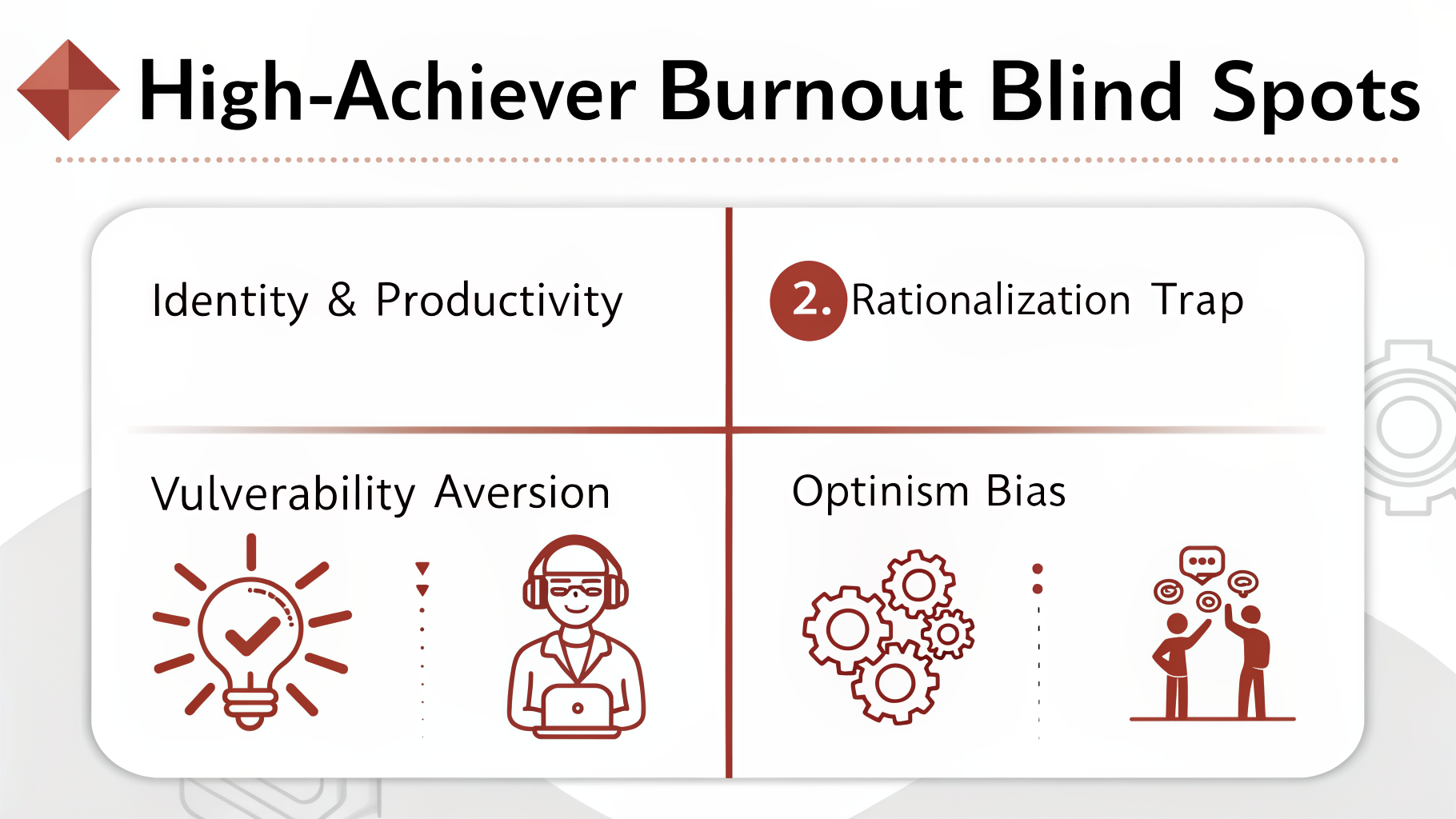
Subtle Emotional & Psychological Red Flags You Might Be Rationalizing

Subtle Emotional & Psychological Red Flags You Might Be Rationalizing
The Symptom
The Rationalization
Quiet Physical Manifestations: Your Body's Early SOS Signals
Subtle Physical Sign
High-Achiever's Rationalization
True Meaning: Early Burnout Signal
Persistent Headaches/Muscle Tension
"Too much screen time, poor posture."
Chronic stress response; unaddressed pressure.
Frequent Minor Illnesses
"Just a bug going around; seasonal allergies."
Weakened immune function from prolonged stress.
Changes in Sleep (Insomnia/Hypersomnia)
"Busy mind; I need less sleep to achieve more."
Disrupted physiological rhythms; early burnout indicator.
Digestive Issues (e.g., IBS-like)
"Dietary choices; stress eating."
Stress-induced gut dysfunction; psychosomatic symptom.
Increased Cravings (Sugar/Caffeine)
"Energy boost needed; treating myself."
Body's attempt to self-regulate energy and mood due to depletion.
"
Behavioral Shifts: How Your Actions Betray Hidden Burnout
Burnout Behaviour: The Reality
High-Achiever Rationalizations
The High-Achiever's Burnout Decoder: Symptom vs. Rationalization

Subtle Symptom
High-Achiever Rationalization
Burnout's True Meaning
Persistent Cynicism
"Just being realistic about corporate politics."
Increased mental distance from your job, a core WHO criterion.
Unexplained Aches & Pains
"Must be my age / lack of stretching."
Chronic stress manifesting physically, weakening immune function.
Social Withdrawal
"Prioritizing deep work / I'm an introvert."
Energy depletion leading to a lack of capacity for social engagement.
Short Temper
"High standards / demanding environment."
Eroding emotional regulation, a sign of psychological overload.
Difficulty Concentrating
"Too many distractions / I need more coffee."
Cognitive fatigue, impacting professional efficacy and leading to brain fog.
The 'It's Just Stress' Trap: Distinguishing Burnout from Normal Pressure
The 'It's Just Stress' Trap: Distinguishing Burnout from Normal Pressure
Aspect
Normal Stress
Burnout
Duration & Nature
Acute, temporary response to demand; resolves with rest.
Chronic, prolonged unmanaged stress; doesn't resolve with rest.
Engagement Level
Engaged, even if overwhelmed; still cares about outcomes.
Increased mental distance, cynicism, or detachment from work.
Energy & Recovery
Can be energizing; energy returns after a break or good sleep.
Persistent energy depletion; exhaustion that sleep doesn't fix.
Professional Efficacy
Temporary dip in performance, but core competence remains.
Reduced sense of accomplishment, feeling ineffective or inadequate.
Consequences
Manageable; minor health impacts.
Increased risk of cardiovascular disease, depression, and weakened immunity, as research indicates.
Your Personal Early Warning System: A Self-Assessment Toolkit for High-Achievers
The 'Energy Audit'
The 'Rationalization Challenge'
The 'Passion Check-in'
Beyond Spotting: First Steps to Course Correction and Prevention
First Steps to Course Correction and Prevention
Identifying the subtle early warning signs of burnout high-achievers often miss is a critical first step, but the real challenge lies in knowing what to do next without feeling like you're hitting the brakes on your career. Many high-performers, like a senior product manager in Vancouver leading a major software launch, might dismiss early fatigue as "just the price of success." However, ignoring these signals can lead to severe consequences, including increased risk of cardiovascular disease and anxiety, according to the WHO. The goal isn't to stop achieving, but to recalibrate for sustainable success.
Perfectionism and a relentless drive, while often rewarded, are significant risk factors for burnout. Learning to embrace "good enough" for certain tasks can be a powerful preventative measure, freeing up mental and physical energy. For instance, instead of spending an extra two hours perfecting a client report that's already 95% complete, that time could be reallocated to deliberate disengagement – a short, non-work-related activity that helps replenish your energy.
"We often tell our high-performers that vulnerability isn't a weakness; it's a strategic asset. Acknowledging early burnout signs protects not just their well-being, but the organization's long-term productivity." — HR Director, major tech firm, Toronto
Reclaiming Your Edge: Prioritizing Well-being for Sustainable Success
Reclaiming Your Edge: Prioritizing Well-being for Sustainable Success
The irony for many high-achievers is that their relentless drive, while propelling them to professional heights, often blinds them to the very signals that threaten their long-term capacity to perform. Recognizing the subtle early warning signs of burnout isn't about hitting the brakes on ambition; it's about building a more resilient, sustainable engine for continued success. The World Health Organization's classification of burnout as an occupational phenomenon in ICD-11 underscores its serious impact, not just on individual health, but on sustained professional efficacy.
Your capacity to innovate, lead, and execute is your most valuable asset. Protecting it requires shifting from an "endless push" mentality to one that integrates strategic recovery and acute self-awareness. For instance, a senior architect in Vancouver might rationalize persistent muscle tension as "just stress from a big project deadline," instead of seeing it as an early physical manifestation of burnout that, left unaddressed, could lead to chronic pain or even cardiovascular issues, as research indicates unaddressed burnout increases such risks. This "Blind Spot Detector" approach empowers you to safeguard that capacity proactively.
This isn't a call to abandon your drive for excellence. Instead, it’s a guide to channel that ambition wisely, ensuring your long-term impact and personal fulfillment. Making self-care a non-negotiable part of your high-performance strategy ensures you can continue to achieve at your peak, preventing the productivity losses and health consequences that cost organizations billions annually, according to industry reports.
Frequently Asked Questions
What are the subtle early signs of burnout high-achievers often overlook?
How can high-achievers tell the difference between normal work stress and actual burnout?
Why do successful people miss the early warnings of burnout?
Is feeling constantly irritable or detached an early sign of burnout for high-achievers?
Can physical symptoms like frequent headaches or digestive issues be early signs of burnout, even if I'm not exhausted?
Frequently Asked Questions
What are the subtle early signs of burnout high-achievers often overlook?
How can high-achievers tell the difference between normal work stress and actual burnout?
Why do successful people miss the early warnings of burnout?
Is feeling constantly irritable or detached an early sign of burnout for high-achievers?
Can physical symptoms like frequent headaches or digestive issues be early signs of burnout, even if I'm not exhausted?
Keep reading
All articles →
Doctor's Guide: Best AI Mental Wellness Apps for High-Achievers

High-Achiever's Blueprint: 7 Evidence-Based Anxiety Coping Strategies

Strategic Mood Tracking: How to Effectively Track Your Mood for Burnout & Anxiety Management