

Beyond Burnout: Is 'Rustout' Why High-Achievers Feel Stuck? A Guide
Many high-achievers feel stuck, assuming burnout is the cause. However, for many, 'rustout'—stagnation from under-stimulation—is the true culprit, requiring different solutions than traditional burnout remedies.

Beyond Burnout: What is Rustout? Defining the High-Achiever's Unique Stagnation
Beyond Burnout: What is Rustout? Defining the High-Achiever's Unique Stagnation
Many high-achievers assume their feelings of being “stuck” or unfulfilled stem from burnout, yet for a surprising number, the real culprit is “rustout”—a distinct form of professional stagnation born not from overwork, but from under-stimulation. While traditional burnout suggests exhaustion from too much demand, rustout manifests as a gnawing boredom and lack of challenge, even when external success is evident. This distinction is critical because applying burnout remedies like rest and boundaries to rustout often deepens the sense of dissatisfaction, leaving high-achievers wondering why they still feel empty despite “doing everything right.”
Rustout describes a state where intrinsically driven individuals, often those who have climbed corporate ladders or excelled in their fields, experience a profound lack of purpose, growth, or meaningful challenge. It's the paradox of the highly successful professional who, despite accolades and a robust resume, feels an internal emptiness or stagnation. Research on “languishing” by Corey Keyes in 2002, describing a state of low well-being that is neither flourishing nor depressed, closely mirrors the rustout experience. You’re not necessarily stressed or overworked in the traditional sense; instead, the spark that once drove you has dimmed, replaced by a quiet disengagement that can be confusing and guilt-inducing for someone accustomed to constant forward momentum.
The core issue in rustout isn't depletion of energy but a deficit of engagement. When their roles no longer offer this balance between skill and challenge, they “rust” from disuse, much like an engine that sits idle. This explains why conventional burnout advice—like “take a vacation” or “set stricter boundaries”—often falls flat. The problem isn't needing less work, but needing different, more stimulating work. Understanding this difference is the first step in answering, “Beyond Burnout: Is 'Rustout' the Real Reason You're Feeling Stuck? A High-Achiever's Guide to Re-engagement.”
This isn't just another buzzword; it's a precise lens through which to view a specific, often misunderstood form of professional malaise. Recognizing rustout requires moving past the superficial symptoms of low motivation and delving into the underlying psychological needs for growth and purpose. The next step involves a clear self-assessment, helping you definitively determine if your current “stuckness” is indeed rustout, setting the stage for strategies that truly reignite your passion and drive.
Rustout vs. Burnout: Understanding the Critical Differences for High-Performers
Many high-achievers confuse their current malaise with burnout, resting more and taking breaks, only to find the deep-seated ennui persists. The critical difference often lies not in being overwhelmed, but in being underwhelmed – a state called rustout, which demands a fundamentally different approach than the typical advice for exhaustion.
Burnout, as many know, is a state of chronic stress, marked by emotional and physical exhaustion, cynicism, and reduced efficacy, frequently from excessive demands. Think of a senior manager in Calgary consistently working 60-hour weeks on high-stakes projects, feeling utterly drained and detached. Rustout, however, is characterized by boredom, apathy, a lack of challenge, and feeling unfulfilled, even when not technically 'overworked.' This often arises when a high-achiever, like a successful software architect in Vancouver, finds their daily tasks repetitive and devoid of growth opportunities, leading to a loss of spark.
| Feature/Aspect | Burnout | Rustout |
|---|---|---|
| Core Feeling | Overwhelmed, drained, exhausted, cynical | Bored, apathetic, unfulfilled, stagnant |
| Primary Cause | Too much output; chronic stress and demands | Too little input; lack of challenge, growth, meaning |
| High-Achiever's Experience | "I can't keep up; I'm doing too much." | "I've achieved everything, but I feel empty." |
| Typical Advice Gap | Rest, delegate, set boundaries | Often misdiagnosed; rest doesn't solve lack of purpose |
While many workers report stress, with many citing a lack of interest, rustout specifically targets this lack of interest as the primary driver, not just stress itself. High-achievers often feel immense guilt or confusion when experiencing rustout; their external success—a promotion, a major project completion—contradicts their internal feelings of emptiness, making them doubt themselves. This is a key pain point that generic advice for burnout often fails to validate.
Understanding this distinction is crucial for any high-achiever asking, "Beyond Burnout: Is 'Rustout' the Real Reason You're Feeling Stuck?" It shifts the focus from merely reducing stress to actively seeking engagement and purpose. The path forward for rustout isn't about doing less, but about finding the right kind of challenge to re-engage your intrinsic drive for growth and mastery.
Are You in Rustout? A High-Achiever's Self-Assessment Checklist

Are You in Rustout? A High-Achiever's Self-Assessment Checklist
You’ve tried every burnout strategy – more sleep, strict boundaries, even a tropical vacation – yet that persistent hum of dissatisfaction remains. For many high-achievers, this isn’t a sign of burnout, but rather "rustout," a different kind of stagnation. It's a subtle, insidious feeling, often masked by external success, that makes you wonder, "Why am I still unfulfilled?"
The key to moving past this stuck feeling is accurate self-diagnosis. Traditional burnout advice often misses the mark because it focuses on stress reduction, not re-engagement. If you’re a high-achiever asking, "Is 'Rustout' the Real Reason You're Feeling Stuck?", this checklist helps clarify your experience.
If many of these points resonate, you're likely experiencing rustout, not burnout. This realization is crucial because it shifts your focus from simply resting to actively seeking new avenues for growth and purpose, a path often overlooked in generic wellness advice. Understanding this distinction is the first step toward crafting a tailored strategy for re-engagement.
The Root Causes of Rustout: Why High-Achievers Get Stuck
It's easy to assume that feeling stuck means you're overworked, but for many high-achievers, the real culprit isn't too much on their plate, but too little that truly engages them. The paradox of success often means reaching a comfortable plateau where the very drive that got you there becomes stifled, leading to a quiet disengagement rather than a dramatic crash.
A primary driver of rustout is a profound lack of challenge and mastery. High-achievers thrive on pushing boundaries and conquering complex problems. When tasks become routine or simply too easy, the absence of a 'flow state'—that deep, immersive focus described by Mihaly Csikszentmihalyi in 1990—leads to boredom and disengagement. Imagine a senior software engineer in Vancouver, accustomed to architecting new systems, suddenly spending their days debugging legacy code; their innate need for complex problem-solving goes unmet.
This links directly to an unfulfilled need for growth. High-achievers possess an intrinsic drive for continuous learning and skill expansion. If opportunities for professional development, new projects, or even cross-functional experiences are scarce, this drive is stifled. A marketing director in a Toronto-based firm, for instance, might feel significant rustout if their role offers no avenues to explore emerging AI marketing tools or lead new market entries.
Beyond skill, an absence of meaning and purpose can be particularly devastating. High-achievers often connect their work to larger values or societal impact. When this connection fades, or the work feels disconnected from personal conviction, a profound sense of emptiness can settle in, even amidst external accolades. Despite achieving significant sales targets, a pharmaceutical representative might feel rustout if they no longer believe in the broader impact of their company's products.
Paradoxically, comfort zone stagnation contributes to this state. The very success high-achievers attain can lead to a comfortable plateau where risks are avoided, and new challenges are no longer actively sought. This can manifest as a reluctance to take on a stretch assignment or pivot to an unfamiliar department, even when internal opportunities exist. This individual avoidance is compounded by broader workplace trends, including low levels of employee engagement, highlighting an environment ripe for rustout when individual growth isn't prioritized.
Understanding these root causes is the first step in moving Beyond Burnout: Is 'Rustout' the Real Reason You're Feeling Stuck? A High-Achiever's Guide to Re-engagement. Recognizing these unmet needs allows you to pinpoint precisely why your internal drive has stalled, paving the way for targeted strategies to reignite your passion.
Beyond Rest: Tailored Strategies for Re-engagement and Growth
When you're a high-achiever, feeling stuck isn't usually about needing more rest; it's about a fundamental mismatch between your drive for growth and your current reality. Moving beyond the stagnation of rustout requires a proactive, tailored approach that taps into your intrinsic motivators.
Re-evaluate Your 'Why'
Your core values are the compass for your engagement. Take time to reconnect with what truly matters to you, asking if your current work or projects align with your deep-seated desire for purpose and impact. For instance, if social impact drives you, but your role is purely profit-focused, that misalignment can fuel rustout. This self-reflection helps answer the question: Beyond Burnout: Is 'Rustout' the Real Reason You're Feeling Stuck? A High-Achiever's Guide to Re-engagement starts with understanding your internal compass.
Seek Skill-Challenge Alignment
The "flow state," as described by Csikszentmihalyi, occurs when challenge meets skill. If you're a senior software developer in Calgary consistently given entry-level coding tasks, you'll feel underutilized. Actively identify areas where your skills can be stretched. This might mean volunteering for a complex project, learning a new programming language like Rust, or taking on a leadership role that pushes your comfort zone. This balance is crucial for high-achievers who feel bored at work.
Embrace Continuous Learning
High-achievers thrive on mastery. Dedicate specific time each week to acquiring new skills or knowledge. This could be a formal online course from Coursera in data analytics, a mentorship with a leader in a different department, or even just reading industry research papers. Satisfying this innate need for growth can rapidly combat feelings of stagnation. Research suggests that employees who feel opportunities for learning and growth are available are significantly more engaged.
Proactive Job Crafting
Don't wait for opportunities; create them. Initiate conversations with your manager to reshape your current role. A marketing manager in Vancouver, for example, might propose leading a new AI integration project or mentoring junior team members, even if those weren't initially part of their job description. This proactive approach can significantly increase engagement and challenge, transforming a stagnant role into one that excites you.
These strategies move beyond superficial fixes, addressing the core drivers of rustout by reconnecting you with purpose, challenge, and continuous development. By taking these intentional steps, you can reignite your passion and redefine your professional trajectory.
Cultivating New Challenges and Meaning (Within or Outside Your Current Role)

Cultivating New Challenges and Meaning
You've tried resting, setting boundaries, and even delegating, yet the pervasive sense of unfulfillment persists. For high-achievers, this isn't always a sign of needing less; often, it's a desperate craving for more—more challenge, more impact, more meaning. The irony is that the very drive that propelled you to success can, in stagnation, become a source of profound unease. If you're feeling stuck, consider that your intrinsic need for growth might be unmet, pointing to rustout rather than burnout.
Re-engagement means strategically seeking avenues for growth, whether within your current role or beyond. A senior project manager in Vancouver, for instance, might propose leading a new cross-functional initiative integrating AI tools like Curipod into client presentations, thereby developing new skills and influencing organizational strategy. Another option is to pursue skill diversification through a side project, like developing a community garden program for a local non-profit, providing a different kind of problem-solving and tangible impact. Recognizing that disengagement is a widespread trend can help you advocate for more stimulating roles or environments that genuinely prioritize employee development.
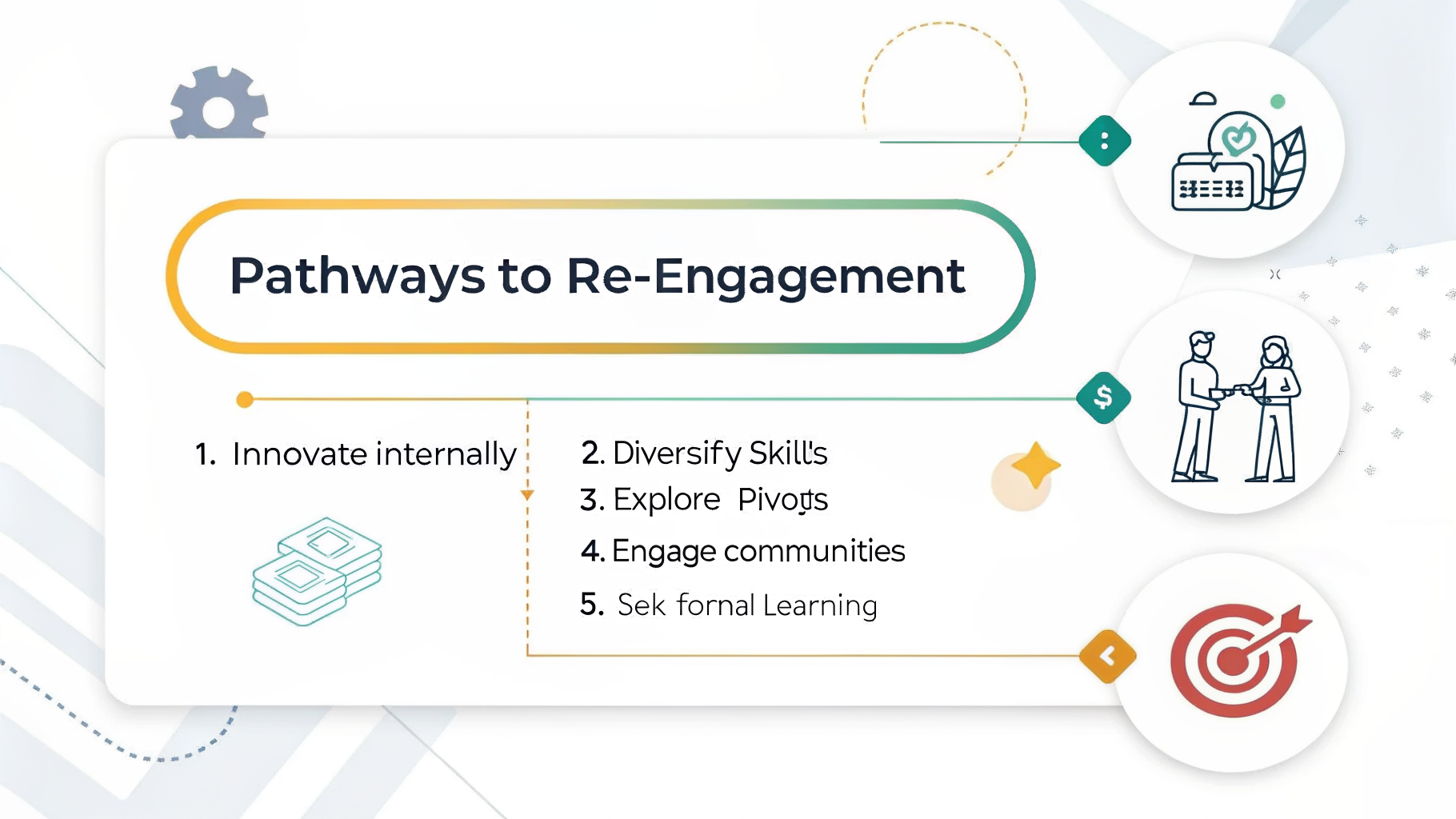
For those whose existing roles offer no further scope, a strategic career pivot might be necessary. This isn't about escaping stress, but about intentionally aligning your work with an evolving need for challenge and purpose, a core tenet of addressing rustout. For example, a marketing director in Calgary might transition into an impact-focused role at a B-Corp, leveraging their expertise for social good. Alternatively, pursuing formal education, such as a Master's certificate in sustainable business practices at the University of British Columbia, can provide structured challenge and open entirely new professional avenues. The key is active, intentional pursuit of stimulation, moving you beyond the stagnation and into a space of renewed vitality, which is critical for going Beyond Burnout: Is 'Rustout' the Real Reason You're Feeling Stuck? A High-Achiever's Guide to Re-engagement.
Proactive Steps to Prevent Rustout and Sustain Peak Performance
Proactive Steps to Sustain Your Drive
You've achieved so much, yet that underlying hum of dissatisfaction persists. It's an irony that high-achievers, often driven by a relentless pursuit of growth, can find themselves in a state of "rustout" precisely because their environment stops challenging them. Preventing this unique form of stagnation requires a proactive, rather than reactive, approach – a continuous calibration of your personal and professional compass.
One critical strategy is implementing regular self-audits. Think of it like a performance review, but for your soul. Periodically ask yourself: Am I genuinely challenged? Am I learning new skills? Does my work connect to a larger purpose I believe in? Identifying early signs of disengagement, such as a creeping sense of boredom during tasks you once loved, can signal nascent rustout. A teacher, for example, might realize their curriculum has been static for three years, leading to a loss of excitement despite their students' progress.
Beyond self-reflection, actively set dynamic goals. These aren't just annual targets; they are ambitious, yet achievable, benchmarks that push your boundaries. If you're a software engineer at a Toronto-based tech firm, this might mean volunteering for a project that utilizes a new programming language or leading a cross-functional team, even if it's outside your immediate job description.
Cultivating diversified interests outside your primary role also acts as a powerful buffer. If your entire sense of worth and challenge comes from work, any dip in professional stimulation can be catastrophic. Picking up a new language, training for a marathon, or joining a community theatre group in Montreal offers different kinds of cognitive and emotional engagement, ensuring your fulfillment isn't solely tied to your career. This broader engagement ensures that the question, "Is 'Rustout' the Real Reason You're Feeling Stuck?" doesn't even arise.
Finally, prioritize continuous learning and development. Allocate dedicated time, perhaps 2-3 hours weekly, to acquire new skills or deepen existing knowledge. This could involve online courses, attending industry conferences, or even simply reading academic papers relevant to your field. According to a 2022 APA survey, a lack of interest or motivation contributes significantly to work-related stress, highlighting the need for ongoing intellectual stimulation. Building a strong support network of peers and mentors who offer constructive feedback and fresh perspectives further solidifies your defence against stagnation, providing external validation and new ideas when your own well runs dry.
When to Seek Professional Support for Rustout and Stagnation
Even for the most driven individuals, there are times when self-guidance isn't enough to break free from the grip of rustout. Recognizing when to seek external support isn't a sign of weakness; it's a strategic move for high-achievers committed to sustained growth and well-being.
When to Seek Professional Support for Rustout
If you've been feeling neither happy nor depressed, a state psychologist Corey Keyes (2002) termed 'languishing,' for several months despite trying personal strategies. This pervasive low-level disengagement often signals a need for external perspective.
Your feelings of being stuck start spilling over. Perhaps your relationships with family in Calgary are strained, you're neglecting personal health goals, or your overall quality of life feels diminished, not just your work satisfaction at a Toronto tech firm.
Despite knowing what you "should" do, you can't initiate or maintain efforts to re-engage. A marketing director in Vancouver might intellectually understand the need for a new challenge but finds themselves unable to act on it for weeks.
The internal pressure to perform, coupled with the confusion of feeling unmotivated despite external success, can become debilitating. This guilt prevents action, leading to a cycle of self-criticism that a neutral professional can help untangle.
Before making significant career pivots, like leaving a senior role at a national bank or starting a new venture, professional guidance offers clarity. A career coach can help structure your thoughts and identify your true drivers, ensuring decisions align with long-term fulfillment, not just reactive escape.
For high-achievers grappling with "Beyond Burnout: Is 'Rustout' the Real Reason You're Feeling Stuck? A High-Achiever's Guide to Re-engagement," understanding the different types of support is key. Career coaches excel at strategic planning and skill development, helping you map out new challenges. Therapists, on the other hand, can address underlying psychological factors, such as perfectionism or imposter syndrome, that might be fueling your stagnation. Mentors offer industry-specific wisdom and network connections. Choosing the right professional can provide the objective perspective and tailored tools you need to move from stagnation to meaningful re-engagement.
Frequently Asked Questions
What is rustout and how does it differ from burnout for high-achievers?
Rustout describes a state of professional stagnation characterized by boredom, lack of challenge, and underutilization of skills, despite often achieving success. Unlike burnout, which stems from chronic overwork and exhaustion, rustout arises from a lack of stimulating work or growth opportunities. High-achievers, having mastered their roles, often encounter rustout when their drive for challenge goes unmet, leading to disengagement rather than depletion.
How can I tell if I'm experiencing rustout instead of just being burnt out?
If you're experiencing rustout, you might feel persistently bored, apathetic towards tasks, or unchallenged, despite having adequate energy. You may seek distractions, feel restless, or sense you're "coasting" without purpose, rather than feeling overwhelmed or physically drained. Burnout, conversely, manifests as chronic fatigue, irritability, cynicism, and a significant drop in performance due to excessive demands.
Why do successful professionals and high-achievers get stuck or feel disengaged?
High-achievers often get stuck because they've reached a plateau after mastering their current responsibilities or achieving initial career goals. The absence of new, complex problems to solve, repetitive tasks, or insufficient opportunities for skill development can lead to disengagement. Their inherent drive for growth and impact, when unmet by their work environment, can manifest as a feeling of being undervalued or stagnant.
What are practical strategies for high performers to re-engage and find new meaning?
To re-engage, high performers can proactively seek stretch assignments, lead cross-functional projects, or mentor junior colleagues. Proposing innovative initiatives within their organization or pursuing external learning, like a new certification or volunteer leadership role, can offer fresh challenges. Redefining personal success beyond current metrics and aligning work with deeper values also helps reignite passion and purpose.
Can rustout be prevented in a high-achieving career, and if so, how?
Yes, rustout can be prevented by cultivating a proactive growth mindset. Regularly assessing career satisfaction, identifying new skills to acquire, and setting ambitious, evolving goals are key. Actively communicating your desire for new challenges and growth opportunities to management helps. Continuously seeking learning experiences, whether formal or informal, ensures your professional journey remains stimulating and purposeful.
Frequently Asked Questions
What is rustout and how does it differ from burnout for high-achievers?
How can I tell if I'm experiencing rustout instead of just being burnt out?
Why do successful professionals and high-achievers get stuck or feel disengaged?
What are practical strategies for high performers to re-engage and find new meaning?
Can rustout be prevented in a high-achieving career, and if so, how?
Keep reading
All articles →
Stress or Burnout? A Self-Check for Driven Professionals
Exhaustion is not automatically burnout, and that distinction matters. This self-check walks you through the markers that separate ordinary work stress from a pattern you can no longer manage on your own.

How to Recognize Decision Fatigue Before It Derails Your Day
Your small choices may cost more energy than your big ones, and the research behind decision fatigue is messier than most articles admit. This guide shows how to spot the warning signs early and lighten your daily load with practical habits.

Burnout or Rustout? High-Achievers' Self-Diagnosis Guide
High-achievers often misinterpret professional unease as simple exhaustion, overlooking the critical distinction between burnout and rustout. This misdiagnosis leads to ineffective solutions, leaving them feeling even more stuck.