

Benefits of Mood Tracking: Your Mental Health Performance Dashboard
While many see mood tracking as another generic self-help trend, its true power lies in its capacity to serve as a sophisticated, data-driven performance dashboard. The core benefits of mood tracking for mental health stem from its ability to transform subjective feelings into actionable insights.

Benefits of Mood Tracking: Your Mental Health Performance Dashboard
Your Mental Health Performance Dashboard
While many see mood tracking as another generic self-help trend, its true power lies in its capacity to serve as a sophisticated, data-driven performance dashboard, offering high-achievers a proactive edge against burnout. The core benefits of mood tracking for mental health stem from its ability to transform subjective feelings into actionable insights, much like a business leader uses analytics to optimize operations. This strategic approach moves beyond simply logging feelings; it's about identifying specific patterns and triggers that impact your well-being, allowing for precise, evidence-based interventions.
For professionals in demanding fields, who often feel skeptical of superficial wellness fads, mood tracking provides a credible, results-oriented alternative. Instead of vague advice, you gain a personalized understanding of your emotional landscape, enabling you to pinpoint what drains your energy and what sustains it. A senior product manager in Vancouver, for instance, might use an app like MySerenity to notice that Tuesdays following late Monday meetings consistently correlate with increased irritability and reduced focus, leading them to adjust their meeting schedule or recovery routine.
This isn't about passive journaling; it's about actively collecting and interpreting your own mental health data. Cognitive Behavioural Therapy (CBT) widely incorporates self-monitoring precisely for this diagnostic power, helping individuals connect thoughts, emotions, and behaviours (Beck, 1995). By tracking, you create a personalized "early warning system" for stress, anxiety, and burnout, which can affect many employees at some point. This data-driven self-awareness helps you make targeted adjustments, fostering resilience before minor stressors escalate into significant challenges.
Embracing mood tracking as a performance tool sets the stage for a proactive approach to mental well-being. You move from reacting to symptoms to strategically managing your emotional state, aligning your mental health strategy with the same rigour you apply to professional goals. This shift provides the tangible, actionable insights busy professionals need to prevent burnout and optimize their overall well-being.
Debunking the Myths: Mood Tracking Isn't Just Another Self-Help Fad
Many high-achievers dismiss mood tracking as just another fluffy self-help trend, a fleeting suggestion from a podcast or a generic app notification. This skepticism is understandable, especially when countless wellness fads promise quick fixes without delivering tangible results. But strategic mood tracking is fundamentally different; it's a core, evidence-based technique integral to therapeutic approaches like Cognitive Behavioral Therapy (CBT), not merely a feel-good exercise. Dr. Aaron Beck, the founder of CBT, emphasized self-monitoring as crucial for identifying thought patterns and emotional responses as far back as 1995.
Effective mood tracking moves far beyond simply logging a "good" or "bad" day. It involves collecting nuanced data points: specific emotions (frustration, calm, anxiety), their intensity, potential triggers (a challenging meeting, insufficient sleep), and the physical sensations accompanying them. This level of detail transforms raw feelings into actionable insights. For instance, a marketing director in Vancouver might notice a recurring pattern of irritability every Tuesday afternoon, coinciding with a specific client call. This isn't just "feeling bad"; it's data pointing to a specific stressor.
The benefits of mood tracking for mental health are rooted in fostering greater self-awareness and emotional regulation. It provides a concrete, data-driven foundation for understanding your internal world, much like a performance dashboard for your well-being. This isn't about navel-gazing; it's about objective pattern recognition that informs targeted interventions, whether it's adjusting your schedule, practicing specific coping strategies, or having a more informed conversation with a therapist. As one kindergarten administrator in Toronto put it,
Understanding that mood tracking is a credible strategy helps address the desire for evidence-based solutions. The next step is to see how this data-driven approach allows you to uncover your unique triggers and patterns, turning abstract feelings into concrete, actionable knowledge.
Beyond Just 'Feeling Better': Why Mood Tracking Matters for High-Achievers
Beyond Just "Feeling Better": Why Mood Tracking Matters for High-Achievers
Many high-achievers dismiss mood tracking as another generic self-help trend, viewing it as a superficial exercise for those "struggling." Yet, the real irony is that precisely this group—driven, high-performing individuals often pushing their limits—stands to gain the most strategic advantage from a data-driven approach to their mental well-being. This isn't about simply feeling a bit happier; it's about optimizing performance, sustaining productivity, and proactively preventing burnout.
For someone managing a demanding role, like a project lead in Calgary or a startup founder in Montreal, time is a non-renewable asset. Mood tracking, when approached strategically, becomes an efficient, high-return investment. It acts as an early warning system, allowing you to catch subtle shifts in your emotional landscape before they escalate into full-blown stress or exhaustion. This proactive stance is crucial; it moves you from reacting to burnout symptoms to actively mitigating them, preserving your capacity for sharp decision-making and innovation.
The benefits of mood tracking for mental health extend directly to enhanced self-awareness. Insight (2017), increased self-awareness directly correlates with improved decision-making and stronger emotional regulation—both non-negotiable skills in high-pressure professional environments. By consistently logging your mood, you begin to identify specific triggers and patterns, such as how sleep quality impacts your focus the next day, or how certain projects contribute to feelings of overwhelm. This data helps you make targeted adjustments, whether it's delegating a task, scheduling a break, or starting a conversation with your manager.
Uncovering Your Unique Triggers and Patterns: The Diagnostic Power of Mood Tracking

Uncovering Your Unique Triggers and Patterns: The Diagnostic Power of Mood Tracking
Many high-achievers find themselves stuck, experiencing stress or anxiety without a clear understanding of what’s truly causing it. Generic self-help often misses the mark because it doesn't account for your unique life. This is where the diagnostic power of consistent mood tracking for mental health becomes invaluable. It acts as your personal detective, helping you pinpoint specific triggers and recurring emotional patterns that traditional journaling might overlook. A senior manager in Calgary, for instance, might initially attribute their mid-week slump to workload, but a detailed mood log could reveal a consistent pattern tied to inadequate sleep after late-night conference calls on Tuesdays, or specific project types.
Tracking more than just your mood—like sleep duration, caffeine intake, social interactions, or specific work tasks—reveals powerful correlations. You might notice your anxiety spikes not just on Mondays, but specifically after a weekend of heavy socialising, or that your focus diminishes on days you skip breakfast. Tools like MySerenity allow you to log these variables alongside your emotional state, transforming vague feelings into clear, actionable data. This diagnostic clarity is a crucial first step in managing chronic stress, which the American Psychological Association notes is often a precursor to more significant issues like anxiety and depression.
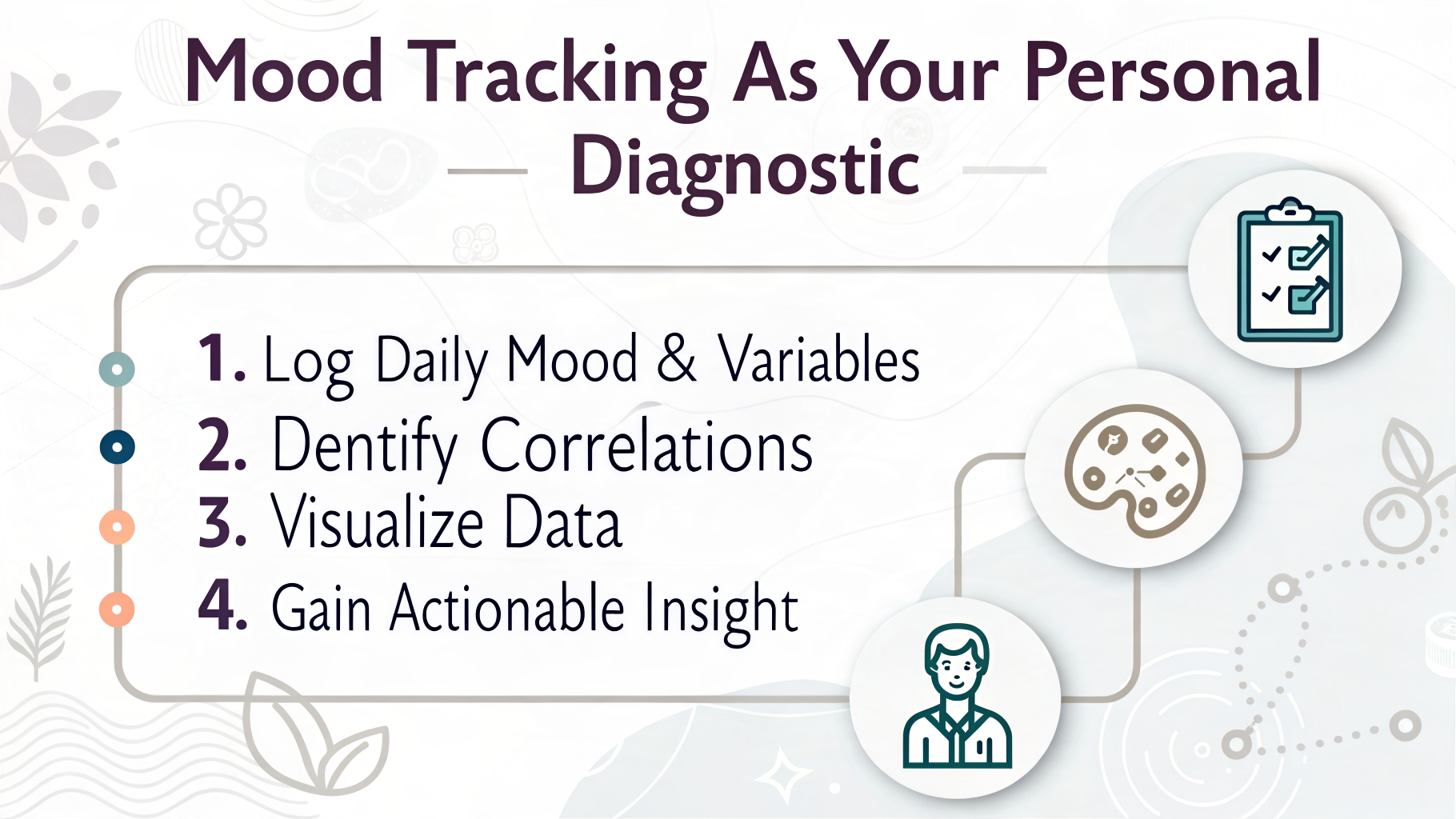
The ability to visualize this data makes complex patterns impossible to ignore, moving you beyond feeling generally "off" to understanding precisely what influences your well-being. This data-driven self-awareness helps you shift from reactive coping to proactive prevention, building resilience against the unique stressors of your high-pressure environment.
From Data to Decisions: How Mood Tracking Helps Proactive Mental Health Management
It's one thing to log your moods; it’s another entirely to convert that raw data into a strategic advantage for your mental well-being. High-achievers often track various metrics, but without clear action, mood data becomes just another unexamined spreadsheet. The real power of mood tracking lies in its ability to inform concrete, impactful behavioural changes.
Pinpoint Your Personal Triggers
Mood tracking helps you move past vague feelings of stress to identify precise triggers. For instance, a senior project manager in Vancouver might notice a consistent dip in mood and increased irritability every Tuesday afternoon, correlating with their weekly high-stakes client review. This pattern allows them to proactively schedule a buffer activity, like a 15-minute walk, before that meeting.
Implement Proactive Coping Strategies
Once triggers are clear, you can deploy targeted interventions. If late-night email checking consistently precedes anxious mornings, you can set a phone curfew. This isn't guesswork; it's a data-driven adjustment. Tools like MySerenity can help visualize these correlations over weeks, making patterns undeniable.
Evaluate Effectiveness with Data
Mood tracking provides a clear "return on investment" for your efforts. Did that new meditation practice genuinely reduce your anxiety levels? By comparing your mood scores before and after implementing a new habit, you gain objective proof. A 2020 WHO guideline on digital interventions highlights how such tools support self-management and can show real improvements.
Targeted Interventions for Anxiety and Stress
The benefits of mood tracking for mental health become especially clear when tackling anxiety and stress. Instead of broad approaches, you can focus on what specifically affects you.
Enhancing Emotional Regulation and Resilience Through Self-Awareness

Enhancing Emotional Regulation and Resilience Through Self-Awareness
Many high-achievers find that the simple act of tracking their mood becomes a surprisingly powerful tool, moving beyond generic self-help to build genuine emotional regulation. It isn't just about logging feelings; it's about creating a feedback loop that reinforces self-awareness, a foundational skill for sustainable mental wellness. When you consistently note your emotional state throughout the day, you start to recognize subtle shifts in real-time. This allows for conscious choices in response, rather than reactive, impulsive behaviours that often lead to regret or burnout.
For instance, someone might notice a pattern: stress levels spike every Tuesday morning after team meetings. By seeing this data, you can proactively plan a short mindfulness break or delegate specific tasks before the meeting, rather than simply reacting with frustration during or after. This proactive approach to emotional management directly improves resilience, helping you bounce back more effectively from setbacks and adapt to stress with greater ease.
The benefits of mood tracking for mental health extend to broader accessibility. The World Health Organization's 2020 guideline on digital interventions highlights how tools like mood trackers show promise in improving access to care and supporting self-management for various mental health conditions. By making self-observation concrete and data-driven, these tools help you take greater control over your mental state, transforming vague unease into actionable insights for well-being.
A Strategic Tool for Therapy and Professional Support: Improving Communication and Outcomes
A Strategic Tool for Therapy and Professional Support: Improving Communication and Outcomes
You might feel like generic self-help tools have fallen short, leaving you wary of new wellness trends. But when you’re working with a therapist or other mental health professional, mood tracking transforms into an invaluable asset, providing objective data that elevates your sessions beyond subjective recollections. Instead of trying to recall how you felt last Tuesday, detailed mood entries offer rich, real-time insights, making each conversation more productive and precisely targeted to your specific challenges.
For high-achievers who value evidence-based solutions, mood tracking offers tangible data that complements professional guidance. Cognitive Behavioral Therapy (CBT), for instance, often integrates self-monitoring like mood tracking as a core technique. This helps individuals pinpoint specific thought patterns, emotions, and behaviours, leading to greater self-awareness and more effective intervention strategies, as noted by researchers like Beck (1995). A senior psychologist in Calgary often recommends apps like MySerenity to clients, stating,
Mood tracking helps bridge the gap between sessions. You can observe and report on real-world experiences and the effectiveness of strategies discussed, providing a continuous feedback loop. This objective data acts as a "performance dashboard" for your mental well-being, offering concrete evidence of the benefits of mood tracking for mental health, even in subtle shifts in your emotional landscape. This factual basis allows you to discuss progress and challenges with your mental health professional with greater clarity and confidence, moving beyond anecdotal feelings to data-driven insights.
Understanding how mood tracking enhances professional support can be seen in the specific benefits it offers during therapy sessions.
| Benefit Category | Without Mood Tracking | With Mood Tracking Data |
|---|---|---|
| Session Focus | Often based on vague recollections or recent, salient events. | Pinpoints specific triggers and patterns across weeks, guiding targeted interventions. |
| Treatment Efficacy | Subjective assessment of whether strategies are "working." | Visual data shows trends in mood scores, sleep, and energy, indicating real impact. |
Mood Tracking Benefits at a Glance: Your Personal Mental Health Dashboard Features
Many high-achievers feel overwhelmed by generic self-help, unsure if another "wellness trend" will truly deliver. The core benefits of mood tracking for mental health, however, offer a data-driven approach, transforming subjective feelings into an actionable performance dashboard for your well-being.
| Strategic Benefit | Key Mechanism | Addresses Pain Point | Evidence Base |
|---|---|---|---|
| Early Warning System | Identifies subtle shifts in mood, energy, and sleep before they escalate into burnout. | Some people feel constantly stressed but don't know why. | Burnout affects many employees; mood tracking flags precursors. |
| Trigger Identification | Correlates mood changes with specific events, activities, or people in your daily life. | It can be hard to pinpoint what makes you anxious. | Core to Cognitive Behavioural Therapy (CBT) for identifying thought patterns (Beck, 1995). |
| Enhanced Self-Awareness | Provides objective data on emotional responses, fostering deeper insight into personal patterns. | I react impulsively and regret it later. | Linked to better decision-making and emotional regulation (Tasha Eurich, 'Insight', 2017). |
| Proactive Planning | Enables data-informed adjustments to schedule, workload, or self-care routines to mitigate risks. | Some people just keep pushing until they crash. | Supports self-management for mental health conditions (WHO, 2020 on digital interventions). |
This structured approach moves beyond vague introspection, providing the kind of clear, actionable data busy professionals use to optimize performance in every other area of their lives. It's about making informed choices to protect your most valuable asset: your mental well-being.
Getting Started Strategically: Making Mood Tracking Work for Your Busy Life
It's easy for any new habit to feel like another item on an already overflowing to-do list, especially for high-achievers. The real power of mood tracking isn't in its existence, but in its strategic integration into your demanding routine, turning it from a chore into a critical diagnostic tool.
Your Mood Tracking Starter Pack
Forget generic advice; pick a tool that fits your life. For a busy marketing director in Vancouver, a quick-tap app like MySerenity or Daylio might be more efficient than a journal. A spreadsheet could suit someone who already tracks project metrics, offering a familiar interface for data entry.
Don't try to track everything at once. Begin by noting just mood and one significant event daily. For example, a senior manager in Calgary might track their mood, and whether they skipped lunch due to meetings. Gradually add details like sleep quality or stress triggers as the habit solidifies.
Consistency is key. Link tracking to an existing daily ritual. A quick morning check-in with your coffee, or an end-of-day reflection while commuting, works well. This builds a sustainable habit, much like how a CEO might review their daily brief at a consistent time.
The benefits of mood tracking for mental health emerge when you analyze the data. Dedicate 15 minutes weekly or monthly to review your patterns. Look for correlations: does Monday always bring lower energy? Does late-night screen time precede restless sleep? This is your performance review for personal well-being.
Your mood tracking system isn't static. If a particular metric isn't yielding insights, drop it. If you discover a pattern, test a small change in your routine and observe the impact. This iterative approach mirrors how you'd optimize a business process, ensuring actionable results.
Approaching mood tracking with this strategic mindset ensures it becomes a valuable, low-effort investment rather than another task.
Frequently Asked Questions
What are the actual benefits of mood tracking for improving mental health?
Mood tracking offers more than just self-awareness; it often uncovers surprising, counter-intuitive patterns in your emotional life. You might assume Mondays are tough, but your data could reveal a consistent dip in mood every Wednesday afternoon, perhaps linked to a specific recurring meeting or a post-lunch energy crash. This objective data helps you move beyond assumptions, providing concrete insights into what truly influences your emotional state. It shifts focus from perceived challenges to actual, data-backed areas for intervention, like adjusting your schedule or planning a mid-week break.
How does mood tracking help with emotional regulation?
Mood tracking builds emotional regulation by fostering a crucial pause between feeling an emotion and reacting to it. By consistently logging your feelings, you start to recognize early warning signs and specific triggers, like a project manager in Calgary noticing stress spikes before client presentations. This awareness allows you to proactively implement coping strategies, such as deep breathing exercises or a short walk, <em>before</em> emotions escalate. It shifts you from reactive responses to intentional, self-directed management of your emotional states, improving your ability to respond thoughtfully rather than impulsively.
Why should high achievers track their mood?
High achievers often prioritize output, sometimes overlooking subtle emotional shifts that can lead to burnout or diminished performance. Mood tracking provides objective data, helping a software developer in Vancouver, for instance, identify patterns where intense coding sprints lead to irritability or sleep disturbances. This insight allows them to proactively adjust their work-life balance, schedule restorative breaks, or seek support <em>before</em> reaching exhaustion. It's not about slowing down, but about optimizing sustainable peak performance and protecting mental capital, ensuring long-term productivity and well-being.
Can mood tracking really help identify mental health triggers?
Absolutely, mood tracking is highly effective for pinpointing mental health triggers. By consistently logging your mood alongside daily activities, sleep patterns, social interactions, or even diet, you create a rich dataset. Over time, tools like MySerenity or a simple journal can reveal clear correlations, such as a consistent dip in mood after poor sleep, or heightened anxiety following specific work meetings. This objective evidence helps you identify previously unnoticed connections, transforming vague feelings into concrete, actionable insights about what consistently impacts your emotional well-being.
Is mood tracking a useful tool for therapy?
Mood tracking significantly enhances therapy by providing concrete, real-time data that traditional recall often misses. Instead of relying solely on memory, a client can show their cognitive behavioural therapist in Montreal a clear record of mood fluctuations, triggers, and coping strategies used between sessions. This objective information allows therapists to tailor interventions more precisely, identify patterns faster, and track progress effectively. It transforms abstract discussions into evidence-based conversations, making therapy more efficient, targeted, and ultimately, more impactful for the client's journey.
Frequently Asked Questions
What are the actual benefits of mood tracking for improving mental health?
How does mood tracking help with emotional regulation?
Why should high achievers track their mood?
Can mood tracking really help identify mental health triggers?
Is mood tracking a useful tool for therapy?
Keep reading
All articles →
Stress or Burnout? A Self-Check for Driven Professionals
Exhaustion is not automatically burnout, and that distinction matters. This self-check walks you through the markers that separate ordinary work stress from a pattern you can no longer manage on your own.

How to Recognize Decision Fatigue Before It Derails Your Day
Your small choices may cost more energy than your big ones, and the research behind decision fatigue is messier than most articles admit. This guide shows how to spot the warning signs early and lighten your daily load with practical habits.

Burnout or Rustout? High-Achievers' Self-Diagnosis Guide
High-achievers often misinterpret professional unease as simple exhaustion, overlooking the critical distinction between burnout and rustout. This misdiagnosis leads to ineffective solutions, leaving them feeling even more stuck.