

Why Am I Crying for No Reason? Your Gut-Check Guide to Emotional Leaks
Many adults report sudden crying spells without an obvious trigger. The surprising truth is your body might be doing exactly what it's designed to do: release tension.

Why Am I Crying for No Reason, Adult? It's Valid Data, Not a Flaw
Many adults, particularly those aged 25-45 in Canadian urban centres, report sudden crying spells without an obvious trigger. When you ask, "Why am I crying for no reason? An honest gut-check," the surprising truth is your body might be doing exactly what it's designed to do: release tension. Unlike purely reactive tears, these "emotional leaks" aren't a sign of weakness; research suggests emotional tears actually contain stress hormones like ACTH, offering a physiological mechanism for your body to offload accumulated pressure and restore emotional balance. This isn't a flaw; it's a built-in release valve.
Feeling overwhelmed or burnt out is incredibly common. For instance, recent surveys indicate a significant portion of working adults across North America, especially those juggling careers and family responsibilities, experience chronic stress that silently accumulates. This ongoing pressure can wear down your emotional resilience, making you more prone to sudden welling-up, even when no single event seems to justify it. Your tears, in this context, are not an overreaction but rather valuable data, signalling that something in your internal or external environment needs attention. Understanding this signal is the first step toward addressing what your body is trying to communicate.
The 'Emotional Leak' Framework: How to Self-Assess Your Crying Spells
When tears spring up without an obvious trigger, it's easy to feel confused or even embarrassed. Instead of dismissing these moments, consider them valuable data points, signals from your body asking for attention.
"People often feel 'crazy' for crying, but it's rarely 'nothing.' It's usually your body screaming what your brain hasn't articulated." — family therapist, Vancouver Island
Track the Pattern
For 1-2 weeks, note when tears appear: morning, evening, after a specific interaction. This reveals subtle triggers.
Scan for Stressors
Reflect on chronic pressures or recent events. Burnout, or even daily annoyances, impact emotional regulation significantly.
Check Your Basics
Assess your sleep, nutrition, hydration, and activity. Deficiencies, like poor sleep for a Halifax teacher, can leave you overwhelmed.
Body Scan for Signals
Notice physical sensations accompanying tears: tension, fatigue, headaches. Your body often communicates distress before your mind does.
Emotional Inventory
Beyond tears, what other emotions are present? Frustration, sadness, anger, or a general feeling of being 'off' or languishing? Identifying these is key to understanding why you are crying for no reason.
This self-assessment isn't about diagnosis; it's about gathering clues. Respond to your emotional leaks with curiosity, not confusion.
Beyond the Obvious: Common Underlying Causes of Unexplained Tears (Stress, Burnout, Hormones, Grief, Languishing)

Beyond the Obvious: Unexplained Tears Have Hidden Roots
You might feel confused when tears well up for no apparent reason. But often, these 'no reason' tears are signals from your body and mind, pointing to hidden stressors. Chronic stress and burnout are key factors; APA "Stress in America" surveys frequently show adults aged 25-45 experience persistent demands without adequate recovery, leading to emotional fragility."Often, the tears aren't about the current moment, but the cumulative weight of everything you've been carrying for weeks." — kindergarten administrator, TorontoHormonal fluctuations are significant. Subtle daily shifts, perimenopause, or thyroid imbalances profoundly influence mood. Unprocessed grief—for lost opportunities or past versions of yourself—can surface as unexplained sadness. Adam Grant's 2021 concept of languishing, a low-grade dissatisfaction, often presents as emotional sensitivity. For some neurodivergent individuals, accumulated sensory input can trigger overwhelm. These underlying factors often contribute to the feeling of "Why am I crying for no reason? An honest gut-check" that many experience. Below, consider common hidden triggers:
| Hidden Trigger | How It Often Feels |
|---|---|
| Chronic Stress/Burnout | Wired but tired, easily frustrated, short temper. |
| Hormonal Shifts | Unpredictable mood swings, heightened sensitivity. |
| Unprocessed Grief | Lingering sadness, a sense of loss for 'what-ifs'. |
| Languishing | Low-grade dissatisfaction, feeling 'meh' or stuck. |
| Sensory Overload | Agitated, overwhelmed by noise/lights, needing to withdraw. |
Recognizing these subtle signals helps you move from confusion to understanding your emotional landscape.
Understanding these deeper currents validates your experience, shifting from "what's wrong with me?" to "what might your body be trying to tell you?". Pinpointing these triggers is the first step toward addressing them effectively.When to Pay Closer Attention: Signs Your Tears Might Signal Something More Than Just Stress
Crying is a human response, but sometimes those "emotional leaks" signal something more than just a tough week. Paying attention to when and how you cry can offer vital clues.
When Your Emotional Leaks Need a Closer Look
Daily for more than two weeks, or intense enough to disrupt work or relationships, like at a daycare in Winnipeg.
Paired with new sleep issues, appetite changes, constant fatigue, or losing interest in favourite activities.
Chronic headaches, persistent digestive issues, or muscle tension that doesn't resolve.
Avoiding friends, family, or cancelling plans with your usual coffee group in Montreal for weeks.
Any thoughts life isn't worth living, or impulses to harm yourself. Seek help immediately.
"It's not about being weak; it's about listening to what your body and mind are trying to tell you. Sometimes, a persistent emotional signal is a call for help." — family physician, Ontario
Recognizing these patterns offers an honest gut-check. If you find yourself asking, "Why am I crying for no reason?" alongside these signs, it might be time to consider professional support.
Practical First Steps: What to Do When You're Crying for 'No Reason'
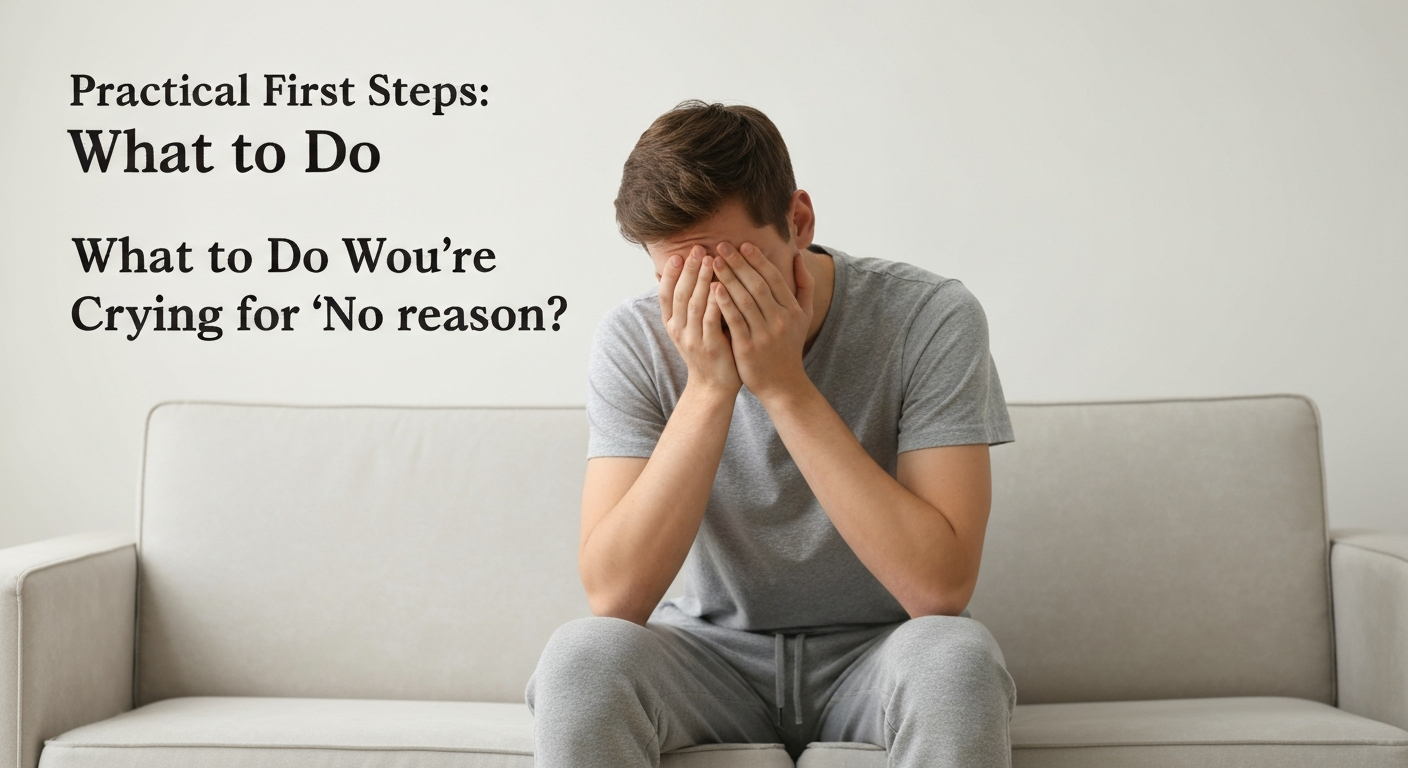
When unexplained tears catch you off guard, your first instinct might be to question yourself, but those tears are valuable data. Instead of asking, "Why am I crying for no reason? An honest gut-check," acknowledge them as a signal. Your body is communicating something important, and that's okay.
If you feel overwhelmed, try a 5-minute reset. Step away from your immediate environment – maybe leave your desk in downtown Montreal for a moment. Grab a cold glass of water, focus on a specific scent like lavender, or take five deep, deliberate breaths. Research indicates emotional tears contain stress hormones like ACTH, suggesting this release is your body's natural way to process tension.
Next, start a brief "Emotional Leak" journal. Jot down what happened just before the tears, any physical sensations, or lingering thoughts. Perhaps you notice tears after a particularly draining video call with a client in Halifax, or after sorting through a pile of bills. Tools like MySerenity or a simple notebook can help you spot patterns.
Integrate micro-breaks and movement into your routine. Even a quick 5-minute walk around the block in your neighbourhood every hour can help regulate stress and reduce the likelihood of sudden emotional overflows. Finally, practice boundary setting. Identify areas where you might be overextending yourself – perhaps saying "no" to an extra volunteer shift at your child's elementary school in Alberta, or declining a social invite when you're already stretched thin. Protecting your emotional energy is a vital first step in understanding and managing these unexpected moments.
Dispelling the Shame: Why Crying is a Human Response, Not a Weakness
When you ask yourself, "Why am I crying for no reason? An honest gut-check," it's easy to immediately feel a rush of shame or frustration. You might think you're "too sensitive" or "overreacting." However, those tears are not a flaw; they are a fundamental human response, a powerful signal from your body. Crying is universal, shared across every culture and age, from a toddler in Calgary to a senior executive in Vancouver.
Suppressing these natural emotional leaks can actually increase your stress. Research suggests that emotional tears are biologically designed to help us cope, containing stress hormones like ACTH that literally leave your body when you cry. This physiological release contributes to the sense of relief you often feel afterward. For many adults, particularly those between 25 and 45 years old, there's immense societal pressure to maintain a strong façade, even when facing significant burnout or overwhelm, as highlighted by various APA Stress in America surveys. This pressure often makes us judge our own tears harshly.
"I used to feel so embarrassed when I'd tear up in front of colleagues, but now I see it as my body's way of saying, 'Hey, I need a moment.' It's not weakness, it's just being human." — Marketing Manager, Toronto
Acknowledging and accepting your tears as valid signals can be the first step toward understanding what your body and mind are trying to communicate. Moving past the shame allows you to truly listen to these emotional leaks and begin to unpack their underlying messages.
When Self-Help Isn't Enough: Considering Professional Support (Without Pressure)
When consistent self-care doesn't quiet the unexplained tears, or if the sheer intensity of your crying spells feels unmanageable, it's a clear indication to explore further options. Many adults experience a subtle but persistent unease, feeling too "well" for immediate crisis intervention, yet too "unwell" for generic self-help apps to genuinely shift their emotional landscape. This isn't a failure of your self-care; it's a signal that the underlying causes of your emotional leaks might benefit from a different approach.
Therapy isn't solely for crisis situations; it's a powerful tool for self-discovery, emotional regulation, and understanding complex feelings. In Canada, your family doctor is an excellent first point of contact. They can gently rule out physiological causes, such as thyroid issues or significant hormonal fluctuations that often impact emotional stability, and provide referrals to mental health professionals.
Consider various types of support. Individual therapy offers a confidential space to process feelings, while group therapy can provide connection and shared understanding. Accessible online platforms can also serve as a low-pressure entry point to professional guidance. Recognizing when to seek help for "Why am I crying for no reason? An honest gut-check" is a proactive step, demonstrating self-awareness and a commitment to your overall well-being.
Frequently Asked Questions
Why do I suddenly start crying for no apparent reason?
Sometimes, your emotions build up like a full cup, and a small bump makes it overflow. This 'no reason' crying can be your body releasing accumulated stress, fatigue, or even unprocessed feelings from a busy week. A subtle scent or a fleeting memory might trigger it, even if you don't consciously register the connection, leaving you wondering why the tears started. It's often a sign your emotional system is working to rebalance.
What are common causes for adults crying unexpectedly?
Adults often cry unexpectedly due to a confluence of factors. High stress from a demanding job in Calgary, persistent fatigue from caring for young children, or hormonal shifts like those during perimenopause can lower your emotional threshold. Unprocessed grief, anxiety, or even sensory overload in a busy environment can also trigger sudden tears, signalling your body needs a release. Sometimes, it's simply a delayed reaction to past events.
Is it normal to cry for no reason as an adult?
Yes, it is entirely normal for adults to experience crying spells without an obvious immediate cause. Tears are a natural physiological response to a range of emotions, not just sadness. They can be a healthy release for pent-up stress, frustration, or even overwhelming joy. Your body might simply be processing emotions you weren't consciously aware of, indicating a need for emotional discharge.
How can I tell if my unexplained crying is serious?
Consider your unexplained crying serious if it's frequent, intense, or significantly disrupts your daily life, like affecting your work performance or relationships in Halifax. If these episodes are accompanied by persistent low mood, changes in sleep or appetite, feelings of hopelessness, or a loss of interest in activities you once enjoyed, it's wise to speak with a doctor or mental health professional for guidance and support.
Can stress or hormones make you cry easily?
Absolutely, both stress and hormones can significantly lower your emotional resilience, making you cry more easily. Chronic stress elevates cortisol, depleting your emotional reserves. Hormonal fluctuations, common during the premenstrual phase or pregnancy, directly impact neurotransmitters that regulate mood. For instance, a senior kindergarten teacher in Toronto might find themselves tearing up over minor frustrations during a particularly stressful school week.
Frequently Asked Questions
Why do I suddenly start crying for no apparent reason?
What are common causes for adults crying unexpectedly?
Is it normal to cry for no reason as an adult?
How can I tell if my unexplained crying is serious?
Can stress or hormones make you cry easily?
Keep reading
All articles →
Doctor's Guide: Best AI Mental Wellness Apps for High-Achievers
For high-achievers battling burnout and decision fatigue, the real challenge isn't finding an app, but rather discerning which of the "best AI mental wellness apps" offer personalized, evidence-based support beyond simple meditation. These tools address specific stressors like perfectionism or performance anxiety.

High-Achiever's Blueprint: 7 Evidence-Based Anxiety Coping Strategies
Many high-achievers see anxiety as an unavoidable cost of ambition. However, clinically proven evidence based anxiety coping strategies offer significant symptom reduction, refining your internal operating system for success.

Strategic Mood Tracking: How to Effectively Track Your Mood for Burnout & Anxiety Management
Many find basic mood logging unhelpful for preventing burnout. This guide transforms mood tracking into a strategic process for proactive self-management.