

CBT Didn't Work For Me: Why It's More Common Than You Think
If Cognitive Behavioural Therapy (CBT) didn't work for you, it's not a sign of personal failure, but rather crucial information about your unique path to healing. Despite its widespread recommendation, research indicates that CBT efficacy rates hover around 50-60% for common conditions like depression and anxiety.

Why 'CBT Didn't Work' Is a Valid Experience (And You're Not Alone)
If Cognitive Behavioural Therapy (CBT) didn't work for you, it's not a sign of personal failure, but rather crucial information about your unique path to healing. Despite its widespread recommendation, research indicates that CBT efficacy rates hover around 50-60% for common conditions like depression and anxiety. This means a significant portion of individuals don't experience full remission, making your feeling of "CBT didn't work for me — and why that's more common than you think" a valid, shared reality, not an isolated incident.
It's easy to feel "broken" or wonder if you didn't try hard enough when a widely recommended therapy doesn't deliver the promised results. This isn't a reflection of your effort or resilience. It's a clinical reality that no single treatment works for everyone. Furthermore, studies, including a 2015 meta-analysis by Wampold, indicate that psychotherapy dropout rates, including for CBT, can range from 20-40%. Often, this happens because people perceive a lack of progress or feel a weak connection with their therapist.
Your experience isn't a dead end; it's valuable data. It clarifies what doesn't work for you, guiding you toward more tailored, nuanced approaches designed for your specific needs. Understanding this reality helps shed the burden of self-blame and opens the door to exploring paths that truly resonate with your healing journey.
Is CBT Overrated for Depression and Anxiety? Beyond 'Just Try Harder'
Many people feel like they've failed when CBT doesn't work for them, especially since it's often presented as the gold standard for depression and anxiety. This pervasive idea, amplified by self-help resources and even some practitioners, implies a universal applicability that simply doesn't hold true for everyone. When you’ve invested time and hope, only to find yourself no better, it’s frustrating to hear generic advice like "just try harder" or "you didn't commit enough." This dismisses your real struggle and the complex reasons why CBT didn't work for you — and why that's more common than you think.
The truth is, while Cognitive Behavioural Therapy is an evidence-based approach and incredibly effective for many, it’s not a guaranteed solution. Research indicates that CBT efficacy rates for common conditions like depression and anxiety typically range from 50-60%. This means a significant portion of individuals don't achieve full remission, and many others drop out, sometimes due to a perceived lack of progress. A structured, cognitive approach excels at identifying and reframing thought patterns, but it might not address deeper emotional wounds or relational patterns, especially for those with complex trauma or certain neurodivergent profiles.
"CBT is a powerful tool, but it's not a magic wand. Expecting it to fix everything for everyone can lead to real disappointment and self-blame." — senior therapist, Vancouver
This isn't to say CBT is overrated, but rather that its application requires nuance. Sometimes, the issue isn't with you or the therapy itself, but with how it's applied. Rigid protocols, insufficient therapist training in adapting the modality, or a mismatch in approach can all impact effectiveness. The onus isn't solely on the patient to make it "work"; systemic factors play a role too.
Understanding these broader contexts helps reframe your experience not as a personal failure, but as valuable data. It clarifies that your journey toward healing might simply require a different path, one that acknowledges the specific reasons why CBT might not have been your fit, which we'll explore next.
Specific Reasons CBT Might Not Be Your Fit (It's Not You, It's the Method)
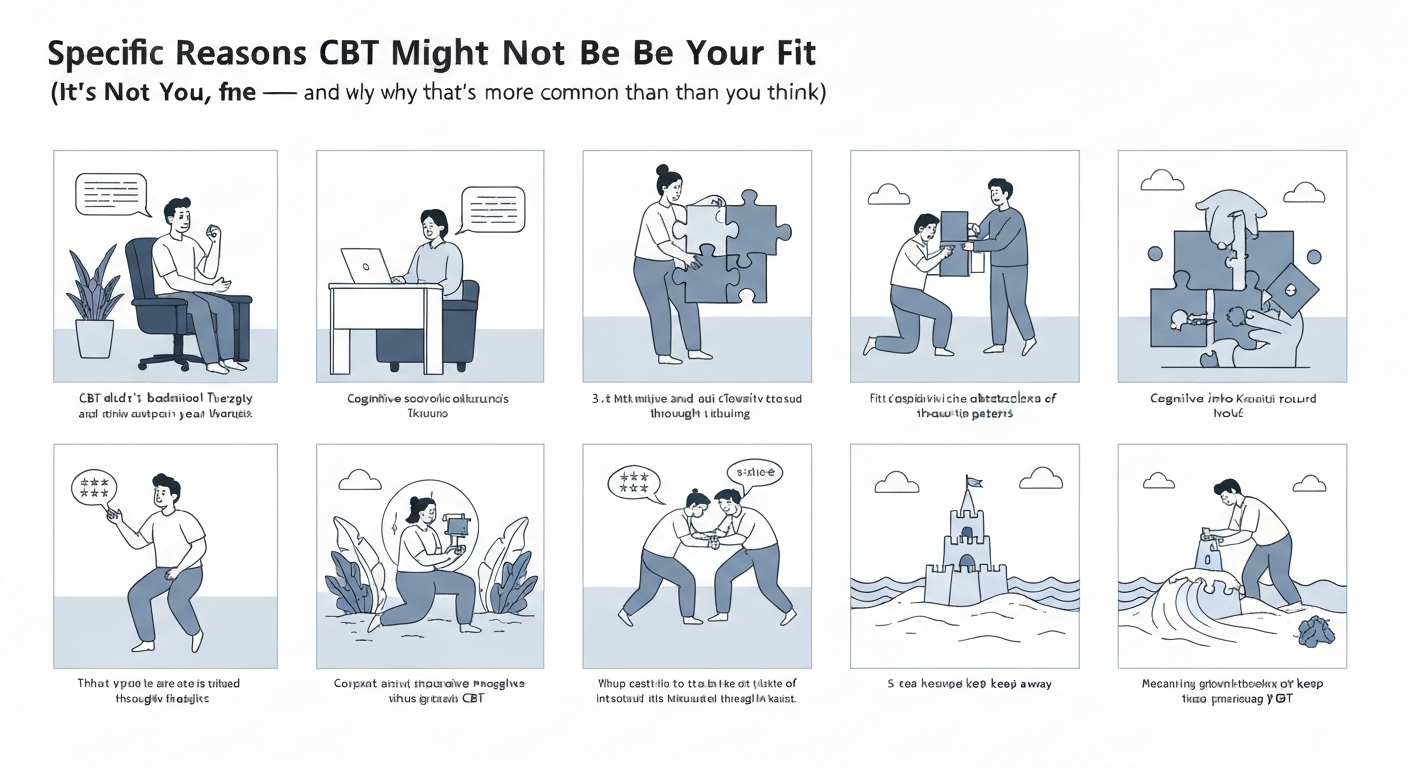
"CBT is a powerful tool, but it's not a universal key. Sometimes you need a different lock pick for a different kind of door." — lead therapist, Vancouver wellness centreThese specific factors explain why CBT isn't universally effective, a reality reflected in broader outcomes.
When the Therapeutic Alliance Fails: The Hidden Impact of a Mismatched Therapist
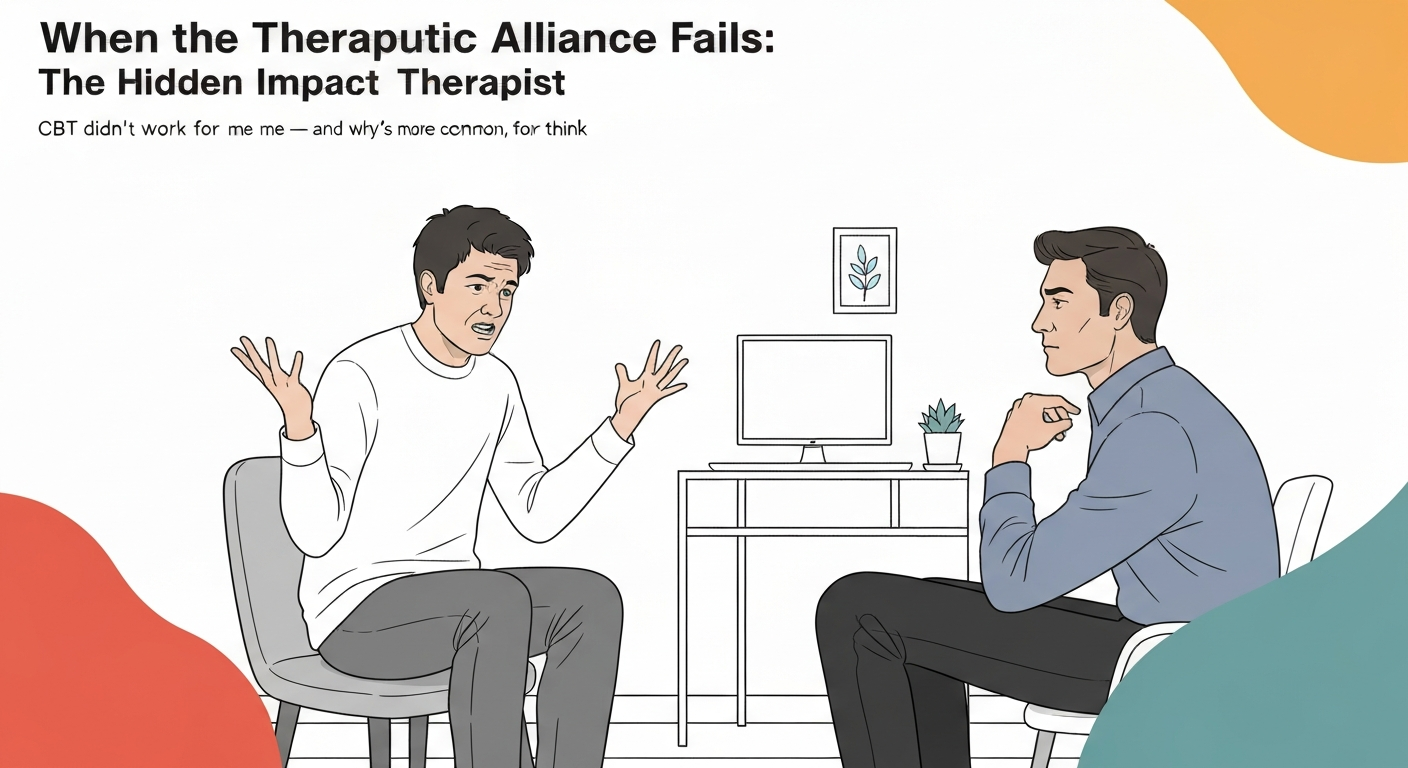
If you're thinking "CBT didn't work for me — and why that's more common than you think," the answer might lie in your therapeutic relationship. The therapeutic alliance – the bond and collaborative relationship between you and your practitioner – is consistently found to be one of the most powerful predictors of positive therapy outcomes, sometimes even outweighing the specific therapeutic approach, as research by Lambert & Ogles (2004) suggests. This crucial, often overlooked element can be the difference between progress and stagnation.
"I tried CBT twice, and both times I felt like I was just ticking boxes, not really connecting. It made me feel like I was the problem, but looking back, neither therapist truly 'got' me." — former client, Vancouver
What a Strong Alliance Offers
- You feel safe enough to share vulnerable thoughts and feelings without judgment.
- Your therapist genuinely grasps your unique experiences and perspective.
- There's mutual respect and a sense of working together towards your goals.
- Your therapist adapts their approach to your specific needs, rather than rigidly following a manual.
- You feel heard, understood, and validated throughout your sessions.
Signs of a Weak Alliance
- You hesitate to be fully open, holding back important details or emotions.
- Your concerns feel dismissed or aren't fully acknowledged by the therapist.
- A noticeable personality clash or discomfort with the therapist's style.
- The therapist seems more focused on strict protocols than on your individual journey.
- Your cultural background or identity feels misunderstood or not respected.
When the therapeutic alliance falters, it's not a personal failing; it's a critical breakdown in the very foundation of effective treatment. This often contributes to high dropout rates, estimated between 20-40% in psychotherapy, as reported in meta-analyses like Wampold (2015), leaving you feeling unheard and frustrated.
What to Do When CBT Doesn't Work: Exploring Alternative Paths
If CBT didn't work for you, it's not a dead end. Instead, your experience offers valuable information, pointing towards approaches better suited to your unique needs. It's more common than you think for individuals to require a different therapeutic path.
When one method doesn't fit, many evidence-based alternatives exist, each with a distinct focus:
| Therapy Modality | Primary Focus | When It Might Be a Better Fit |
|---|---|---|
| Dialectical Behavior Therapy (DBT) | Emotional regulation, distress tolerance, interpersonal skills. | For intense emotions, impulse control, or complex trauma, especially when CBT alone isn't enough (as developed by Marsha Linehan). |
| Eye Movement Desensitization and Reprocessing (EMDR) | Processing distressing memories and trauma resolution. | For single-incident or complex trauma, and persistent PTSD symptoms that resist other approaches. |
| Psychodynamic Therapy | Exploring unconscious patterns, past experiences, relational dynamics. | For anxiety rooted in early life experiences, recurring relationship issues, or a desire for deeper self-understanding. |
| Acceptance and Commitment Therapy (ACT) | Mindfulness, values-driven action, psychological flexibility. | For managing difficult thoughts and feelings by accepting them, clarifying values, and living a meaningful life. |
This shift from one therapy to another isn't a failure; it's a strategic move towards a more tailored fit, recognizing that roughly 40-50% of people don't find full relief with initial CBT. Finding the right therapist is as important as the modality itself. When CBT didn't work for me, I learned to prioritize a strong therapeutic alliance – a genuine, trusting connection. Look for someone flexible, culturally competent, and transparent about their approach, especially for complex issues that need more than a single method. Asking about their experience with specific conditions or neurodivergence can save you time and emotional energy.
Reframing 'Failure': Building a Stronger Foundation for Healing Beyond the Couch
The experience of CBT not working for you isn't a dead end; it's a vital signpost, clarifying what *doesn't* resonate with your unique needs. This isn't a personal failing, but crucial data that refines your search for effective support, alleviating any feelings of being 'broken'.
Beyond traditional talk therapy, exploring holistic strategies can offer new avenues for emotional regulation. Consider practices like Somatic Experiencing, which helps process trauma held in the body, or specific mindfulness techniques such as mindful self-compassion, not just basic meditation apps. Your daily habits also play a profound role; prioritizing consistent sleep hygiene, nourishing your body with balanced nutrition, and engaging in regular physical activity – even a daily 20-minute walk in a local park – can significantly bolster your mental well-being, creating a stronger foundation no matter your therapeutic path.
Building a robust support system, whether through a peer support group in Halifax or connecting with trusted friends and family, offers a powerful buffer when formal therapy feels insufficient. Use your experience, including why CBT didn't work for me — and why that's more common than you think — to advocate for yourself, asking informed questions and seeking out approaches that align better with your insights. Remember, even after successful CBT, relapse rates can be significant; research by Hollon et al. (2005) indicated that maintaining gains often requires ongoing, diversified strategies, reinforcing the idea that your healing journey is dynamic, not a one-time fix. This deeper understanding helps you build a truly personalized toolkit, moving beyond the couch to integrate diverse supports into a long-term strategy for your well-being.
Frequently Asked Questions
Why does CBT not work for everyone?
CBT isn't a one-size-fits-all solution because mental health is deeply personal. For some, the structured, present-focused approach might not address underlying complex trauma or developmental issues effectively. Others might find the focus on thought patterns doesn't resonate with their lived experiences or cultural background. For instance, someone dealing with chronic pain might need a different approach than someone managing mild social anxiety, even if both are experiencing depression. Your unique brain chemistry and life circumstances play a significant role in how any therapy impacts you.
Is it normal for CBT not to help with anxiety or depression?
Yes, it's quite normal. While CBT is highly effective for many, research suggests that roughly 30-50% of individuals don't experience significant improvement for anxiety or depression. This isn't a reflection on you. Factors like symptom severity, co-occurring conditions, or even just a mismatch in therapeutic style can influence outcomes. It simply means your specific needs might be better met by a different therapeutic approach, and exploring alternatives is a valid and common next step.
What are common reasons CBT might not be effective for me?
Several factors can limit CBT's effectiveness. You might find the emphasis on homework, like thought records, feels overwhelming or isn't consistently applied. If your challenges stem from deep-seated relational patterns or past trauma, CBT's present-focused, structured nature might not address these roots sufficiently. Sometimes, a lack of strong therapeutic alliance with your practitioner, or even undiagnosed co-occurring conditions like ADHD, can also hinder progress, making it feel like the therapy isn't quite hitting the mark.
Can a bad therapist client match make CBT fail?
Absolutely, the therapeutic relationship is foundational. If you don't feel understood, respected, or safe with your therapist, even the most evidence-based techniques can fall flat. A mismatch might mean differing communication styles, a lack of cultural understanding, or simply a personality clash. For instance, if you prefer a more collaborative, less directive approach, a highly structured CBT therapist might not be the best fit, regardless of their skill. Trust and rapport are crucial for you to openly explore your thoughts and feelings.
How to find therapy alternatives if CBT didn't work?
If CBT wasn't the right fit, many other effective therapies exist. Consider approaches like Dialectical Behaviour Therapy (DBT) for emotional regulation, psychodynamic therapy for exploring past experiences, or Acceptance and Commitment Therapy (ACT) for embracing difficult thoughts. Start by discussing your experience with a trusted healthcare provider or a new therapist, explaining what felt unhelpful about CBT. Online platforms like Psychology Today Canada or MySerenity can help you search for practitioners specializing in these alternative modalities, ensuring a better match for your specific needs.
Frequently Asked Questions
Why does CBT not work for everyone?
Is it normal for CBT not to help with anxiety or depression?
What are common reasons CBT might not be effective for me?
Can a bad therapist client match make CBT fail?
How to find therapy alternatives if CBT didn't work?
Keep reading
All articles →
Doctor's Guide: Best AI Mental Wellness Apps for High-Achievers
For high-achievers battling burnout and decision fatigue, the real challenge isn't finding an app, but rather discerning which of the "best AI mental wellness apps" offer personalized, evidence-based support beyond simple meditation. These tools address specific stressors like perfectionism or performance anxiety.

High-Achiever's Blueprint: 7 Evidence-Based Anxiety Coping Strategies
Many high-achievers see anxiety as an unavoidable cost of ambition. However, clinically proven evidence based anxiety coping strategies offer significant symptom reduction, refining your internal operating system for success.

Strategic Mood Tracking: How to Effectively Track Your Mood for Burnout & Anxiety Management
Many find basic mood logging unhelpful for preventing burnout. This guide transforms mood tracking into a strategic process for proactive self-management.